A research group at Lucerne University of Applied Sciences and Arts is developing new hearing education approaches that enable senior citizens to activate and maintain their hearing ability through exercises with music or sounds. The Swiss National Science Foundation supported
Findings from psychology, neuroscience, hearing physiology and acoustics show that Hearing ability can be activated, trained and maintained. It is precisely because their hearing ability is declining that older people could particularly benefit from an improvement. To date, however, hearing education options have rarely been researched and tested with older people.
Thanks to a grant from the Swiss National Science Foundation, a research group from Lucerne University of Applied Sciences and Arts has now been given the opportunity to develop, test and evaluate exercises in collaboration with the Kriens care homes.
An offer for everyone - regardless of previous experience
The tested activities were explicitly aimed at all interested residents, regardless of their previous musical experience or why they live at Heimen Kriens. "We wanted to involve people in different ways and bring different skills to bear," says Patricia Jäggi, hearing and sound researcher and co-director of the "Listening as intervention" project.
Strange noises train the ear
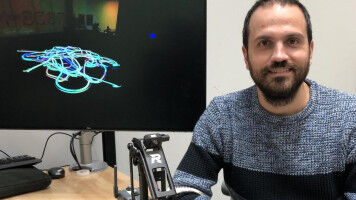
In one exercise, the participants were asked to remember a sound from their childhood - be it a squeaky barn door or the trucks in front of the house - and then try to imitate it with their voice. Another challenging task was so-called "graphic notations": one person imagined a sound sequence and drew it using geometric or freely drawn shapes. The other person then developed sounds from this. "I wasn’t sure whether this could be overwhelming. But some persisted and kept trying until it sounded the way they had imagined," Patricia Jäggi recalls. Experiments in which participants made music with stones or leaves were also included. "We know that it has an effect on hearing when we make strange noises. This not only trains the speech muscles, but also the hearing," explains Patricia Jäggi.
Creativity challenges and establishes contact
The fact that the Kriens homes already had a music-based program and were also open to new experiments was a challenging process for Patricia Jäggi. "Sometimes things didn’t work out. Then we looked for other ways to stimulate individual expression." One resident was inspired by this game with sound and listening: "If they can do such crazy things at the university, then we can do it too," she said to a member of the leisure staff at the home.
Christmas: Singing as a gift
The researcher remembers one of the most touching experiences in the home just before Christmas: She was waiting with a resident to be collected by the carers. "The situation led to us joining in again with the song Kling Glöcklein kling, which we had sung together beforehand." She began, and the resident joined in with the chorus. "Then we sang again, for the nursing staff. I could feel how much joy it gave her. She was usually very dependent on others. And now she had the opportunity to give something back to the care staff by singing." Offering older family members an opportunity like this - at Christmas, for example - could make the moment special for both parties, she adds.