

news 2026
« BACK
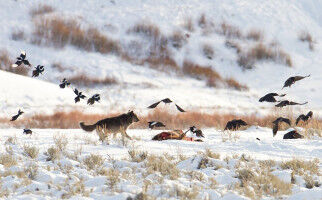 Wolves kill-and ravens remember where
 Invasive species: improving the assessment of how they redefine ecosystems
 Analysis of ancient parrot DNA reveals sophisticated, long-distance animal trade network that pre-dates the Inca Empire
 Europe’s buzzards are losing their colour diversity
 Villages: underestimated habitats with potential
 Using individual atoms to achieve fossil-free chemistry
 Software tool shows potential for cost effective coastal erosion monitoring
 Rainfall shapes bird populations
 How realistic does a supermarket need to be?
 Scientists rescue lost song of the critically endangered regent honeyeater
Environment
Results 1 - 20 of 108.
Environment - Life Sciences - 13.03.2026
Multi-year field study provides insight into environmental effects of offshore solar energy
A four-year study in the Dutch part of the North Sea shows that a small-scale offshore solar farm did not cause measurable changes in currents and water mixing. At the same time, multiple species settled on the floating installations within a short period of time, including mussels, barnacles and other small marine animals.
Health - Environment - 13.03.2026
Making homes more sustainable leads to better health for children
This weekend we will be switching to a new system for handling student queries. From 16 March you can track the status of your question or request in your portal. Click to read the news article. Better insulation and ventilation in social housing means that children need less medication for asthma or allergies.
Life Sciences - Environment - 13.03.2026
Three new rock monitor lizard species discovered in northern Queensland
Three striking new species of rock-dwelling monitor lizards have been formally described from the savannas of north-eastern Queensland, revealing a previously unrecognised evolutionary lineage. The discovery, led by researchers from The Australian National University (ANU), identified the Rainbow Rock Monitor ( Varanus iridis ), the Orange-headed Rock Monitor ( Varanus umbra ) and the Yellow-headed Rock Monitor ( Varanus phosphoros ).
Life Sciences - Environment - 12.03.2026
Less protein, less nitrogen: what does that mean for methane?
Does feeding less protein over a longer period not only reduce nitrogen losses, but also affect methane emissions? Researchers at Wageningen University & Research (WUR) investigated this in a multi-year study with dairy cows, funded by the Vereniging Diervoederonderzoek Nederland (VDN), LVVN and the Melkveefonds.
Environment - 12.03.2026
In Yellowstone National Park, birds primarily search for food in areas where wolves frequently hunt prey Ravens and wolves: Ravens are often seen flying with wolves, following their tracks, or gathering quickly at fresh carcasses A twist in the tale: New research reveals that ravens don't simply follow wolves, they remember common hunting grounds and regularly check back for fresh meat.
Environment - 11.03.2026
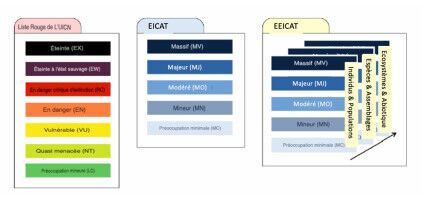
Although invasive alien species are very often reduced to predators eliminating defenseless prey, in reality they do more than simply weaken certain species: they fundamentally reshape the environment itself. In order to better assess the impacts of the roughly 3,500 invasive species on the environment, an international team of scientists led by a researcher from the CNRS 1 has developed an evolution of the " Environmental Impact Classification of Alien Taxa " (EICAT) standard.
Life Sciences - Environment - 11.03.2026
New analysis of ancient parrot DNA has revealed vibrant Amazonian parrots were transported alive across the Andes to coastal Peru centuries before the Inca Empire, highlighting a sophisticated pre-Inca, long-distance trade network spanning rainforest, highlands and deserts. The international team of researchers, including scientists from The Australian National University (ANU), analysed parrot feathers that were discovered at Pachacamac, Peru - one of the preeminent religious centres of the Andean civilisation - far outside the birdsnative rainforest range.
Environment - Life Sciences - 10.03.2026
A Europe-wide citizen science study reveals common buzzards are becoming more uniform in colour Mapping colour: Scientists used nearly 100,000 citizen science observations to map and track common buzzard plumage colour across Europe. Unexpected patterns: Buzzard colours vary geographically with patterns that defy theories linking colour to habitat and climate.
Environment - Life Sciences - 09.03.2026
Tree cover shapes freshwater ecosystems over millennia
In-person class cancellation and work-from-home / Annulation des cours en présentiel et télétravail In-person class cancellation and work-from-home / Annulation des cours en présentiel et télétravail. McGILL ALERT! Due to freezing rain all'in-person classes and activities on Wednesday, March 11, will be cancelled.
Environment - Life Sciences - 06.03.2026
Villages can provide important habitats for insects. A new study by the University of Würzburg shows which areas in rural settlements are particularly rich in species - and where there is still room for improvement. When it comes to research on habitats for pollinating insects, villages have so far received relatively little attention.
Environment - Agronomy & Food Science - 06.03.2026
Cattle grazing boosts nature recovery in Yorkshire Dales
Cattle grazing at a nature reserve in the Yorkshire Dales has increased plant diversity by over 40% according to research by the University of Leeds. Allowing native cattle breeds to roam large areas of the landscape at Ingleborough has also led to a five-fold increase in the number of butterflies. Researchers conducted two studies into the relative effects of cattle and sheep grazing on the 1500-hectare landscape restoration project.
Environment - Earth Sciences - 05.03.2026
Franconia’s agriculture of the future: olives and rice instead of barley and sugar beet?
A new study by the University of Würzburg shows that undamped climate change will radically change German agriculture by 2100 and could bring Mediterranean crops to Franconia. Against the backdrop of climate change, agriculture is facing an unprecedented transformation. While Germany was hardly affected by massive crop failures for decades, the picture has changed drastically since 2015.
Life Sciences - Environment - 05.03.2026
Flipped chromosomal segments drive natural selection
When a species lives in two distinct types of habitats, individuals with traits better suited to each habitat will thrive and reproduce, naturally selecting descendants with those traits.
Chemistry - Environment - 04.03.2026
Methanol is a key starting material for chemical products. Researchers from ETH Zurich can now produce this precursor from CO2 and hydrogen with high efficiency by using isolated metal atoms as catalysts. Every chemical reaction faces a barrier: for substances to react with one another, it is first necessary to supply energy.
Environment - 04.03.2026
Safeguarding climate-resilient mangroves requires only a moderate increase in the global protected area
VUB research shows that targeted protection makes mangroves more resilient to climate change. A new study by an international team of researchers shows how climate change can be better considered when protecting mangrove forests. The researchers found that even modest increases in protected areas can make these ecosystems more resilient to climate change.
Computer Science - Environment - 04.03.2026
A tool originally designed to monitor the erosion of Scotland's coast has proven its worth on a tropical island the other side of the world. The open-source tool, called VedgeSat, was developed by researchers from the University of Glasgow as a more affordable and accessible alternative to traditional methods of coastal management.
Environment - Life Sciences - 03.03.2026
Scientists have long focused on rising temperatures to understand how climate change is reshaping the natural world. But there's a critical blind spot in that picture: rain. A new global study reveals precipitation has been largely overlooked in studies of how climate change impacts birds, even though it can be just as influential as temperature.
Environment - Agronomy & Food Science - 03.03.2026
Researchers at the University of Bonn have conducted a review study to examine the methods used to research consumer behaviour in supermarkets. WHAT IS IT ABOUT? Researchers from the University of Bonn have taken a comprehensive look at how scientists study consumer behavior in supermarkets. Their review covers everything from real-life grocery stores to lab-based shelves, online supermarkets, and virtual reality environments.
Environment - Earth Sciences - 03.03.2026
Long-term climate warming and cooling influences from northern forest fires
Northern wildfires, such as the record-breaking 2023 and 2025 fires in Canada, have long-lasting effects on the climate, according to new research from, among others, earth system scientists Max van Gerrevink, Sander Veraverbeke and Nick Schutgens. The summer of 2025 marked the second largest fire season on record in Canada, after the recent record of 2023.
Environment - 03.03.2026
Scientists from The Australian National University (ANU) and the Taronga Conservation Society Australia have successfully restored the lost traditional song of one of Australia's most endangered birds, offering new hope for the survival of the critically endangered regent honeyeater. The new study reveals how targeted "song tutoring" at Taronga Zoo in Sydney and Taronga Western Plains Zoo in Dubbo has revived a disappearing cultural trait vital to the species' survival.


