

news 2026
« BACK
 Why some oesophageal cancers are so hard to treat
 Researchers design a pioneering drug capable of reversing cognitive decline in Alzheimer’s disease in animal models
 Novel imaging used on humans for the first time
 Inflammation-related protein changes could help predict cognitive impairment after a stroke- especially in smokers
 The human metaorganism: understanding obesity individually
 Metabolism links cancer and cardiovascular disease
 People with HIV did not show more severe clinical symptoms during the 2022 mpox outbreak in Spain
 Predicting brain health with a smartwatch
 How boron helps to produce key proteins for new cancer therapies
 Taking medications: apps are not going to replace health-care professionals
 Spring fatigue cannot be empirically proven
Health
Results 1 - 20 of 193.
Health - 13.03.2026
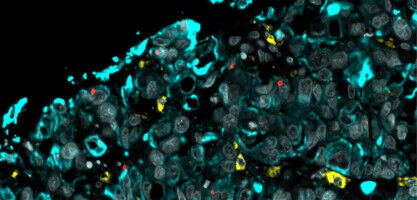
Research published in Science Advances has uncovered new insights into why the most aggressive oesophageal cancers are so difficult to treat and how the body's own defence systems are helping them to thrive. The study, led by Professor Eileen Parkes and her team in the Department of Oncology at the University of Oxford, analysed patient-donated tumour samples and found that the most dangerous types of oesophageal cancers share a key feature: high chromosomal instability.
Health - Environment - 13.03.2026
Making homes more sustainable leads to better health for children
This weekend we will be switching to a new system for handling student queries. From 16 March you can track the status of your question or request in your portal. Click to read the news article. Better insulation and ventilation in social housing means that children need less medication for asthma or allergies.
Life Sciences - Health - 13.03.2026
The new experimental compound works through an epigenetic mechanism that acts not only on the symptoms of the disease, but directly on the molecular mechanisms that contribute to its progression. Health A team from the University of Barcelona has designed and validated in animal models an innovative compound with a pioneering mechanism of action for the treatment of Alzheimer's disease.
Physics - Health - 13.03.2026
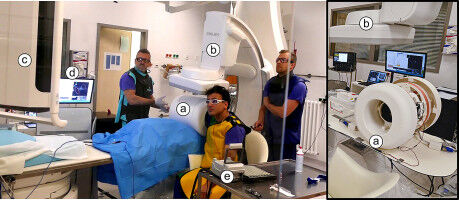
The University and University Hospital of Würzburg have demonstrated magnetic particle imaging on humans for the first time. The new procedure enables radiation-free visualisation of blood vessels in real time. 131 years ago, the physicist Wilhelm Conrad Röntgen discovered the rays named after him in Würzburg, enabling completely new methods for visualising the human body.
Life Sciences - Health - 11.03.2026
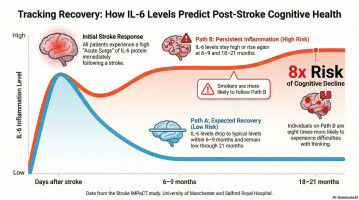
Inflammation-related protein changes could help predict cognitive impairment after a strokeespecially in smokers Researchers at The University of Manchester have found that tracking changes in a protein linked to inflammation (interleukin-6) after a stroke could help identify people at risk of later memory and thinking problems (also known as cognitive problems).
Health - Life Sciences - 11.03.2026
News from At Leipzig University Medicine, scientists are researching how bodies, organs, cells and microbes talk to each other. In an article in the newspaper "Die WELT", Dr. Rima Chakaroun and Veronica Witte, among others, show how close laboratory and life, molecules and people, stomach and brain really are - and what all this reveals about our health and the possibility of personalized therapies.
Health - Life Sciences - 11.03.2026
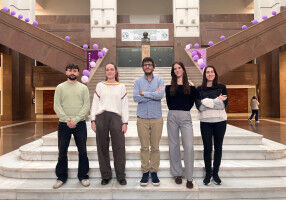
A research team from the University of Valencia has analysed the scientific evidence available suggesting that cancer and cardiovascular disease are not independent conditions but share important metabolic and biological mechanisms.
Health - 11.03.2026
People affected by human immunodeficiency virus (HIV), which causes AIDS, did not develop more severe forms of mpox - compared to HIV-negative people - during the multiregional outbreak of this disease that occurred in Spain in 2022.
Life Sciences - Health - 10.03.2026
Development and sex shape the brain
Two companion studies, published in Cell Genomics , reveal how brain development lays the foundation for both shared and sex-specific circuits, redefining how neural diversity arises. A preview article l'inked to the report highlights the broader significance of these findings and places them in context for the field.
Health - 10.03.2026
Severe chronic skin inflammation suppresses the development of skin cancer
Chronic inflammation is generally considered a risk factor for the development of cancer. In psoriasis, a chronic inflammatory skin disease, the link with cutaneous squamous cell carcinoma, a common form of skin cancer, has not yet been clarified. In medical practice, it has long been observed that tumours in psoriasis often do not develop directly in inflamed areas of skin.
Health - Psychology - 10.03.2026
A UNIGE study shows that connected devices can gather valuable data to help prevent neurological and mental disorders. Can smartphones or smartwatches help detect early signs of neurological or mental illness? Researchers at the University of Geneva monitored a group of participants wearing connected devices, and used artificial intelligence to analyse data such as heart rate, physical activity, sleep and air pollution.
Health - Life Sciences - 10.03.2026
Chemists from ETH Zurich have found a way to produce poorly soluble proteins by caging a uniquely reactive boron compound.
Health - Life Sciences - 09.03.2026
New ’molecular switch’ controlling antiviral immunity identified
A previously unknown chain of molecular signals that determines how strongly the body's immune system responds to viral infection has been discovered by scientists at UCL and the University of Cologne. Pattern recognition receptors act as sensors in the body's immune system that detect the molecular signatures of invading viruses and bacteria.
Life Sciences - Health - 09.03.2026
Worrying extent of imprecise gene and gene mutation naming
A systematic review of 52 scientific papers submitted to a world-leading clinical genetics journal from multiple scientists over a two-year period reveals that not a single one named critical gene mutations (correctly termed as variants) with precision. The findings partly explain why around 70% of rare diseases go undiagnosed, even in the UK, which arguably has the worlds most advanced genomic medicine service.
Pharmacology - Health - 09.03.2026
Many people find it difficult to take their medication correctly as prescribed. This has significant health implications and economic consequences. Digital health apps are designed to help people take their medication correctly. However, a study by the University of Basel shows that digital assistants do not replace the need for personalized professional support.
Health - 09.03.2026
Why do many people say they are so exhausted in the spring? Researchers at the Center for Chronobiology at the University of Basel, the University Psychiatric Clinics Basel (UPK) and the Inselspital in Bern investigated this question. The study reveals that spring fatigue appears to be more of a cultural phenomenon than a measurable biological one.
Life Sciences - Health - 06.03.2026
The cellular switch that explains why humans aren’t nocturnal
Differences in cellular pathway activity flip the switch from nocturnality to diurnality and explain a major evolutionary change humans have undergone. Early mammals were nocturnal, sleeping during the day while large predators were active. However, after the extinction of dinosaurs, several different lineages of mammals independently transitioned to become active during the day.
Health - Life Sciences - 05.03.2026
Alzheimer’s: discovery of the involvement of new cells in the onset and progression of the disease
Tanycytes (white) capture Tau protein (red) circulating in the cerebrospinal fluid and transport it along their extensions/arms, which pass through brain tissue and come into contact with blood vessels (green), into which they release this protein, which is involved in Alzheimer's disease when it accumulates in the brain.
Pharmacology - Health - 05.03.2026
Digital tool that personalises antidepressant treatment significantly improves outcomes of people with depression
An AI-driven tool that tailors antidepressant treatment to individual patients was shown to improve outcomes for people with depression, compared to standard treatment, in a major international trial. It is the first time ever a mental health clinical prediction tool has been demonstrated as effective.
Health - Pharmacology - 05.03.2026
Stroke Cognition Calculator could help predict thinking problems after stroke
Researchers at the University of Oxford have developed a "Stroke Cognition Calculator", a new tool designed to estimate a person's chance of having thinking and memory problems six months after a stroke. The study, funded by the National Institute for Health and Care research (NIHR), and led by researchers at the Nuffield Department of Clinical Neurosciences was published in the Lancet Health Longevity .


