




Art & Design - Today
New special exhibition at the Josephinum is dedicated to Austria's exceptional artist Gustav Klimt
New special exhibition at the Josephinum is dedicated to Austria's exceptional artist Gustav Klimt
Health - Today
University of Manchester supports landmark Russell Group commitment to build healthier communities
University of Manchester supports landmark Russell Group commitment to build healthier communities
Health - Today
Cortical thickness, schizophrenia, and causality in psychiatry: when the trace is mistaken for the cause
Cortical thickness, schizophrenia, and causality in psychiatry: when the trace is mistaken for the cause
Career - Today
Low-income students and girls are steered away from 'risky' creative careers at school
Low-income students and girls are steered away from 'risky' creative careers at school


Environment - Today
UCalgary expedition, with NASA, Canadian and European space agencies, sets out to better understand state of Arctic ice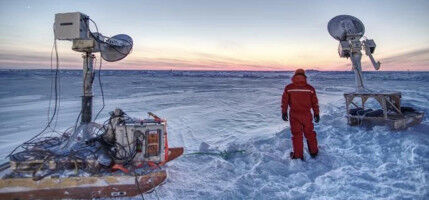
UCalgary expedition, with NASA, Canadian and European space agencies, sets out to better understand state of Arctic ice


Social Sciences - Mar 24
Young people's wellbeing is improving in Greater Manchester, major survey finds
Young people's wellbeing is improving in Greater Manchester, major survey finds

Environment - Mar 24
Australia's environment is improving but climate change is 'accelerating' damage to ecosystems and wildlife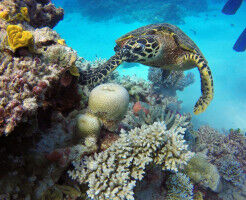
Australia's environment is improving but climate change is 'accelerating' damage to ecosystems and wildlife


science wire
Agronomy & Food Science
Results 801 - 850 of 2004.
Agronomy & Food Science - Environment - 19.07.2017
Brexit’s impact on food
The UK is unprepared for the most complex ever change to its food system, which will be required before Brexit, according to a new briefing paper.
Agronomy & Food Science - 18.07.2017
Pomologist Chester Forshey dies at 92
Chester "Chick" Forshey, professor emeritus of pomology, died May 7 at the age of 92. Forshey, who held a bachelor's degree in horticulture and a Ph.D.
Chemistry - Agronomy & Food Science - 18.07.2017
Heritage and ancient grain project feeds a growing demand
After a century of markets dominated by a few types of wheat and white flour, ancient and heritage wheat varieties are making a comeback.
Life Sciences - Agronomy & Food Science - 18.07.2017
One amino acid, a whale of a difference
ANN ARBOR'A single amino-acid variation in a key receptor in whales may help explain why some species of cetaceans evolved sleek, muscular bodies to hunt fish and seals, while others grow to massive sizes by filter-feeding on large volumes of plankton, an international research team has found.
Agronomy & Food Science - Administration - 17.07.2017
UK not ready for Brexit’s impact on food, report warns
UK not ready for Brexit's impact on food, report warns Severe problems with the UK food system are likely unless issues are addressed, according to latest expert report The retail industry is predict
Environment - Agronomy & Food Science - 17.07.2017
!- Start of DoubleClick Floodlight Tag: Please do not remove Activity name of this tag: UCB001CP Retargeting URL of the webpage where the tag is expected to be placed: http://unknown This tag must be placed between the But we're learning new things about privacy and emails in the age of FOIA.
Life Sciences - Agronomy & Food Science - 14.07.2017

!- Start of DoubleClick Floodlight Tag: Please do not remove Activity name of this tag: UCB001CP Retargeting URL of the webpage where the tag is expected to be placed: http://unknown This tag must be placed between the Food Evolution is a documentary about GMOs.
Agronomy & Food Science - Environment - 14.07.2017
Buried alive: Aquatic plants survive in ‘ghost ponds’ under agricultural fields
Aquatic plants in 'ghost ponds' are able to survive more than 100 years buried beneath cropped agricultural fields, according to new UCL research. Ghost ponds are abundant across many agricultural regions, often visible as damp depressions, areas of poor crop cover, or changes in soil colour. Many UK ponds were filled-in during agricultural land intensification that took place after the 1950s.
Agronomy & Food Science - Life Sciences - 13.07.2017
Cuomo signs bill, invests in industrial hemp at Cornell event
Gov. Andrew Cuomo signs the hemp bill. Looking on, from left, are: Howard Zemsky, president and CEO of Empire State Development and commissioner of the New York State Department of Economic Development; Cornell President Martha E. Pollack; state Sen.
Health - Agronomy & Food Science - 13.07.2017
Separating food facts from fiction
As a nutritional epidemiologist devoted to prevention, Karin Michels has spent much of her career studying how health can be optimized through a proper diet.
Health - Agronomy & Food Science - 10.07.2017
Counting steps via smartphones reveals intriguing clues about obesity
A pedestrian walks across O'Connell Bridge in Dublin, Ireland. Stanford researchers used data captured from smartphones of hundreds of thousands of people around the globe to discover a public health risk they call 'activity inequality.' (Image credit: Giuseppe Milo / Creative Commons) A global study based on daily steps counted by smartphones discovers 'activity inequality.' It's similar to income inequality, except that the 'step-poor' are prone to obesity while the 'step-rich' tend toward fitness and health.
Administration - Agronomy & Food Science - 06.07.2017
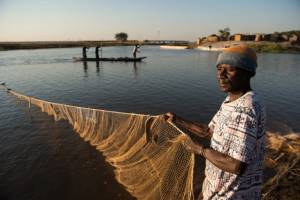
As the old saying goes, teaching someone to fish is far more helpful than just giving them a fish. Now, research from WorldFish and MIT takes that adage a step further: Better yet, the study found, is working with the fishermen to help develop better fishing methods. Involving local people in figuring out how to improve their farming and fishing methods provides more lasting and widespread benefits than just introducing new technologies or methods, the researchers showed.
Computer Science - Agronomy & Food Science - 05.07.2017
Moms, kids and TV: A complicated relationship that’s not all bad
ANN ARBOR'Watching television sometimes gets a bad rap''especially where children and screen time are concerned''but not all of it's deserved.
Innovation - Agronomy & Food Science - 05.07.2017
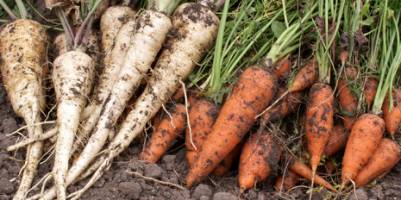
"Naturalness" is a construct - but according to a new study from the ETH Consumer Behavior group, a product's success on the food market is primarily defined by whether or not consumers perceive it as natural. The increasingly artificial and virtual nature of everyday life has now achieved broad acceptance, and the benefits that technological development bring to everyone cannot be denied.
Agronomy & Food Science - Chemistry - 04.07.2017
Health - Agronomy & Food Science - 29.06.2017

A multi-year survey of the nutritional, physiological and reproductive health of endangered southern resident killer whales suggests that up to two-thirds of pregnancies failed in this population from 2007 to 2014. The study links this orca population's low reproductive success to stress brought on by low or variable abundance of their most nutrient-rich prey, Chinook salmon.
Economics - Agronomy & Food Science - 23.06.2017
N.Y. honeybees stung hard by varroa mite, researchers find
A small mite is causing big trouble for New York's honeybee population and putting in peril the fruit and vegetable crops that depend on these pollinators. Other beekeeper team findings ' A study of 30 apple orchards revealed a high level of pesticide exposure (five acute cases, 22 chronic). The majority of the high-risk insecticides appear to be coming not from the apples or the pollen that bees are collecting from the apples, but from wildflowers surrounding the orchards, which points to a potential issue in grower spray practices.
Agronomy & Food Science - Life Sciences - 23.06.2017
Cornell to team with IBM to protect global milk supply
Cornell and IBM announced a joint research project June 23 that will use genetic sequencing and big-data analyses to help keep the global milk supply safe.
Agronomy & Food Science - 20.06.2017
Guidelines for Fertiliser Application for All Swiss Crops now Merged in One Document
Life Sciences - Agronomy & Food Science - 19.06.2017
Berry for your thoughts: Contest seeks name for grape
Big on flavor, aroma and size, Cornell's newest grape lacks one defining feature: a name. Grape breeder Bruce Reisch '76 spent years developing the grape, and now he's offering the public the chance to name it.
Environment - Agronomy & Food Science - 19.06.2017
Forewarned is forearmed: $6.2m for better farm forecasting
Environment - Agronomy & Food Science - 13.06.2017
$3 million for research to help farmers cut greenhouse gas emissions
Two McGill University research projects aimed at helping farmers mitigate greenhouse gas emissions will receive nearly $3 million in funding from the Government of Canada, federal officials announced.
Health - Agronomy & Food Science - 10.06.2017

Queen Mary University of London (QMUL) has received â?2m from Barts Charity to launch the Barts Research Centre for Women's Health, with the aim of tackling problems that affect mothers and their unborn and newborn children. Diabetes is one of the key issues the Centre will focus on. In East London where the Centre is based, as many as 10-15 per cent of mothers develop diabetes in pregnancy.
Life Sciences - Agronomy & Food Science - 07.06.2017
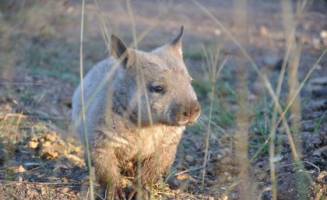
Do you know the difference between freezing wombat sperm and koala sperm? After 13 years researching wombat behaviour and reproduction, Associate Professor Stephen Johnston and his team from The University of Queensland School of Agriculture and Food Sciences are experts on the topic.
Health - Agronomy & Food Science - 07.06.2017
Energy drinks are killing young people. Itâ? s time to stop that
!- Start of DoubleClick Floodlight Tag: Please do not remove Activity name of this tag: UCB001CP Retargeting URL of the webpage where the tag is expected to be placed: http://unknown This tag must be
History & Archeology - Agronomy & Food Science - 05.06.2017
Ancient grain tells the tale of our ancestorsâ?- cities
Archaeological digs in the Middle East have revealed the remains of ancient harvests that record how some of the worldâ??s earliest cities grew and developed. A study published in Nature Plants sheds new light on the agricultural and political economy that underpinned the growth of some of the worldâ??s oldest cities in Mesopotamia, in present-day northern Syria.
Health - Agronomy & Food Science - 05.06.2017
Obesity and diabetes rising across Africa, according to Imperial study
Obesity and diabetes are rising in Africa, led by higher income countries in the north and south. Diabetes can contribute to early death and lead to health problems such as nerve damage, blindness and amputation.
Agronomy & Food Science - Life Sciences - 05.06.2017
New consortium aims to reduce greenhouse energy use
From left, Neil Mattson, associate professor in the Horticulture Section of the School of Integrative Plant Science (SIPS); David de Villiers, research associate, SIPS; Kale Harbick, research associa
Astronomy & Space - Agronomy & Food Science - 31.05.2017
Seeds and knowledge shared at ’Planting Moon’ gathering
Angela Ferguson of the Onondaga Nation Farm Crew speaks on the importance of restoration and agriculture to the Haudenosaunee at Cornell Botanic Gardens.
Agronomy & Food Science - 24.05.2017
Learning about nutrition from ‘food porn’ and online quizzes
Many of our social media feeds are dominated by beautiful, mouth-watering photos of food. These photos inspire some serious food envy but could they also educate and encourage healthier eating? That was the question explored by a team of researchers from the Department of Biomedical Informatics at Columbia University and the Harvard John A. Paulson School of Engineering and Applied Sciences (SEAS).
Environment - Agronomy & Food Science - 23.05.2017
Cornell climate center at front line of drought response
For more than a year, as drought spread across the Northeast, agricultural fields went parched, crops withered, wells ran dry.
Health - Agronomy & Food Science - 19.05.2017

Baking meets science in a delicious University of Queensland health initiative that really takes the cake.
Linguistics & Literature - Agronomy & Food Science - 18.05.2017
A century of agriculture research goes online
A rich trove of once-hidden Cornell agricultural research from journals and other serial publications is now available to the public.
Health - Agronomy & Food Science - 17.05.2017
Tax on sugar-sweetened beverages in Mexico is expected to reduce obesity, diabetes
ANN ARBOR'The current 10 percent tax on sugar-sweetened beverages in Mexico should reduce obesity in the country by 2.5 percent by 2024 and prevent up to 134,000 new cases of diabetes by 2030, according to a new study co-led by researchers at the University of Michigan.
Social Sciences - Agronomy & Food Science - 17.05.2017
Who is ’too fat’’ That all depends on race, gender, generation
Doctors have a specific definition of what it means to be overweight or obese. But that's not how it works on the beach, on Tinder or at the workplace.
Life Sciences - Agronomy & Food Science - 17.05.2017
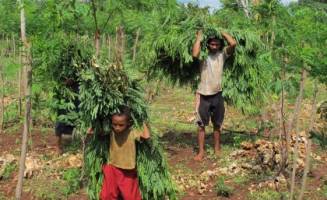
Indonesian journalists have visited The University of Queensland to hear about a successful cattle fattening project in their nation's east which is bringing significant economic benefits for smallholder cattle farmers.
Earth Sciences - Agronomy & Food Science - 16.05.2017
Former Sussex Vice-Chancellor honoured with top geographical prize
Agronomy & Food Science - Health - 16.05.2017

CHAMPAIGN, Ill. — Healthy mass transit systems could contribute to healthier communities, according to a new study by University of Illinois researchers that determined higher mass transit use was correlated with lower obesity rates in counties across the United States.
Agronomy & Food Science - Event - 16.05.2017
Agronomy & Food Science - 16.05.2017
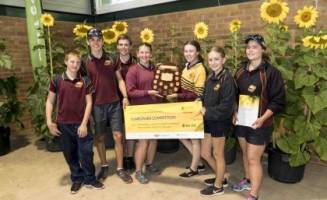
A blooming great competition at UQ Gatton
Agronomy & Food Science - 15.05.2017
Media Alert: A blooming great competition at UQ Gatton
Environment - Agronomy & Food Science - 09.05.2017

The sage grouse is an exceptionally showy bird and an icon of the American West. But its sagebrush habitat is disappearing, and there is debate over how best to protect the populations in an increasingly developed landscape. A new study by University of Washington, state and federal researchers analyzed sage grouse in Eastern Washington and showed a surprisingly large benefit from a federal program that subsidizes farmers to plant year-round grasses and native shrubs instead of crops.
Agronomy & Food Science - Economics - 09.05.2017
Food entrepreneurs innovate, collaborate with Cornell
For food entrepreneurs, the bitter battles between small and large companies are increasingly giving way to collaboration in the quest for better-tasting, high-quality food.
Earth Sciences - Agronomy & Food Science - 08.05.2017
Professor Sir Gordon Conway honoured with top geographical prize
Health - Agronomy & Food Science - 04.05.2017

Extending NHS weight loss programmes from one session per week for 12-weeks to one session per week for a year helped people who are overweight to lose more weight and keep it off for longer, according to a study published in The Lancet , and led by researchers from the University of Cambridge, University of Liverpool and University of Oxford.
Agronomy & Food Science - 03.05.2017
Recognizing food brands puts preschoolers at risk for obesity
ANN ARBOR'Young children who recognize food name brands, such as Lucky Charms, M&M's and Cheetos, often eat unhealthy items that lead to their high body mass index. The risk of this weight gain, according to a new University of Michigan study, occurs independently of other variables, including family demographics or TV viewing.
Life Sciences - Agronomy & Food Science - 27.04.2017
Cassava is genetically decaying, putting staple crop at risk
For breeders of cassava, a staple food for hundreds of millions in the tropics, producing improved varieties has been getting harder over time. A team at Cornell used genomic analysis of cassava varieties and wild relatives to make a diagnosis: Mutations have corroded the genome, producing many dysfunctional versions of genes and putting at risk a crop crucial to the survival of one-tenth of the world's population.
Agronomy & Food Science - Civil Engineering - 25.04.2017
University statement on urban horticulture studies
Life Sciences - Agronomy & Food Science - 21.04.2017
£1.7million investment for Bristol cereal genomics group
Environment - Agronomy & Food Science - 21.04.2017

Many companies want to know how the creation of their products affects the environment. Scientists at Stanford, the University of Minnesota and Unilever have found a way to better predict and quantify environmental impacts.


Art & Design - Today
New special exhibition at the Josephinum is dedicated to Austria's exceptional artist Gustav Klimt
New special exhibition at the Josephinum is dedicated to Austria's exceptional artist Gustav Klimt
Health - Today
University of Manchester supports landmark Russell Group commitment to build healthier communities
University of Manchester supports landmark Russell Group commitment to build healthier communities
Health - Today
Cortical thickness, schizophrenia, and causality in psychiatry: when the trace is mistaken for the cause
Cortical thickness, schizophrenia, and causality in psychiatry: when the trace is mistaken for the cause
Career - Today
Low-income students and girls are steered away from 'risky' creative careers at school
Low-income students and girls are steered away from 'risky' creative careers at school
Environment - Today
UCalgary expedition, with NASA, Canadian and European space agencies, sets out to better understand state of Arctic ice
UCalgary expedition, with NASA, Canadian and European space agencies, sets out to better understand state of Arctic ice
Social Sciences - Mar 24
Young people's wellbeing is improving in Greater Manchester, major survey finds
Young people's wellbeing is improving in Greater Manchester, major survey finds
Environment - Mar 24
Australia's environment is improving but climate change is 'accelerating' damage to ecosystems and wildlife
Australia's environment is improving but climate change is 'accelerating' damage to ecosystems and wildlife