A new project at the University of Bonn’s BCDSS Cluster of Excellence and the Department of History is studying nameless individuals in historical sources.
Most people in history remain nameless, appearing in sources merely as numbers, traits or anonymous figures. A new research project launched by the Cluster of Excellence Bonn Center for Dependency and Slavery Studies (BCDSS) and the Department of History (IGW) at the University of Bonn is looking into how these nameless individuals can be analyzed and rendered visible in historical records. It has been awarded €370,000 in funding from the Volkswagen Foundation.
Julius Caesar, Joan of Arc, Mother Teresa: (Almost) everyone knows their names, and we associate them with either power, courage or charity. We know all’about them thanks to historical sources. And this turns them into a minority because, in the words of BCDSS and IGW historian Professor Julia Hillner: "Most people mentioned in historical sources are nameless. Either they had no way of preserving their names for posterity, or they actually had a strong desire to remain incognito."
Why so many people go unnamed in the sources
Enslaved people, for instance, had no say in how they would be recorded in the annals of history. "Ships passenger lists would often only record them based on certain characteristics like their sex, height or age," Hillner explains. What is more, those who managed to escape slavery had every reason to want to stay unregistered and unrecognized. Other forms of namelessness, by contrast, were a question of narrative strategy or social etiquette. In the ancient world, family members were rarely mentioned by name in correspondence, because letters tended to be read aloud in public, so this was a way of protecting both their honor and that of the whole family. "In other words, the same practice could serve a degrading and protective purpose at the same time," says Hillner.
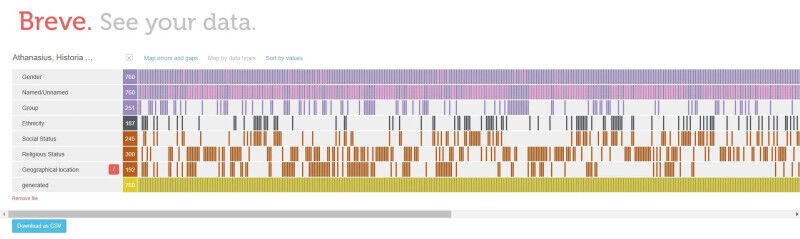
Nameless people in sources pose a major challenge to historians. After all, how can individuals be studied if hardly anything is known about them? With their project, therefore, Hillner and Professor Pia Wiegmink-her fellow co-speaker at the BCDSS-together with Professor Jamie Wood from the University of Oxford intend to formulate a set of academic guidelines for researching the nameless that can be used in many disciplines. They study various genres-from narrative sources and chronicles through to letters and even novels-from Imperial Rome and the post-Roman period (from around the 1st to the 7th century CE) as well as from the early modern and modern periods. "We’re also interested in the role of namelessness for processes of remembering and cultures of commemoration" Wiegmink explains.
What namelessness says about identity and power
This is because, although today personal identity is closely linked to one’s own name, this was by no means a given in the past. "In the context of slavery, naming is often a violent act-a symbolic act of taking possession. Studying namelessness gives insights into ideas about identity that are contingent on what time period you’re looking at." The project team is therefore investigating what tools are needed to conduct systematic research into namelessness in historical sets of personal information. How can we use this kind of information to learn more about past societies? How can we write history about people who have no name? And what are the hallmarks of ethically responsible research into namelessness, especially in the context of colonial power relationships? The aim of the project is thus to develop a methodological foundation for a historiography that includes and acknowledges nameless people; research that is ethical, sensitive, and sound.