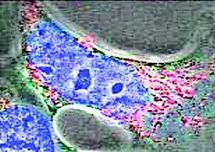
Human embryonic kidney cells were used to test the DNA cages
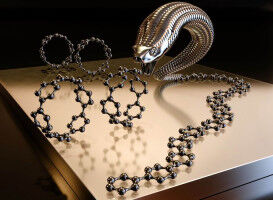
Scientists at Oxford University have shown for the first time that molecular cages made from DNA can enter and survive inside living cells. The work, a collaboration between physicists and molecular neuroscientists at Oxford, shows that artificial DNA cages that could be used to carry cargoes of drugs can enter living cells, potentially leading to new methods of drug delivery. A report of the research is published online in the journal ACS Nano . The cages developed by the researchers are made from four short strands of synthetic DNA. These strands are designed so that they naturally assemble themselves into a tetrahedron (a pyramid with four triangular faces) around 7 nanometres tall. The Oxford researchers have previously shown that it is possible to assemble these cages around protein molecules, so that the protein is trapped inside, and that DNA cages can be programmed to open when they encounter specific 'trigger' molecules that are found inside cells. "these results are an important first step towards proving that DNA cages could be used to deliver cargos, such as drugs, inside living cells" Professor Andrew Turberfield In the new experiment they introduced fluorescently-labelled DNA tetrahedrons into human kidney cells grown in the laboratory.
TO READ THIS ARTICLE, CREATE YOUR ACCOUNT
And extend your reading, free of charge and with no commitment.