 Top of a quantum dot
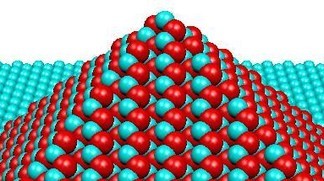
The enigmatic quantum dot is the basic building block for quantum computers. Physicists have developed a new theory to determine the optical properties of these dots based on the principles of symmetry. Physicists from EPFL have created a pyramidal dot that's just shy of 100 nanometers high, about 200 atoms on a side. By applying voltage to this miniature structure, the scientists have created a device that can emit light, which could then be used in future components of quantum computers. But the road to this new kind of computing is still long, particularly because determining the optical properties of these quantum dots is a complicated and computationally intensive endeavor. Marc-André Dupertuis and his team from EPFL's Laboratory of Physics of Nanostructures have proposed, and observationally verified, a new physical theory that not only reduces the time needed to perform these calculations, but also, and above all, allows us simply to better understand the nature of these strange objects. When voltage is applied to quantum dots, they start to vibrate. This is what physicists call the wave function, which in this case vibrates a bit like the head of a drum. One would think that simulating these vibrations would be extremely complex, but Dupertuis realized that the wave behavior, and thus the light emitted by the quantum dot, could be determined sufficiently by symmetry. Because of this, the calculation could be simplified using a familiar mathematical tool known as group theory. Better understanding on the back of a napkin
TO READ THIS ARTICLE, CREATE YOUR ACCOUNT
And extend your reading, free of charge and with no commitment.
Your Benefits
- Access to all content
- Receive newsmails for news and jobs
- Post ads