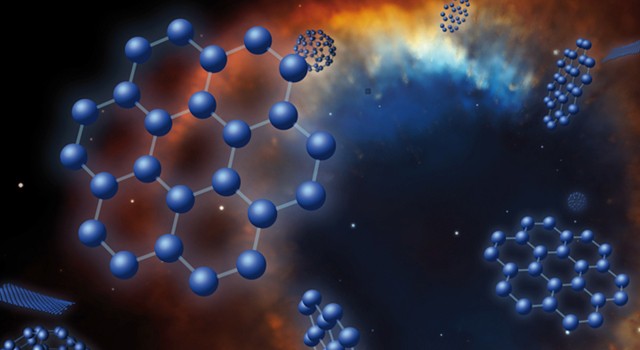
An artist’s concept of graphene, buckyballs and C70 superimposed on an image of the Helix planetary nebula, a puffed-out cloud of material expelled by a dying star. Image credit: IAC/NASA/NOAO/ESA/STScI/NRAO
NASA's Spitzer Space Telescope has spotted the signature of flat carbon flakes, called graphene, in space. If confirmed, this would be the first-ever cosmic detection of the material - which is arranged like chicken wire in flat sheets that are one atom thick. Graphene was first synthesized in a lab in 2004, and subsequent research on its unique properties garnered the Nobel Prize in 2010. It's as strong as it is thin, and conducts electricity as well as copper. Some think it's the "material of the future," with applications in computers, screens on electrical devices, solar panels and more. Graphene in space isn't going to result in any super-fast computers, but researchers are interested in learning more about how it is created. Understanding chemical reactions involving carbon in space may hold clues to how our own carbon-based selves and other life on Earth developed.
TO READ THIS ARTICLE, CREATE YOUR ACCOUNT
And extend your reading, free of charge and with no commitment.