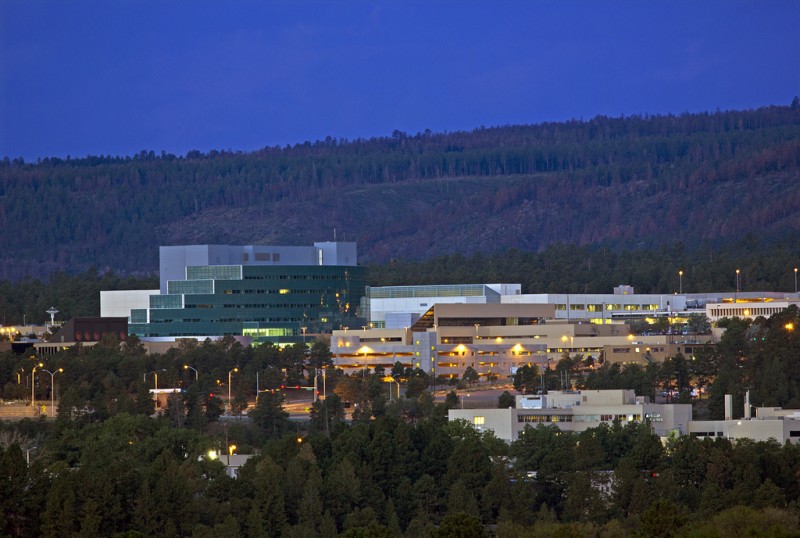
Los Alamos National Laboratory sits on top of a once-remote mesa in northern New Mexico with the Jemez mountains as a backdrop to research and innovation covering multi-disciplines from bioscience, sustainable energy sources, to plasma physics and new materials.
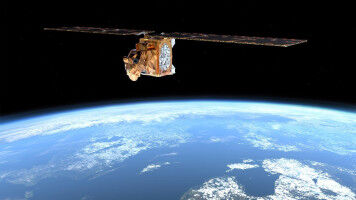
Scientists and an international research team have announced discovery of molecular oxygen ions in the upper-most atmosphere of Dione. Discovery could mean ingredients for life are abundant on icy space bodies Los Alamos National Laboratory scientists and an international research team have announced discovery of molecular oxygen ions (O2+) in the upper-most atmosphere of Dione, one of the 62 known moons orbiting the ringed planet. The research appeared recently in Geophysical Research Letters and was made possible via instruments aboard NASA's Cassini spacecraft, which was launched in 1997. Dione—discovered in 1684 by astronomer Giovanni Cassini (after whom the spacecraft was named)—orbits Saturn at roughly the same distance as our own moon orbits Earth. The tiny moon is a mere 700 miles wide and appears to be a thick, pockmarked layer of water ice surrounding a smaller rock core. As it orbits Saturn every 2.7 days, Dione is bombarded by charged particles (ions) emanating from Saturn's very strong magnetosphere. These ions slam into the surface of Dione, displacing molecular oxygen ions into Dione's thin atmosphere through a process called sputtering.
TO READ THIS ARTICLE, CREATE YOUR ACCOUNT
And extend your reading, free of charge and with no commitment.