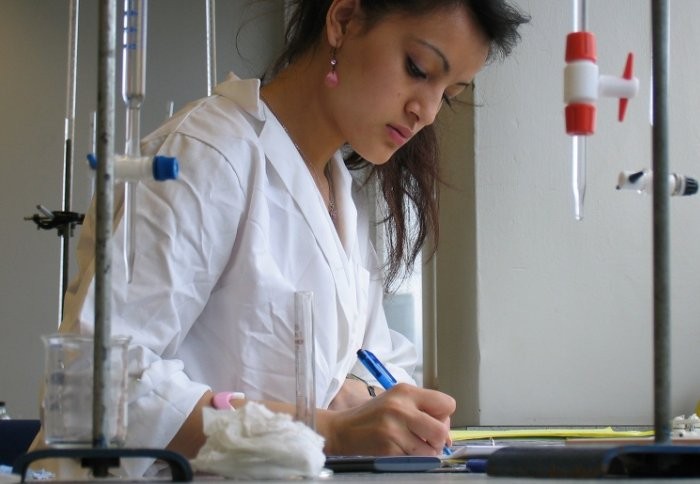
Now a scientist could become known for their published data as well as their research papers
A new free-to-access 'swap-shop', where scientists deposit and exchange data could reduce the cost of research and deliver a raft of new discoveries. The architects of such a service, say it could bring about new advances faster in all fields of science, medicine and engineering by bringing together results from different sources. This would allow data from multiple experiments to be analysed by the world's most powerful computers, to uncover previously unseen trends. Users would also be encouraged to upload the outcome of many basic experiments, doing away with the need for students and early career scientists to unnecessarily repeat them. Scientists at Imperial College London and Saarland University in Germany have been the first to simultaneously publish the results of new research in the database, called Figshare, and a traditional journal, Nature Chemistry . Henry Rzepa is Professor of Computational Chemistry at Imperial and one of the university scientists pioneering the Figshare service. Why is this such a big deal for science? "Reproducibility, or the ability to repeat the outcome of your experiments, is a cornerstone in science. It is important that scientific research be open and transparent and all research data is freely accessible to anybody. For example, it is estimated that less than 20% of data collected in chemistry is ever made available in an open manner. "Agencies including the UK Government's funding body, Research Councils UK, have been calling for scientists to share all the outcomes of all research supported by the public purse and sharing data like this could even improve the transparency of privately funded research." What has happened to all this information in the past?
TO READ THIS ARTICLE, CREATE YOUR ACCOUNT
And extend your reading, free of charge and with no commitment.