Stars can be late parents
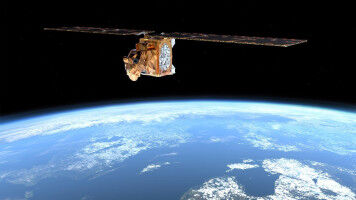
Using the unique capabilities of ESA's Herschel space observatory, astronomers have accurately 'weighed' a star's disc, finding it still has enough mass to spawn 50 Jupiter-sized planets, several million years after most other stars have already given birth. Proto-planetary discs contain all the raw ingredients for building planets. They are composed mainly of cold molecular hydrogen gas, which is highly transparent and essentially invisible. Usually, it is much easier to measure the emission from 'contaminants' such as the small fraction of dust mixed in the gas, or other gas constituents, to make estimates of the total disc mass. In the past, this technique has caused significant uncertainties in the estimations of molecular hydrogen mass, but thanks to the far-infrared wavelength capabilities and sensitivity of Herschel, astronomers have used a new, more accurate method, using a close relative of molecular hydrogen called hydrogen deuteride, or 'heavy' molecular hydrogen. Since the ratio of 'normal' and 'heavy' molecular hydrogen gas is extremely well known from measurements in our local solar neighbourhood, this approach provides a means to 'weigh' a star's total disc mass with ten times higher accuracy than ever before. Using this technique, a substantial mass of gas was detected in a disc encircling TW Hydrae, a young star just 176 light-years away in the constellation of Hydra.