Provided
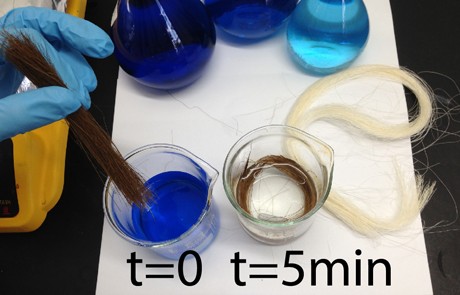
A cheap and simple process using natural fibers embedded with nanoparticles can almost completely rid water of harmful textile dyes in minutes, report Cornell and Colombian researchers who worked with native Colombian plant fibers. Dyes, such as indigo blue used to color blue jeans, threaten waterways near textile plants in South America, India and China. Such dyes are toxic, and they discolor the water, thereby reducing light to the water plants, which limits photosynthesis and lowers the oxygen in the water. The study, published in the August issue of the journal Green Chemistry, describes a proof of principle, but the researchers are testing how effectively their method treats such endocrine-disrupting water pollutants as phenols, pesticides, antibiotics, hormones and phthalates. "These molecules are contaminants that are very resilient to traditional water-purification processes, and we believe our biocomposite materials can be an option for their removal from waste water," said study co-author, Marianny Combariza, a researcher at Colombia's Universidad Industrial de Santander. Local fibers, like those made from the native Colombian fique plants ( Frucraea andina ) pictured here, were processed and then used to degrade dyes in water. The research takes advantage of nano-sized cavities found in cellulose that co-author Juan Hinestroza, Cornell associate professor of fiber science, has previously used to produce nanoparticles inside cotton fibers.
TO READ THIS ARTICLE, CREATE YOUR ACCOUNT
And extend your reading, free of charge and with no commitment.