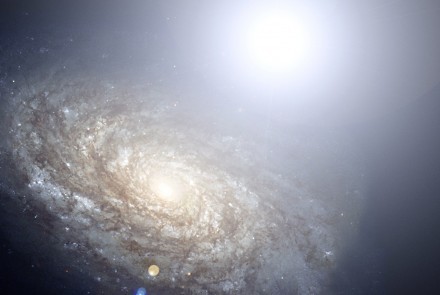
Image courtesy NASA / Paul Preuss
Astronomers searching for clues about dark energy, the mysterious force that is speeding up the expansion of the Universe, have uncovered new evidence about the nature of supernovae, finding many are lighter than scientists had expected. The findings, from an international team from the Nearby Supernova Factory project, overturn previous understanding of white dwarf stars and raise new questions about how these stars explode. "White dwarfs are dead stars, the corpses of stars that were once like our Sun. They won't explode on their own - they need another star to help blow them up,” said ANU astronomer Dr Richard Scalzo, who led the latest research. "We now know it's much easier to blow them up than we used to think." A supernova is a star that explodes and shines much more brilliantly as it reaches the end of its life. By studying "nearby” Type Ia (1a) supernovae - within a billion light years from earth - astronomers can then compare them with older and fainter supernovae even further out in space, allowing them to measure distances in the Universe. Dr Scalzo said most of the supernovae his team studied had blown up well before dinosaurs walked on Earth.
TO READ THIS ARTICLE, CREATE YOUR ACCOUNT
And extend your reading, free of charge and with no commitment.