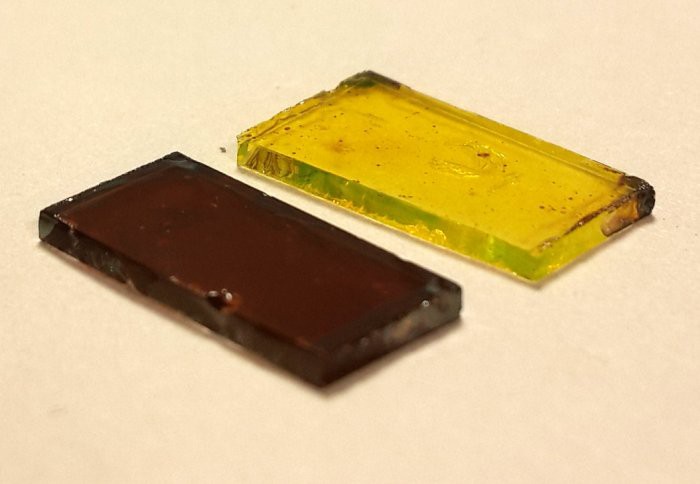
A fresh perovskite solar film (L) and a degraded film exposed to dry air and light for just six days (R).
Imperial researchers have determined how oxygen and light degrade promising new solar cells and have proposed an innovative solution. Solar cells harness energy from the Sun and provide an alternative to non-renewable energy sources like fossil fuels. However, they face challenges from costly manufacturing processes and poor efficiency - the amount of sunlight converted to useable energy. Light-absorbing materials called organic lead halide perovskites are used in a new type of solar cells that have shown great promise, as they are more flexible and cheaper to manufacture than traditional solar cells constructed of silicon. The efficiency of perovskite cells has risen rapidly from less than four per cent in 2009 to over 20 per cent today, on par with traditional solar cells. However, perovskite cells degrade rapidly in natural conditions, greatly decreasing their performance in a matter of days. This is one reason they are not currently widely used.
TO READ THIS ARTICLE, CREATE YOUR ACCOUNT
And extend your reading, free of charge and with no commitment.