Sun explorer spacecraft leaves for launch site
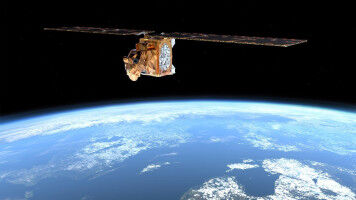
The European Space Agency's Solar Orbiter, which carries instruments proposed, designed and built at UCL, is completing final testing in Germany before travelling to Cape Canaveral, USA, for launch in February 2020. Solar Orbiter will perform unprecedented close-up observations of the Sun, to help answer questions about why the Sun's corona is so hot and why the solar wind flows away from the Sun so rapidly, typically at 400-500 kilometres per second. Understanding these phenomena is crucial in predicting solar storms, which have the potential to knock out communication systems on Earth. Although some instruments will start data taking within a few months of launch, the full science mission begins about two years after lift-off. The spacecraft will take two and a half years to reach its target vantage point within 0. Astronomical Units of the Sun. This is just under a third of the distance from the Sun to the Earth.