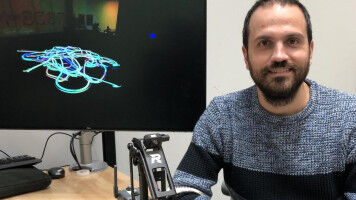
The vey low frequency receiver at the Halley Research Station, Antarctica. Photo: British Antarctic Survey
The vey low frequency receiver at the Halley Research Station, Antarctica. Photo: British Antarctic Survey - The eerie and usually unheard sounds of space captured in the deep cold of Antarctica could be the next hot hit, thanks to a new research, musical and artistic collaboration. The unique project takes recordings of Earth's natural radio sounds, normally not audible to the human ear, and stunning imagery captured at the Halley Research Station in Antarctica to create a 90-minute soundtrack set to piano. The resulting album, Aurora Musicalis , is released today. The trio behind the space soundtrack are musician and composer Dr Kim Cunio from The Australian National University's School of Music, Dr Nigel Meredith a space weather researcher based at the British Antarctic Survey, and Cambridge-based, artist-engineer, Diana Scarborough. For the soundtrack Dr Meredith worked with four years of data from the Halley Very Low Frequency (VLF) receiver and carefully selected a day featuring a rich variety of radio emissions made by the planet, including spherics, whistlers and chorus. This data is normally used to investigate space weather storms, the impact of space weather on our climate and to detect lighting, but conversion to sound reveals a series of weird and wonderful noises, known as the 'sounds of space'.
TO READ THIS ARTICLE, CREATE YOUR ACCOUNT
And extend your reading, free of charge and with no commitment.