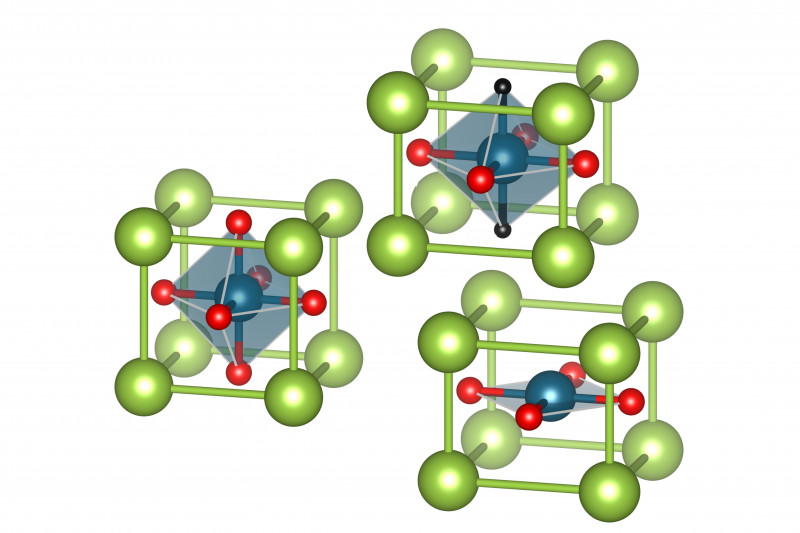
1/2 images Nickelate When hydrogen is incorporated into the nickelate structure, it is not a superconductor. When hydrogen is incorporated into the nickelate structure, it is not a superconductor.
1/2 images Nickelate When hydrogen is incorporated into the nickelate structure, it is not a superconductor. When hydrogen is incorporated into the nickelate structure, it is not a superconductor. Nickel is supposed to herald a new age of superconductivity - but this is proving more difficult than expected. Scientists at TU Wien (Vienna) can now explain why. Last summer, a new age for high-temperature superconductivity was proclaimed - the nickel age. It was discovered that there are promising superconductors in a special class of materials, the so-called nickelates, which can conduct electric current without any resistance even at high temperatures. However, it soon became apparent that these initially spectacular results from Stanford could not be reproduced by other research groups.
TO READ THIS ARTICLE, CREATE YOUR ACCOUNT
And extend your reading, free of charge and with no commitment.