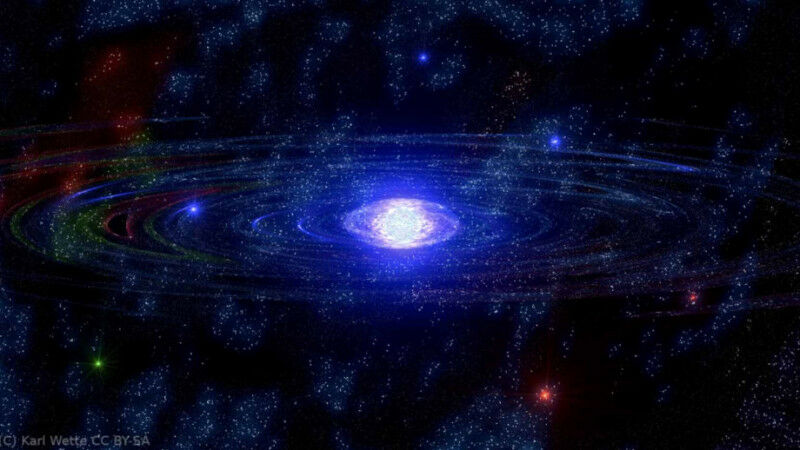
Credit: K. Wette.
Credit: K. Wette. Remember the days before working from home? It's Monday morning, you're running late to beat the traffic, and you can't find your car keys. What do you do? You might try moving from room to room, casting your eye over every flat surface, in the hope of spotting the missing keys. Of course, this assumes they are somewhere in plain sight; if they're hidden under a newspaper, or fallen behind the sofa, you'll never spot them. Or you might be convinced you last saw the keys in the kitchen and search for them there: inside every cupboard, the microwave, dishwasher, back of the fridge, etc. Of course, if you left them on your bedside table, upending the kitchen is doomed to failure. So, which is the best strategy? Scientists face a similar conundrum in the hunt for gravitational waves-ripples in the fabric of space and time-from rapidly spinning neutron stars.
TO READ THIS ARTICLE, CREATE YOUR ACCOUNT
And extend your reading, free of charge and with no commitment.