A ’super-puff’ planet like no other
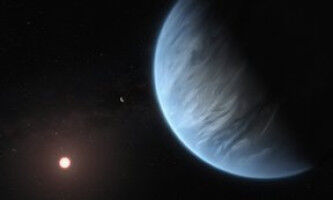
The core mass of the giant exoplanet WASP-107b is much lower than what was thought necessary to build up the immense gas envelope surrounding giant planets like Jupiter and Saturn, according to a Canadian-led team of astronomers, including McGill University Professor Eve Lee. This intriguing discovery by Caroline Piaulet of the Université de Montréal under the supervision of Björn Benneke suggests that gas-giant planets form a lot more easily than previously believed. Published in Astronomical Journal by a team of astronomers from Canada, the U.S. Germany and Japan, the new analysis of WASP-107b's internal structure has big implications. "This study pushes the boundaries of our theoretical understanding of how giant-sized planets form. WASP-107b is one of the puffiest planets out there, and we need a creative solution to explain how these tiny cores can build such massive gas envelopes," says co-author Eve Lee , Assistant Professor in the Department of Physics at McGill University and McGill Space Institute. As big as Jupiter but 10 times lighter WASP-107b was first detected in 2017 around WASP-107, a star about 212 light years from Earth in the Virgo constellation. The planet is very close to its star - over 16 times closer than the Earth is to the Sun.