Research at the interface of chemistry, materials science and mechanics [Picture: Secundum naturam]
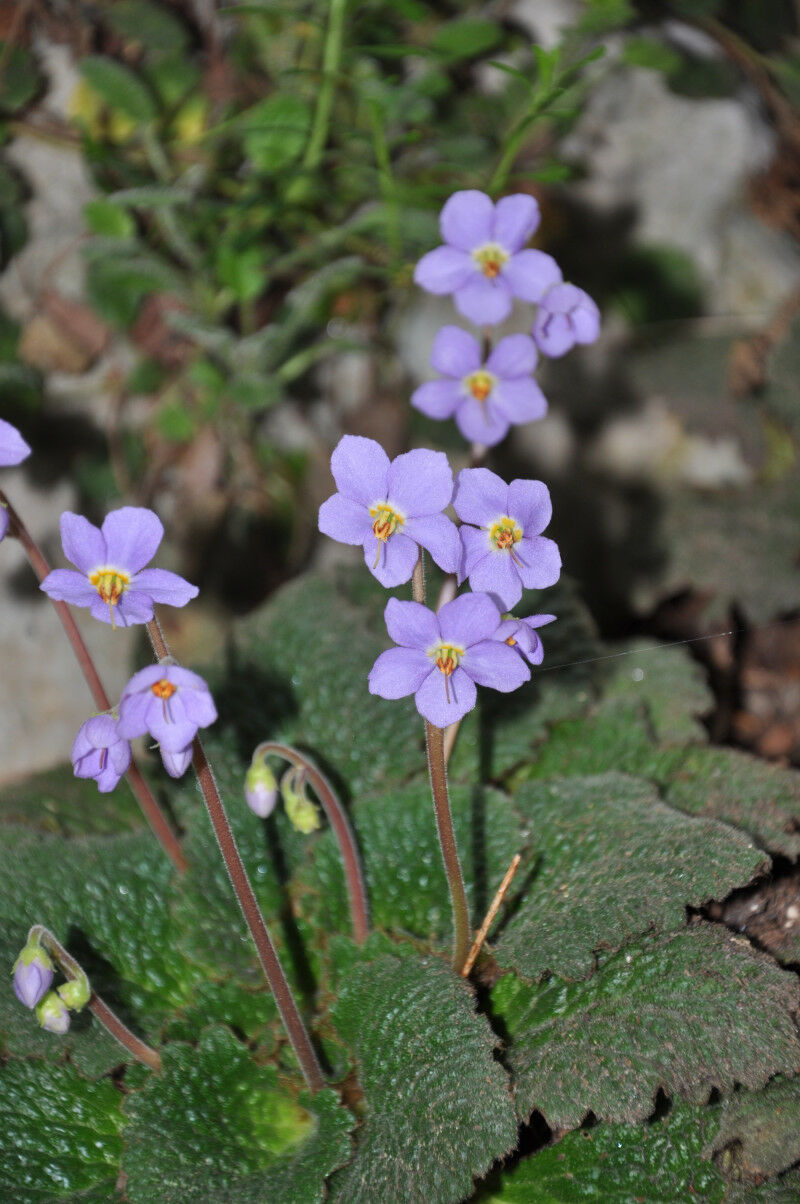
Research at the interface of chemistry, materials science and mechanics [ Picture: Secundum naturam] - Research groups led by the polymer chemist Prof. Sabine Ludwigs and the mechanic Prof. Holger Steeb at the University of Stuttgart have developed active double-layer structures from intelligent polymers based on the structures of a flowering plant, which lean of their own accord in response to humidity and then regain their original shape. They have also integrated the experimental results into a model which can be used to predict and control the characteristics of the curvature. This was reported in the renowned scientific journal Advanced Materials. The principle could for example be used for soft robotic arms or in biomedicine. Ramonda myconi, the Pyrenean violet, impresses with its little purple flowers and its very particular leaves. They are made up of several layers, of which one can absorb water and swell up as a result while the others remain robust. In extremely dry weather, the store of water becomes depleted and the leaf starts to bend.
TO READ THIS ARTICLE, CREATE YOUR ACCOUNT
And extend your reading, free of charge and with no commitment.