Despite the fuzziness of the quantum world, measurements of quantum particles yield precise outcomes in our everyday world. How does the act of measuring achieve this transformation?
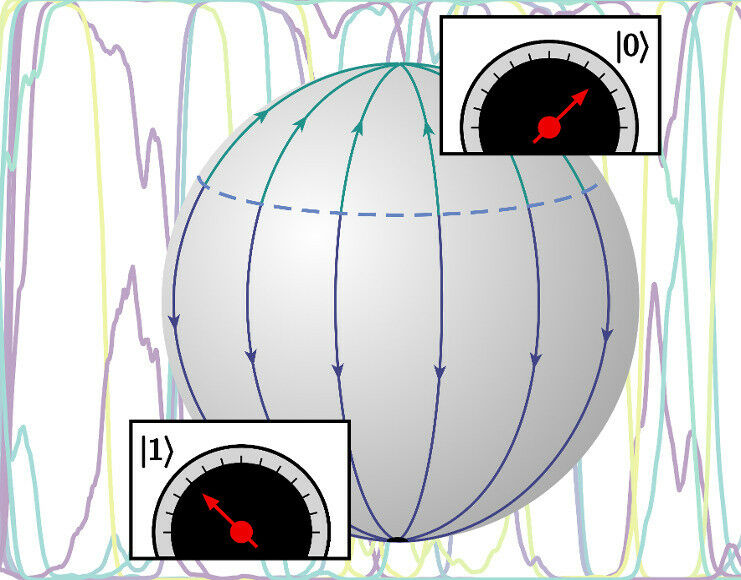
Despite the fuzziness of the quantum world, measurements of quantum particles yield precise outcomes in our everyday world. How does the act of measuring achieve this transformation? - The quantum world and our everyday world are very different places. In a publication that appeared as the "Editor's Suggestion" in Physical Review A this week, UvA physicists Jasper van Wezel and Lotte Mertens and their colleagues investigate how the act of measuring a quantum particle transforms it into an everyday object. Quantum mechanics is the theory that describes the tiniest objects in the world around us, ranging from the constituents of single atoms to small dust particles. This microscopic realm behaves remarkably differently from our everyday experience - despite the fact that all objects in our human-scale world are made of quantum particles themselves. This leads to intriguing physical questions: why are the quantum world and the macroscopic world so different, where is the dividing line between them, and what exactly happens there? - Measurement problem. One particular area where the distinction between quantum and classical becomes essential is when we use an everyday object to measure a quantum system.
TO READ THIS ARTICLE, CREATE YOUR ACCOUNT
And extend your reading, free of charge and with no commitment.