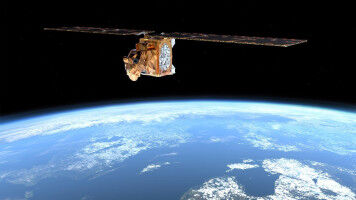
Starshot light-sail. Credit: Breakthrough Initiatives
Starshot light-sail. Credit: Breakthrough Initiatives - Scientists from The Australian National University (ANU) have designed a new type of space-craft propulsion system as part of an ambitious international project that aims to explore the worlds surrounding our second nearest star, Alpha Centauri. The Breakthrough Starshot project calls for the design of an ultra-lightweight spacecraft, which acts as a light-sail, to travel with unprecedented speed over tens of trillions of kilometres to the star about four lightyears away, reaching the destination within 20 years. The sheer scale and size of the interstellar distances between solar systems is difficult for most people to comprehend. Travel from Earth to Alpha Centauri using today's conventional spacecraft would take more than 100 lifetimes. In a recent paper published in the Journal of the Optical Society of America B, the ANU team, with funding support from Breakthrough Initiatives, outlines their design concept for the laser propulsion system to be used to launch the probes from Earth. Lead author Dr Chathura Bandutunga said the light to power the sail will come from the Earth's surface - a giant laser array with millions of lasers acting in concert to illuminate the sail and push it onto its interstellar journey. "To cover the vast distances between Alpha Centauri and our own solar system, we must think outside the box and forge a new way for interstellar space travel," Dr Bandutunga, from the Applied Metrology Laboratories at the ANU Centre for Gravitational Astrophysics, said. "Once on its way, the sail will fly through the vacuum of space for 20 years before reaching its destination.
TO READ THIS ARTICLE, CREATE YOUR ACCOUNT
And extend your reading, free of charge and with no commitment.