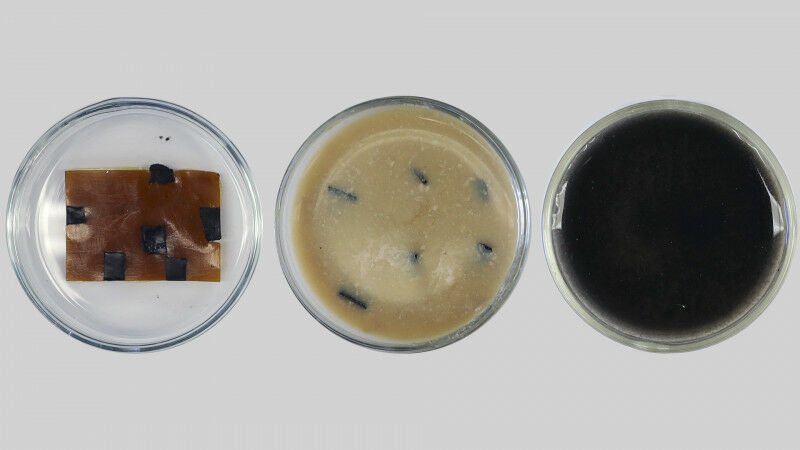
Two different PDK plastics in acidic solution, demonstrating how each polymer easily breaks down into individual monomers in different steps conducted at different temperatures, which allows for complete recycling of both plastics. (Credit: Jérémy Demarteau/Berkeley Lab)
Berkeley Lab technology provides low-carbon manufacturing solution for plastic products. Two different PDK plastics in acidic solution, demonstrating how each polymer easily breaks down into individual monomers in different steps conducted at different temperatures, which allows for complete recycling of both plastics. (Credit: Jérémy Demarteau/Berkeley Lab) By Alison Hatt Scientists have designed a new material system to overcome one of the biggest challenges in recycling consumer products: mixed-plastic recycling. Their achievement will help enable a much broader range of fully recyclable plastic products and brings into reach an efficient circular economy for durable goods like automobiles. We generate staggering quantities of plastic and plastic-containing products each year, but only a tiny fraction of that plastic can be recovered and used to manufacture products of similar quality. That's because most products, from food-packaging films and single-use bags to sneakers and electronics, are made from mixtures of different plastics, and once they are mixed, those plastics can't be recovered and used to make new bags or sneakers. Instead, most of it ends up in landfills, incinerators, or oceans.
TO READ THIS ARTICLE, CREATE YOUR ACCOUNT
And extend your reading, free of charge and with no commitment.