output-01
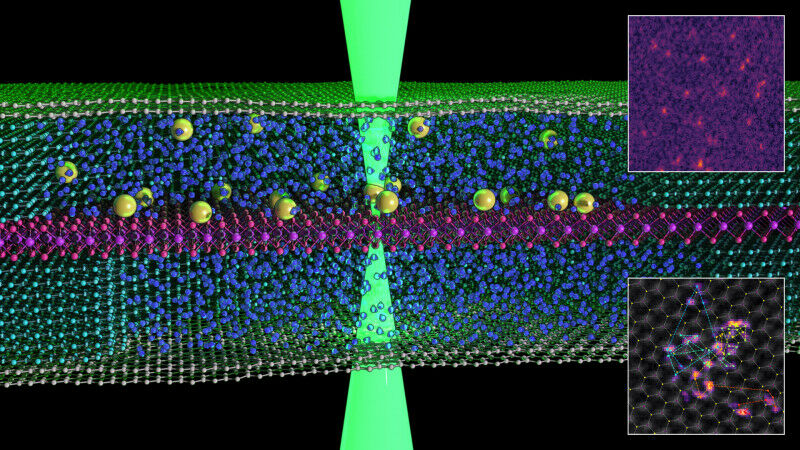
output-01 - Graphene scientists from The University of Manchester have created a novel 'nano-petri dish' using two-dimensional (2D) materials to create a new method of observing how atoms move in liquid. Publishing in the journal, Nature , the team led by researchers based at the National Graphene Institute (NGI) used stacks of 2D materials including graphene to trap liquid in order to further understand how the presence of liquid changes the behaviour of the solid. The team were able to capture images of single atoms 'swimming' in liquid for the first time. The findings could have widespread impact on the future development of green technologies such as hydrogen production. When a solid surface is in contact with a liquid, both substances change their configuration in response to the proximity of the other. Such atomic scale interactions at solid-liquid interfaces govern the behaviour of batteries and fuel cells for clean electricity generation, as well as determining the efficiency of clean water generation and underpinning many biological processes. One of the lead researchers, Professor Sarah Haigh, commented: "Given the widespread industrial and scientific importance of such behaviour it is truly surprising how much we still have to learn about the fundamentals of how atoms behave on surfaces in contact with liquids.
TO READ THIS ARTICLE, CREATE YOUR ACCOUNT
And extend your reading, free of charge and with no commitment.