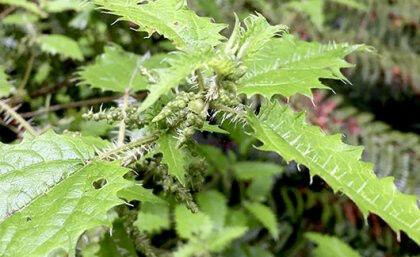
Ongaonga, despite its danger, could help researchers develop treatments for pain. Image: supplied.
Ongaonga, despite its danger, could help researchers develop treatments for pain. Image: supplied. Researchers at The University of Queensland have found that a native New Zealand stinging tree produces toxins that could hold clues for future pain medication. In a quest to find new molecules that affect pain pathways, Dr Thomas Durek , Dr Sam Robinson and a team from UQ's Institute for Molecular Bioscience (IMB) studied toxins from the tree nettle known as ongaonga, one of New Zealand's most poisonous plants that can cause painful stings that last for days, and in severe cases can even be fatal. Dr Robinson and a team from UQ previously investigated toxins found in an Australian gympie-gympie stinging tree but found the New Zealand tree nettle toxins activated pain receptors in a new way. "We discovered that the New Zealand nettle tree toxins target the same receptor as their Australian counterparts, but they cause pain in a different way," Dr Robinson said. "The Australian stinging tree and New Zealand tree nettle are both members of the nettle family, but separated millions of years ago and have evolved differently.
TO READ THIS ARTICLE, CREATE YOUR ACCOUNT
And extend your reading, free of charge and with no commitment.