EP_012_sugar_big view
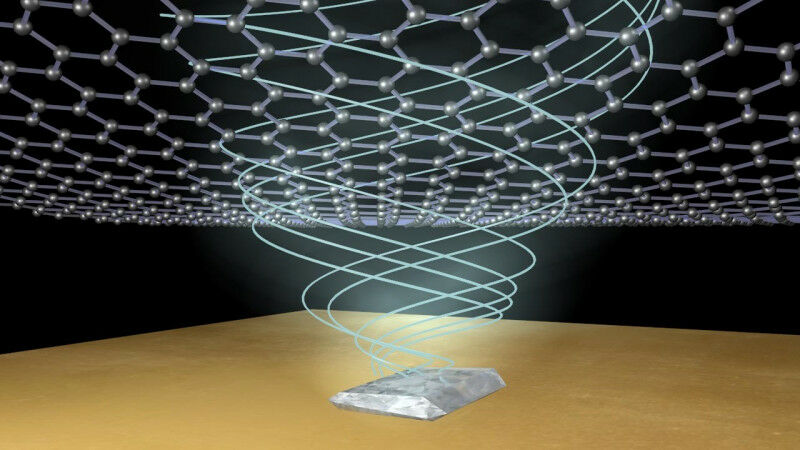
EP_012_sugar_big view - A research team led by The University of Manchester's National Graphene Institute (NGI) has developed a tunable graphene-based platform that allows for fine control over the interaction between light and matter in the terahertz (THz) spectrum, revealing rare phenomena known as exceptional points. The work - co-authored by researchers from Penn State College of Engineering in the US - is published today (8 April) in Science . The work could advance optoelectronic technologies to better generate, control and sense light and potentially communications, according to the researchers. They demonstrated a way to control THz waves, which exist at frequencies between those of microwaves and infrared waves. The findings could contribute to the development of beyond-5G wireless technology for high-speed communication networks. Weak and strong interactions. Light and matter can couple, interacting at different levels: weakly, where they might be correlated but do not change each other's constituents; or strongly, where their interactions can fundamentally change the system.
TO READ THIS ARTICLE, CREATE YOUR ACCOUNT
And extend your reading, free of charge and with no commitment.