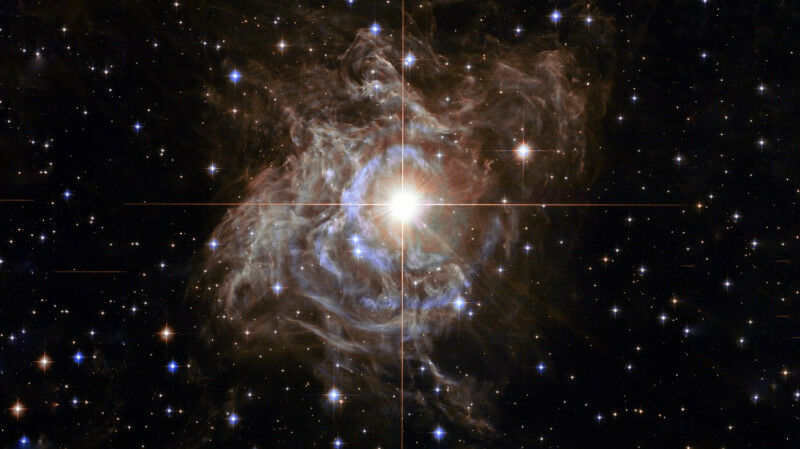
 This Hubble image shows RS Puppis, a type of variable star known as a Cepheid variable.
This Hubble image shows RS Puppis, a type of variable star known as a Cepheid variable. ©Hubble Legacy Archive, NASA, ESA. When it comes to measuring how fast the Universe is expanding, the result depends on which side of the Universe you start from. A recent EPFL study has calibrated the best cosmic yardsticks to unprecedented accuracy, shedding new light on what's known as the Hubble tension. The Universe is expanding - but how fast exactly? The answer appears to depend on whether you estimate the cosmic expansion rate - referred to as the Hubble's constant, or H0 - based on the echo of the Big Bang (the cosmic microwave background, or CMB) or you measure H0 directly based on today's stars and galaxies. This problem, known as the Hubble tension, has puzzled astrophysicists and cosmologists around the world. A study carried out by the Stellar Standard Candles and Distances research group, lead by Richard Anderson at EPFL's Institute of Physics, adds a new piece to the puzzle.
TO READ THIS ARTICLE, CREATE YOUR ACCOUNT
And extend your reading, free of charge and with no commitment.
Your Benefits
- Access to all content
- Receive newsmails for news and jobs
- Post ads