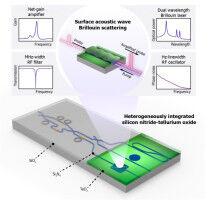
 Scanning electron microscope image of an ultra-coherent superconducting electro-mechanical system.
Scanning electron microscope image of an ultra-coherent superconducting electro-mechanical system. Amir Youssefi / EPFL Scientists at EPFL have successfully extended the quantum state lifetime of a mechanical oscillator, a development with vast implications for quantum computing and communication systems. Over the past decade, scientists have made tremendous progress in generating quantum phenomena in mechanical systems. What seemed impossible only fifteen years ago has now become a reality, as researchers successfully create quantum states in macroscopic mechanical objects. By coupling these mechanical oscillators to light photons - known as "optomechanical systems"-, scientists have been able to cool them down to their lowest energy level close to the quantum limit, "squeeze them" to reduce their vibrations even further, and entangle them with each other. These advancements have opened up new opportunities in quantum sensing, compact storage in quantum computing, fundamental tests of quantum gravity, and even in the search for dark matter. In order to efficiently operate optomechanical systems in the quantum regime, scientists face a dilemma.
TO READ THIS ARTICLE, CREATE YOUR ACCOUNT
And extend your reading, free of charge and with no commitment.
Your Benefits
- Access to all content
- Receive newsmails for news and jobs
- Post ads