Space Nebula in the Constellation Orion
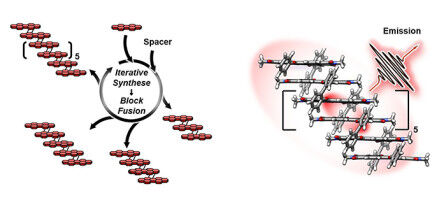
Space Nebula in the Constellation Orion © ESA/Hubble & NASA, ESO, K. Noll - A team of scientists from Austria and France has discovered a new abiotic pathway for the formation of peptide chains from amino acids - an important chemical step in the origin of life. The current study provides strong evidence that this crucial step for the emergence of life can indeed take place even in the very inhospitable conditions of space. The origin of life is one of the great questions of mankind. One of the prerequisites for the emergence of life is the abiotic - not caused by living beings, chemical - production and polymerization of amino acids, the building blocks of life. "Two scenarios are being discussed for the emergence of life on Earth: On the one hand, the first-time generation of such amino acid chains on Earth and, on the other hand, the input from outer space," explains Tilmann Märk from the University of Innsbruck. "For the latter, such amino acid chains would have to be created under the very unfavorable and inhospitable conditions for this in space." A team of researchers led by Michel Farizon of the University of Lyon and Tilmann Märk of the University of Innsbruck has now made a significant discovery in the field of abiotic peptide chain formation from amino acids for the smallest occurring amino acid, glycine, a molecule that has been observed extraterrestrially several times in recent years. A recent study published in the Journal of Physical Chemistry A , which also made the cover of the journal, shows that small clusters of glycine molecules exhibit polymerization upon energy input.
TO READ THIS ARTICLE, CREATE YOUR ACCOUNT
And extend your reading, free of charge and with no commitment.
Your Benefits
- Access to all content
- Receive newsmails for news and jobs
- Post ads