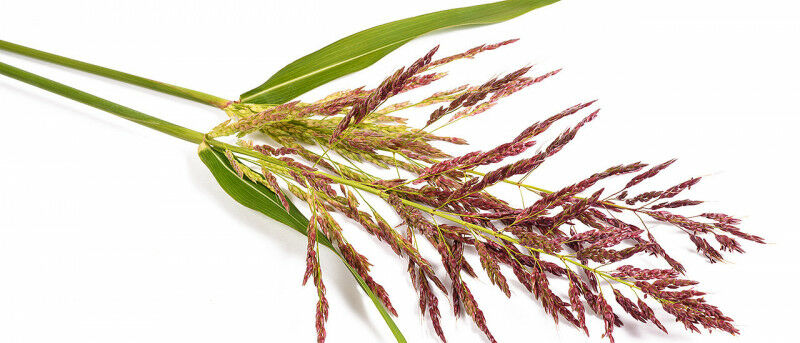
Johnsongrass is considered a so-called problem weed because of its herbicide resistance. (Image: scisettialfio / iStockphot.com)
Johnsongrass is considered a so-called problem weed because of its herbicide resistance. (Image: scisettialfio / iStockphot.com) Together with the Max Planck Institute for Evolutionary Biology, Würzburg biology professor Chaitanya S. Gokhale has developed a mathematical model on population dynamics and evolution of herbicide resistance in perennial weeds. Weeds have always been a significant problem for agriculture. They compete with crops for resources such as light, water and nutrients, which can result in severe yield losses. Researchers at the Max Planck Institute for Evolutionary Biology in Plön and the Julius-Maximilians-Universität Würzburg (JMU) have now developed a mathematical model that enables predictions for a specific weed. From the Würzburg side, Chaitanya S. Gokhale, professor of theoretical biology, was involved in the study. Herbicides as a Milestone.
TO READ THIS ARTICLE, CREATE YOUR ACCOUNT
And extend your reading, free of charge and with no commitment.