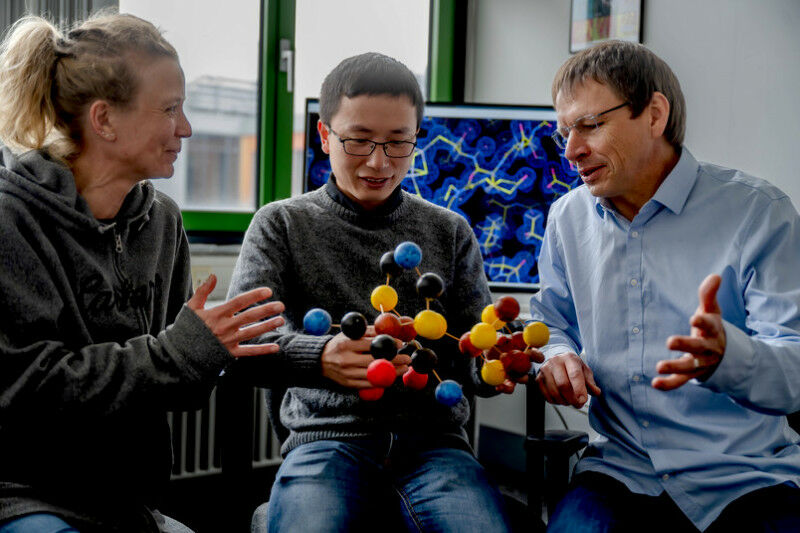
 Anja Hemschemeier, Jifu Duan and Eckhard Hofmann (from left) worked together on the study.
Anja Hemschemeier, Jifu Duan and Eckhard Hofmann ( from left ) worked together on the study. RUB, Marquard Formaldehyde can inhibit enzymes that produce hydrogen particularly efficiently. Researchers from Bochum have discovered how this can be prevented. Enzymes from microorganisms can produce hydrogen (H
2) under certain conditions, which makes them potential biocatalysts for biobased H
2 technologies. In order to make this hydrogen production efficient, researchers are trying to identify and eliminate possible limiting factors. These include formaldehyde, which occurs naturally as a metabolic product in cells and inhibits the particularly efficient [FeFe] hydrogenase. A team from the work group Photobiotechnology at Ruhr University Bochum, Germany, was able to elucidate and switch off the underlying mechanism.
TO READ THIS ARTICLE, CREATE YOUR ACCOUNT
And extend your reading, free of charge and with no commitment.
Your Benefits
- Access to all content
- Receive newsmails for news and jobs
- Post ads