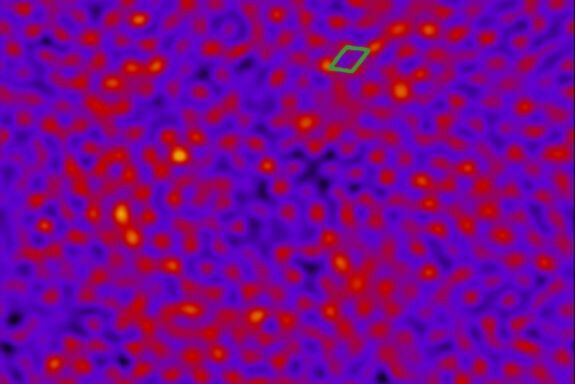
Microscope image on which individual atoms are visible.
Microscope image on which individual atoms are visible. The friction in our joints is extremely low - how is that physically possible at all? Measurements at TU Wien provide explanations and ideas for new treatment methods . Friction and wear as an eternal nuisance - this is as familiar in technology as it is in medicine. Whether it's a manual transmission or a knee joint, you always want moving parts to slide over each other with as little friction as possible, so that energy expenditure and wear are kept to a minimum. Nature solves this problem in an admirably effective way: The friction in a healthy joint is orders of magnitude smaller than in moving parts of a machine. How nature manages this is difficult to explain: It requires an understanding of the complicated interplay of different molecules at the boundary layers. An important discovery has now been made at the Vienna University of Technology, with support from Canada and China.
TO READ THIS ARTICLE, CREATE YOUR ACCOUNT
And extend your reading, free of charge and with no commitment.