


Chemistry - Mar 19
Leipzig University and Center for the Transformation of Chemistry conclude collaboration agreement
Leipzig University and Center for the Transformation of Chemistry conclude collaboration agreement


Chemistry - Feb 2
New material for use in the chemical industry capable of transforming CO2 into high value-added compounds
New material for use in the chemical industry capable of transforming CO2 into high value-added compounds
Chemistry - Feb 2
Material for modulating metal-organic frameworks for use in the chemical industry capable of transforming CO2 into high value-added compounds
Material for modulating metal-organic frameworks for use in the chemical industry capable of transforming CO2 into high value-added compounds
Chemistry - Jan 15
University of Glasgow spin-out hails milestone breakthrough in hydrogen energy process
University of Glasgow spin-out hails milestone breakthrough in hydrogen energy process

Life Sciences - Dec 17
Manchester Institute of Biotechnology welcomes three new professors, driving innovation in chemical and biological sciences
Manchester Institute of Biotechnology welcomes three new professors, driving innovation in chemical and biological sciences

Health - Nov 21
New Collaborative Research Centres: A Resounding Success for the University and the University Hospital
New Collaborative Research Centres: A Resounding Success for the University and the University Hospital
Chemistry - Nov 6
The scientific community and industry are seeking ways to accelerate the application of perovskite solar cells
The scientific community and industry are seeking ways to accelerate the application of perovskite solar cells

news
Chemistry
Results 1 - 20 of 3958.
Chemistry - Environment - 25.03.2026 - Today
Chemists use electricity to make building blocks for medicines and plastics from biomass
Chemists at Wageningen University & Research (WUR) and Utrecht University have developed a new method to produce a promising chemical building block from biomass. This compound can serve as a precursor for useful products such as plastics, pharmaceuticals, and flavour and fragrance ingredients. Conventionally, its production requires hazardous chemicals.
Physics - Chemistry - 24.03.2026
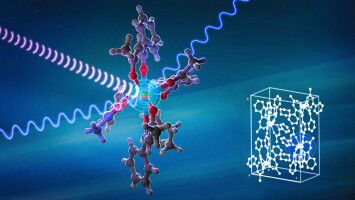
A research team at the Karlsruhe Institute of Technology (KIT) has made an important advance in quantum physics and materials research: For the first time, nuclear spins in a molecular material could be optically initialized, controlled and read out. Nuclear spins are considered to be particularly stable carriers of quantum information due to their low interaction with the environment.
Chemistry - Physics - 23.03.2026

Chemistry: A sophisticated process stacks dye molecules in such a way that their luminosity increases significantly as their size grows - a significant step forward for the electronics of tomorrow. In nature, a certain size is often a prerequisite for biomolecules to perform their specific functions.
Chemistry - Physics - 16.03.2026

Researchers have produced exceptionally long chains of an electrically conductive polymer known as poly(p-phenylene) (PPP). The longest of these chains measure almost one micrometre in length - roughly one thousandth of a millimetre. This makes them nearly ten times longer than chains previously achieved.
Materials Science - Chemistry - 05.03.2026
New research could help lithium-ion batteries reach their full potential
New research into why lithium-ion batteries tend to lose power over cycles of charge and discharge could help unlock the next generation of more durable, fast-charging power cells. An international team of chemists and engineers from the UK, China, and Germany have published a paper which challenges the conventional assumptions about how batteries should be optimised to maximise performance, highlighting the importance of electrical, rather than ionic, conductivity.
Life Sciences - Chemistry - 05.03.2026
Microbial ancestor of complex life was more sophisticated than previously thought
The molecular building blocks that make up the cells of humans, animals and plants so sophisticated appear to be older than scientists previously assumed. They were already present in our single-celled ancestor that lived 2.5 billion years ago. That is the conclusion of Wageningen and American researchers in two studies published in Nature and Nature Microbiology.
Materials Science - Chemistry - 05.03.2026

Solid-state batteries do not use flammable liquid electrolytes and are therefore safer than conventional lithium-ion batteries.
Chemistry - Environment - 04.03.2026

Methanol is a key starting material for chemical products. Researchers from ETH Zurich can now produce this precursor from CO2 and hydrogen with high efficiency by using isolated metal atoms as catalysts. Every chemical reaction faces a barrier: for substances to react with one another, it is first necessary to supply energy.
Materials Science - Chemistry - 25.02.2026
Wageningen researchers break materials theory with a new type of plastic
Researchers at Wageningen University & Research have developed a new type of plastic that, according to materials theory, should not be able to exist. Its properties sit somewhere between those of glass and plastic: it is easy to (re)shape, yet resistant to impact. This unusual combination is possible because the building blocks of the material are not held together by chemical bonds, but by physical forces.
Chemistry - Materials Science - 25.02.2026

A team from the University of Stuttgart and international researchers have succeeded in making perovskite solar cells more efficient and more resistant to environmental influences. This is another important step towards the application of a technology that holds great promise for photovoltaics. Optimal material mixture sought Perovskite solar cells are a promising technology for photovoltaics.
Chemistry - Physics - 19.02.2026

Flexible electronics are often sold on a simple promise: bendable screens, lightweight solar cells or wearable devices that can bend and flex without breaking. But what does that 'flexibility' actually look like at the molecular scale, and how does it affect performance? Researchers led by the University of Cambridge say they have taken a first step towards answering this question.
Chemistry - 19.02.2026

Chemists synthesise high-tensile ring molecules through photocatalysis / Components for drug development When developing new drugs, one thing is particularly important: finding and producing the right molecules that can be used as active ingredients. The key elements of some drugs, such as penicillin, are small, trior quadripartite ring molecules.
Life Sciences - Chemistry - 18.02.2026
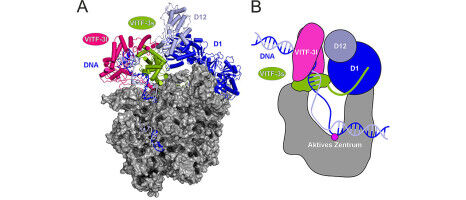
A research team at the University of Würzburg has deciphered another aspect of poxviral gene activation. The study reveals a unique viral mechanism: a molecular ring anchors the viral copying machine to the DNA. Compared to other organisms, viruses have very small genomes. Their genetic material is not sufficient to maintain their own metabolism, produce proteins or reproduce independently.
Chemistry - Materials Science - 16.02.2026

ISTA physicists explain the exceptional energy-harvesting efficiency of perovskites Despite being riddled with impurities and defects, solution-processed lead-halide perovskites are surprisingly efficient at converting solar energy into electricity. Their efficiency is approaching that of silicon-based solar cells, the industry standard.
Chemistry - Physics - 12.02.2026

Researchers discover a crystalline compound that opens the door to a new carbon chemistry An international research team, led by scientists from the University of Valencia, has synthesised a "new crystalline compound": a calcium silicon double carbonate formed under conditions of pressure and temperature similar to those found in the Earth's mantle.
Physics - Chemistry - 29.01.2026

From today, scientists in the Netherlands can use the most accurate time and frequency signal ever available in our country. Thanks to a new network service from SURF, developed in collaboration with the National Metrology Institute VSL and the international White Rabbit Collaboration, this extremely precise signal is now accessible via the SURF network.
Physics - Chemistry - 27.01.2026
Discovered by chance: the refractive index microscope
By combining completely different microscopy methods, the optical density of a sample can be measured with pinpoint accuracy. The original intention was to examine biological samples on a molecular scale and encountered stubborn problems. But then it was discovered that the cause of the annoying measurement inaccuracy, the variable refractive index of the sample, can be precisely determined and thus becomes a highly interesting measurement result itself - when two fundamentally completely different microscopy methods are combined.
Chemistry - Astronomy & Space - 23.01.2026

New molecule: For the first time, a complex, ring-shaped molecule containing 13 atoms-including sulfur-has been detected in interstellar space, based on laboratory measurements. Bridging lab and space: The discovery closes a critical gap by linking simple chemistry in space with the complex organic building blocks found in comets and meteorites.
Life Sciences - Chemistry - 23.01.2026
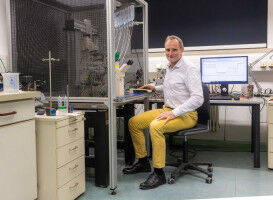
Researchers at Leipzig University and TU Dresden have succeeded in developing biological switches that can selectively turn ion channels on and off using light pulses. Initial applications show that it is possible, for example, to stimulate nerve cells in the brain or to control the release of adrenaline from cells of the adrenal gland and the movement of the small intestine using light stimuli.
Physics - Chemistry - 20.01.2026
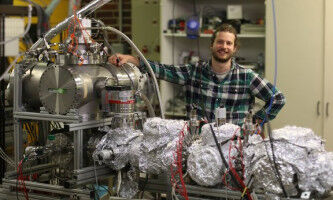
At the Department of Ion Physics and Applied Physics at the University of Innsbruck, a research team has succeeded for the first time in storing electrically charged helium nanodroplets in an ion trap for up to one minute. This extends the time window for experiments with these extremely cold "mini-laboratories" by a factor of 10,000 compared to previous methods - and opens up new possibilities for basic research in physics and chemistry.


Chemistry - Mar 19
Leipzig University and Center for the Transformation of Chemistry conclude collaboration agreement
Leipzig University and Center for the Transformation of Chemistry conclude collaboration agreement
Chemistry - Feb 2
New material for use in the chemical industry capable of transforming CO2 into high value-added compounds
New material for use in the chemical industry capable of transforming CO2 into high value-added compounds
Chemistry - Feb 2
Material for modulating metal-organic frameworks for use in the chemical industry capable of transforming CO2 into high value-added compounds
Material for modulating metal-organic frameworks for use in the chemical industry capable of transforming CO2 into high value-added compounds
Chemistry - Jan 15
University of Glasgow spin-out hails milestone breakthrough in hydrogen energy process
University of Glasgow spin-out hails milestone breakthrough in hydrogen energy process
Life Sciences - Dec 17
Manchester Institute of Biotechnology welcomes three new professors, driving innovation in chemical and biological sciences
Manchester Institute of Biotechnology welcomes three new professors, driving innovation in chemical and biological sciences
Health - Nov 21
New Collaborative Research Centres: A Resounding Success for the University and the University Hospital
New Collaborative Research Centres: A Resounding Success for the University and the University Hospital
Chemistry - Nov 6
The scientific community and industry are seeking ways to accelerate the application of perovskite solar cells
The scientific community and industry are seeking ways to accelerate the application of perovskite solar cells