



Chemistry - Mar 19
Leipzig University and Center for the Transformation of Chemistry conclude collaboration agreement
Leipzig University and Center for the Transformation of Chemistry conclude collaboration agreement


Chemistry - Feb 2
New material for use in the chemical industry capable of transforming CO2 into high value-added compounds
New material for use in the chemical industry capable of transforming CO2 into high value-added compounds
Chemistry - Feb 2
Material for modulating metal-organic frameworks for use in the chemical industry capable of transforming CO2 into high value-added compounds
Material for modulating metal-organic frameworks for use in the chemical industry capable of transforming CO2 into high value-added compounds
Chemistry - Jan 15
University of Glasgow spin-out hails milestone breakthrough in hydrogen energy process
University of Glasgow spin-out hails milestone breakthrough in hydrogen energy process
Life Sciences - Dec 17
Manchester Institute of Biotechnology welcomes three new professors, driving innovation in chemical and biological sciences
Manchester Institute of Biotechnology welcomes three new professors, driving innovation in chemical and biological sciences

Health - Nov 21
New Collaborative Research Centres: A Resounding Success for the University and the University Hospital
New Collaborative Research Centres: A Resounding Success for the University and the University Hospital
Chemistry - Nov 6
The scientific community and industry are seeking ways to accelerate the application of perovskite solar cells
The scientific community and industry are seeking ways to accelerate the application of perovskite solar cells
news
Chemistry
Results 141 - 160 of 3959.
Computer Science - Chemistry - 04.04.2025

Publication by the University of Bonn warns of misunderstandings in handling predictive algorithms Researchers from chemistry, biology, and medicine are increasingly turning to AI models to develop new hypotheses. However, it is often unclear on which basis the algorithms come to their conclusions and to what extent they can be generalized.
Health - Chemistry - 31.03.2025

People breathing contaminated air over the course of years are at greater risk of developing numerous diseases. This is thought to be due to highly reactive components in particulate matter, which affect biological processes in the body. However, researchers from the University of Basel have now shown that precisely these components disappear within hours and that previous measurements therefore completely underestimate the quantities in which they are present.
Chemistry - Environment - 25.03.2025

Researchers from the University of Bern and the RIKEN research institute in Japan have made a significant advance in sustainable chemistry. They have succeeded in producing organic molecules through a chemical reaction based on the sustainable metals sodium and iron. This represents a more environmentally friendly alternative to conventional methods and has the potential to fundamentally change the production of pharmaceuticals and other fine chemicals.
Astronomy & Space - Chemistry - 25.03.2025

The longest organic molecules identified to date on Mars have recently been detected by scientists from the CNRS 1 , together with their colleagues from France, the United States of America, Mexico and Spain. These long carbon chains, containing up to 12 consecutive carbon atoms, could exhibit features similar to the fatty acids produced on Earth by biological activity 2 .
Chemistry - Life Sciences - 25.03.2025

Life needs sufficient phosphorus. However, the element is scarce, not only today but also at the time of the origin of life. So where was there sufficient phosphorus four billion years ago for life to emerge? A team of origin-of-life researchers has an answer. Along with nitrogen and carbon, phosphorus is an essential element for life on Earth.
Agronomy & Food Science - Chemistry - 24.03.2025

Food fraud occurs when products that do not meet consumer expectations reach the market and, in extreme cases, this can lead to health problems. To combat this misleading and critical practice in the food sector, a team from the University of Barcelona has published new studies presenting technologies to verify the geographical origin of two food products: virgin olive oil - emblematic of the Mediterranean diet - and pine nuts, the most expensive nuts on the market.
Physics - Chemistry - 20.03.2025

Using machine learning workflows developed in-house, the researchers were able to establish that heat conduction is much more intricate than previously thought. Findings offer potential for developing specific materials. Complex materials such as organic semiconductors or the microporous metal-organic frameworks known as MOFs are already being used for numerous applications such as OLED displays, solar cells, gas storage and water extraction.
Environment - Chemistry - 19.03.2025
Study of velvet worm slime could revolutionize sustainable material design
McGill researchers want to harness a natural process that enables slime's transformation from liquid to fibre and back again A new discovery about the slime ejected by velvet worms could revolutionize sustainable material design, according to a study by McGill researchers. Their findings outline how a naturally occurring protein structure, conserved across species from Australia, Singapore and Barbados over nearly 400 million years of evolution, enables the slime's transformation from liquid to fibre and back again.
Chemistry - Materials Science - 18.03.2025

New method can improve the efficiency and flexibility of displays, solar cells and transistors Scientists at the Institute of Organic Chemistry, University of Vienna, have unveiled an innovative approach for synthesizing azaparacyclophanes (APCs), a class of highly advanced ring-shaped molecular structures with immense potential in material science.
Physics - Chemistry - 17.03.2025

At TU Wien (Vienna), methods are being developed to extract valuable substances from biomass - and quantum cascade lasers offer some very interesting new possibilities. Much of our waste is far too valuable to simply be incinerated. If it is recycled in a carefully controlled way, not only can thermal energy be generated, but the resulting gas can also be used to produce valuable chemicals - from hydrogen to methane or methanol.
Chemistry - 14.03.2025
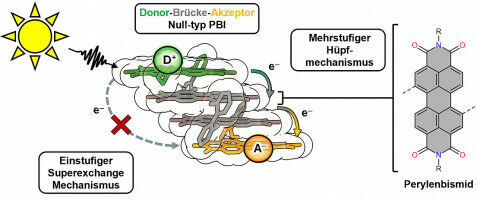
With artificial photosynthesis, mankind could utilise solar energy to bind carbon dioxide and produce hydrogen. Würzburg chemists have taken this one step further. Photosynthesis is a marvellous process: plants use it to produce sugar molecules and oxygen from the simple starting materials carbon dioxide and water.
Chemistry - 04.03.2025
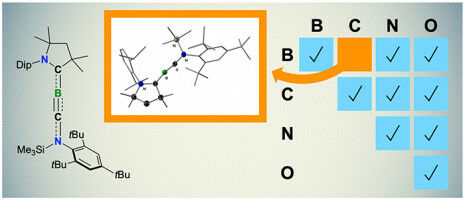
Researchers from the University of Würzburg are opening up new horizons in chemistry: They present the world's first triple bond between the atoms boron and carbon. Boron, carbon, nitrogen and oxygen: these four elements can form chemical triple bonds with each other due to their similar electronic properties.
Chemistry - 03.03.2025
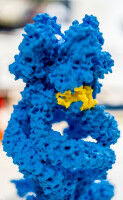
Research team gains new insights into the sense of hearing Hearing begins with the stretching of elastic molecular "springs" that open ion channels in the sensory hair cells of the ear. For decades, researchers have known that these gating springs must exist, but they could not find them. A team from the Cluster of Excellence Multiscale Bioimaging (MBExC) in Göttingen has now discovered just such a spring for the first time.
Chemistry - Physics - 03.03.2025
Complete breakdown of acrylic glass into its building blocks
Polymer chemists at ETH Zurich have found a surprising way to almost completely decompose PMMA, a plastic known as acrylic glass or as trademark Plexiglas, into its monomeric components. Even additives do not interfere with the process. Today, plastics recycling is primarily limited to the collection of sorted PET or polyethylene beverage bottles.
Physics - Chemistry - 28.02.2025

Scientists at EPFL have revealed how quantum interference and symmetry dictate molecular behavior in collisions with gold surfaces, offering new insights into molecular interactions. The findings can have important implications for chemistry and materials science. The quantum rules shaping molecular collisions are now coming into focus, offering fresh insights for chemistry and materials science.
Chemistry - Environment - 28.02.2025
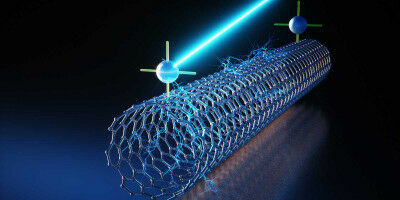
Researchers have developed a low-cost sensor made of carbon nanotubes that can selectively, efficiently and reliably measure minute quantities of oxygen in gas mixtures under light. The detector could be widely used in industry, medicine and environmental monitoring. Oxygen is essential for life and a reactive player in many chemical processes.
Environment - Chemistry - 25.02.2025

Emerging pollutants are compounds - microplastics, oils, dyes, pharmaceuticals, plasticizers, etc. that end up in aquatic ecosystems and can pose an environmental and health risk.
Life Sciences - Chemistry - 24.02.2025
DNA Origami Suggests Route to Reusable, Multifunctional Biosensors
Using an approach called DNA origami, scientists at Caltech have developed a technique that could lead to cheaper, reusable biomarker sensors for quickly detecting proteins in bodily fluids, eliminating the need to send samples out to lab centers for testing. "Our work provides a proof-of-concept showing a path to a single-step method that could be used to identify and measure nucleic acids and proteins," says Paul Rothemund (BS '94), a visiting associate at Caltech in computing and mathematical sciences, and computation and neural systems.
Chemistry - Pharmacology - 19.02.2025
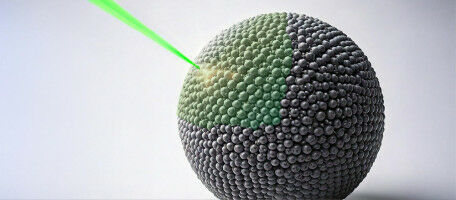
Scientists have developed a tool that uses light to control the activity and localisation of a molecule, making it possible to control drug's site of action. Acting in the right place at the right time is the key to effective medical treatment with minimal side effects. However, this feat remains difficult to achieve.
Physics - Chemistry - 17.02.2025
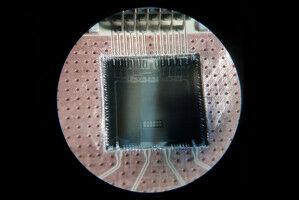
Superconducting circuits are being used at TU Wien and ISTA to create new types of quantum systems that are much easier to control and much more tunable than natural quantum systems like atoms. Many objects that we normally deal with in quantum physics are only visible with special microscopes - individual molecules or atoms, for example.


Chemistry - Mar 19
Leipzig University and Center for the Transformation of Chemistry conclude collaboration agreement
Leipzig University and Center for the Transformation of Chemistry conclude collaboration agreement
Chemistry - Feb 2
New material for use in the chemical industry capable of transforming CO2 into high value-added compounds
New material for use in the chemical industry capable of transforming CO2 into high value-added compounds
Chemistry - Feb 2
Material for modulating metal-organic frameworks for use in the chemical industry capable of transforming CO2 into high value-added compounds
Material for modulating metal-organic frameworks for use in the chemical industry capable of transforming CO2 into high value-added compounds
Chemistry - Jan 15
University of Glasgow spin-out hails milestone breakthrough in hydrogen energy process
University of Glasgow spin-out hails milestone breakthrough in hydrogen energy process
Life Sciences - Dec 17
Manchester Institute of Biotechnology welcomes three new professors, driving innovation in chemical and biological sciences
Manchester Institute of Biotechnology welcomes three new professors, driving innovation in chemical and biological sciences
Health - Nov 21
New Collaborative Research Centres: A Resounding Success for the University and the University Hospital
New Collaborative Research Centres: A Resounding Success for the University and the University Hospital
Chemistry - Nov 6
The scientific community and industry are seeking ways to accelerate the application of perovskite solar cells
The scientific community and industry are seeking ways to accelerate the application of perovskite solar cells