



Life Sciences - Mar 27
Understanding the Brain - TU Ilmenau's EU EMBRACE Project Nominated for European Excellence Award
Understanding the Brain - TU Ilmenau's EU EMBRACE Project Nominated for European Excellence Award
Social Sciences - Mar 27
A manual addresses, for the first time in Spain, child and adolescent sexual exploitation
A manual addresses, for the first time in Spain, child and adolescent sexual exploitation


Environment - Mar 26
Changing vegetation in thawing permafrost increases emissions of greenhouse gases
Changing vegetation in thawing permafrost increases emissions of greenhouse gases
Environment - Mar 26
University of Manchester hits major sustainability milestone, with Main Campus becoming 100% 'Zero Landfill'
University of Manchester hits major sustainability milestone, with Main Campus becoming 100% 'Zero Landfill'
Social Sciences - Mar 26
"It would be naive to believe that a social media ban will solve all problems"
"It would be naive to believe that a social media ban will solve all problems"


Health - Mar 26
Earlier detection, better outcomes: Irish researchers target rising bowel cancer rates with new blood test
Earlier detection, better outcomes: Irish researchers target rising bowel cancer rates with new blood test

Environment - Mar 26
UK must improve energy efficiency to end 50 years of policy failure and prevent future energy crises, study argues
UK must improve energy efficiency to end 50 years of policy failure and prevent future energy crises, study argues

Mathematics - Mar 26
From Materials to Medical Imaging, Fonseca's Work Shapes the Future of Innovation
From Materials to Medical Imaging, Fonseca's Work Shapes the Future of Innovation


news
Chemistry
Results 2621 - 2640 of 3958.
Life Sciences - Chemistry - 08.09.2016
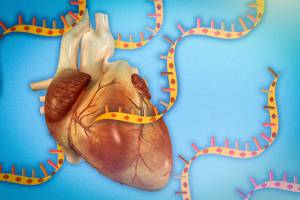
Several years ago, biologists discovered a new type of genetic material known as long noncoding RNA. This RNA does not code for proteins and is copied from sections of the genome once believed to be 'junk DNA.' Since then, scientists have found evidence that long noncoding RNA, or lncRNA, plays roles in many cellular processes, including guiding cell fate during embryonic development.
Physics - Chemistry - 08.09.2016
A ’potalyzer’ for roadside marijuana tests
As the breathalyzer does for alcohol, this experimental 'potalyzer' could provide a practical field test for determining whether a driver might be impaired from smoking marijuana. This November, several states will vote whether to legalize marijuana use, joining more than 20 states that already allow some form of cannabis use.
Life Sciences - Chemistry - 06.09.2016
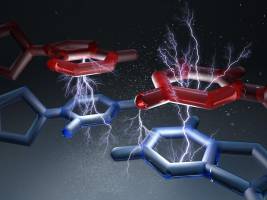
Research news DNA, our genetic material, normally has the structure of a twisted rope ladder. Experts call this structure a double helix. Among other things, it is stabilized by stacking forces between base pairs. Scientists at the Technical University of Munich (TUM) have succeeded at measuring these forces for the very first time on the level of single base pairs.
Physics - Chemistry - 02.09.2016
288 from Sep 02, 2016 2.3 Million Euros for Nano Research German Research Foundation (DFG) Approved Funding for New High-performance Microscope at Freie Universität Berlin
German Research Foundation (DFG) Approved Funding for New High-performance Microscope at Freie Universität Berlin ' 288/2016 from Sep 02, 2016 The German Research Foundation has designated 2.3 million euros for a new cryogenic transmission electron microscopy (cryo-TEM) at Freie Universität Berlin.
Physics - Chemistry - 01.09.2016
In batteries, a metal reveals its dual personality
Battery researchers have been focusing on lithium metal electrodes as leading contenders for improving the amount of energy that batteries can store without increasing their weight. But lithium in this metallic form has a problem that has stymied much of this research effort: As the batteries are being charged, finger-like lithium deposits form on the metal surface, which can hamper performance and even lead to short-circuits that damage or disable the battery.
Chemistry - Life Sciences - 29.08.2016
Bringing artificial enzymes closer to nature
Scientists at the University of Basel, ETH Zurich in Basel, and NCCR Molecular Systems Engineering have developed an artificial metalloenzyme that catalyses a reaction inside of cells without equivalent in nature. This could be a prime example for creating new non-natural metabolic pathways inside living cells, as reported today in Nature.
Chemistry - Life Sciences - 27.08.2016
Simple polymer could unlock more effective bone regeneration treatments
A new technique developed by biomedical engineers could help to unlock the full potential of a promising treatment for bone regeneration, creating better therapies for spinal injuries, bone grafts and other orthopaedic surgeries. In a new paper published today (Saturday 27 August) in the journal Science Advances , scientists from the University of Glasgow discuss how they have used a cheap, commercially-produced polymer to help stimulate 'growth factors' - molecules which help the body to regenerate.
Chemistry - Physics - 26.08.2016
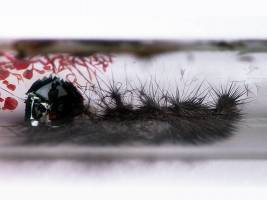
Research news It is the double helix, with its stable and flexible structure of genetic information, that made life on Earth possible in the first place. Now a team from the Technical University of Munich (TUM) has discovered a double helix structure in an inorganic material. The material comprising tin, iodine and phosphorus is a semiconductor with extraordinary optical and electronic properties, as well as extreme mechanical flexibility.
Life Sciences - Chemistry - 25.08.2016

Forschen Proteins fulfill vital functions in our body. They transport substances, combat pathogens, and function as catalysts. In order for these processes to function reliably, proteins must adopt a defined three-dimensional structure. Molecular "folding assistants", called chaperones, aid and scrutinize these structuring processes.
Chemistry - Life Sciences - 25.08.2016

University of Queensland researchers have taken a big step toward understanding the movement of molecules in the human body. Professor Geoff Goodhill from the Queensland Brain Institute and the School of Mathematics and Physics said molecular movement was involved in a number of diseases, including Alzheimer's.
Astronomy & Space - Chemistry - 24.08.2016
A better way to learn if alien planets have the right stuff
A new method for analyzing the chemical composition of stars may help scientists winnow the search for Earth 2. Yale University researchers Debra Fischer and John Michael Brewer, in a new study that will appear in the Astrophysical Journal, describe a computational modeling technique that gives a clearer sense of the chemistry of stars, revealing the conditions present when their planets formed.
Physics - Chemistry - 24.08.2016
New method developed for producing some metals
The MIT researchers were trying to develop a new battery, but it didn't work out that way. Instead, thanks to an unexpected finding in their lab tests, what they discovered was a whole new way of producing the metal antimony - and potentially a new way of smelting other metals, as well. The discovery could lead to metal-production systems that are much less expensive and that virtually eliminate the greenhouse gas emissions associated with most traditional metal smelting.
Physics - Chemistry - 22.08.2016
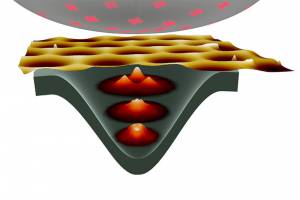
Electrons reveal their quantum properties when they are confined to small spaces. Scientists from TU Wien (Vienna), Aachen and Manchester have created tiny quantum dots in Graphene.
Physics - Chemistry - 22.08.2016
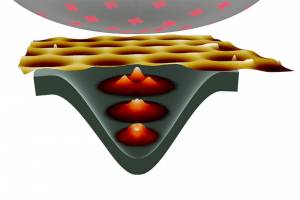
Electrons reveal their quantum properties when they are confined to small spaces. Scientists from TU Wien (Vienna), Aachen and Manchester have created tiny quantum dots in Graphene. The charged tip of a scanning tunneling microscope and an additional magnetic field lead to localized stable electron states in graphene.
Chemistry - 18.08.2016
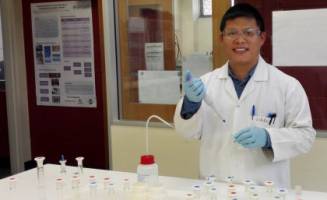
North Queensland has some of Earth's largest known bauxite deposits, but their potential has largely remained locked in the ground, until now. A University of Queensland researcher has collaborated with global mining company Rio Tinto to investigate a new way to process bauxite which adds value to the ore and significantly reduces the mine's environmental impact.
Chemistry - Physics - 17.08.2016
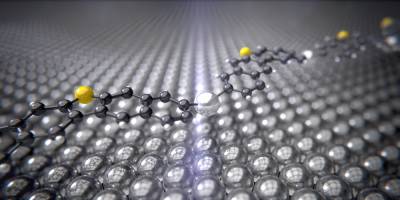
Physicists at the University of Basel have succeeded in watching a silver catalyst at work for the first time with the aid of an atomic force microscope. The observations made during an Ullmann reaction have allowed the researchers to calculate the energy turnover and, potentially, to optimize the catalysis.
Chemistry - Life Sciences - 15.08.2016
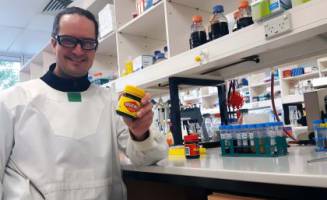
Is Vegemite more than a spread? Or can it be used to brew beer? University of Queensland researchers have put the theory to the test. School of Chemistry and Molecular Biosciences researchers investigated claims that Vegemite and a similar product, Marmite, have been used to brew a cheap form of beer.
Chemistry - Physics - 15.08.2016
New technique may help detect Martian life
In 2020, NASA plans to launch a new Mars rover that will be tasked with probing a region of the planet scientists believe could hold remnants of ancient microbial life. The rover will collect samples of rocks and soil, and store them on the Martian surface; the samples would be returned to Earth sometime in the distant future so that scientists can meticulously analyze the samples for signs of present or former extraterrestrial life.
Health - Chemistry - 11.08.2016
Virus attracts bumblebees to infected plants by changing scent
Study of bee-manipulating plant virus reveals a 'short-circuiting? of natural selection. Researchers suggest that replicating the scent caused by infection could encourage declining bee populations to pollinate crops - helping both bee and human food supplies.
Chemistry - Life Sciences - 09.08.2016
Plastic manufacturing chemical BPS harms egg cells, study suggests
FINDINGS Bisphenol S, a chemical used to manufacture polycarbonate water bottles and many other products such as epoxy glues and cash receipts, is an increasingly common replacement for bisphenol A, the use of which was discontinued because of concerns about its harmful effects on the reproductive system.


Life Sciences - Mar 27
Understanding the Brain - TU Ilmenau's EU EMBRACE Project Nominated for European Excellence Award
Understanding the Brain - TU Ilmenau's EU EMBRACE Project Nominated for European Excellence Award
Social Sciences - Mar 27
A manual addresses, for the first time in Spain, child and adolescent sexual exploitation
A manual addresses, for the first time in Spain, child and adolescent sexual exploitation
Environment - Mar 26
Changing vegetation in thawing permafrost increases emissions of greenhouse gases
Changing vegetation in thawing permafrost increases emissions of greenhouse gases
Environment - Mar 26
University of Manchester hits major sustainability milestone, with Main Campus becoming 100% 'Zero Landfill'
University of Manchester hits major sustainability milestone, with Main Campus becoming 100% 'Zero Landfill'
Social Sciences - Mar 26
"It would be naive to believe that a social media ban will solve all problems"
"It would be naive to believe that a social media ban will solve all problems"
Health - Mar 26
Earlier detection, better outcomes: Irish researchers target rising bowel cancer rates with new blood test
Earlier detection, better outcomes: Irish researchers target rising bowel cancer rates with new blood test
Environment - Mar 26
UK must improve energy efficiency to end 50 years of policy failure and prevent future energy crises, study argues
UK must improve energy efficiency to end 50 years of policy failure and prevent future energy crises, study argues
Mathematics - Mar 26
From Materials to Medical Imaging, Fonseca's Work Shapes the Future of Innovation
From Materials to Medical Imaging, Fonseca's Work Shapes the Future of Innovation