

Economics - Today
University of Glasgow and Lloyds Banking Group announce groundbreaking agentic AI research programme
University of Glasgow and Lloyds Banking Group announce groundbreaking agentic AI research programme
Astronomy & Space - Today
ANU lends its expertise in laser communications to support NASA's Artemis II crewed moon mission
ANU lends its expertise in laser communications to support NASA's Artemis II crewed moon mission

Life Sciences - Mar 27
Understanding the Brain - TU Ilmenau's EU EMBRACE Project Nominated for European Excellence Award
Understanding the Brain - TU Ilmenau's EU EMBRACE Project Nominated for European Excellence Award
Social Sciences - Mar 27
A manual addresses, for the first time in Spain, child and adolescent sexual exploitation
A manual addresses, for the first time in Spain, child and adolescent sexual exploitation

Environment - Mar 26
Changing vegetation in thawing permafrost increases emissions of greenhouse gases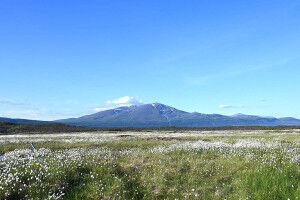
Changing vegetation in thawing permafrost increases emissions of greenhouse gases
Environment - Mar 26
University of Manchester hits major sustainability milestone, with Main Campus becoming 100% 'Zero Landfill'
University of Manchester hits major sustainability milestone, with Main Campus becoming 100% 'Zero Landfill'
Social Sciences - Mar 26
"It would be naive to believe that a social media ban will solve all problems"
"It would be naive to believe that a social media ban will solve all problems"


Health - Mar 26
Earlier detection, better outcomes: Irish researchers target rising bowel cancer rates with new blood test
Earlier detection, better outcomes: Irish researchers target rising bowel cancer rates with new blood test


news
Chemistry
Results 2761 - 2780 of 3958.
Physics - Chemistry - 29.02.2016
New Form of Electron-beam Imaging Can See Elements that are ’Invisible’ to Common Methods
Electrons can extend our view of microscopic objects well beyond what's possible with visible light-all the way to the atomic scale. A popular method in electron microscopy for looking at tough, resilient materials in atomic detail is called STEM, or scanning transmission electron microscopy, but the highly focused beam of electrons used in STEM can also easily destroy delicate samples.
Life Sciences - Chemistry - 25.02.2016
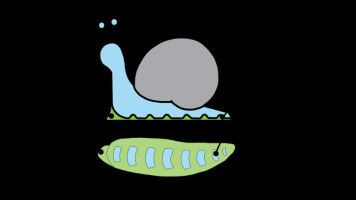
Mirror mirror: Snail shells offer clue in unravelling common origins of body asymmetry
PA 41/16 An international team of researchers has discovered a gene in snails that determines whether their shells twist clockwise or anti-clockwise - and could offer clues to how the same gene affects body asymmetry in other animals including humans.
Life Sciences - Chemistry - 23.02.2016
New Way to Reduce Plant Lignin Could Lead to Cheaper Biofuels
Scientists from the U.S. Department of Energy's Lawrence Berkeley National Laboratory (Berkeley Lab) have shown for the first time that an enzyme can be tweaked to reduce lignin in plants. Their technique could help lower the cost of converting biomass into carbon-neutral fuels to power your car and other sustainably developed bio-products.
Earth Sciences - Chemistry - 22.02.2016
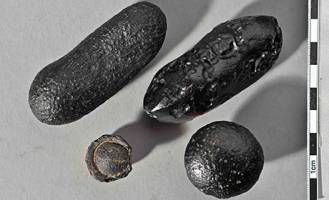
Approximately 790,000 years ago there were multiple cosmic impacts on earth with global consequences. Geoscientists from Heidelberg University reached this conclusion after dating so-called tektites from various parts of the world. The research group under the direction of Mario Trieloff studied several of such rock glasses, which originated during impacts of asteroids or comets.
Life Sciences - Chemistry - 22.02.2016
Title for ’Earth’s first animal’ likely goes to simple sea creature
The first animal to appear on Earth was very likely the simple sea sponge. New genetic analyses led by MIT researchers confirm that sea sponges are the source of a curious molecule found in rocks that are 640 million years old. These rocks significantly predate the Cambrian explosion - the period in which most animal groups took over the planet, 540 million years ago - suggesting that sea sponges may have been the first animals to inhabit the Earth.
Life Sciences - Chemistry - 18.02.2016
New Transport Mechanisms Gain Access To Brain
Researchers at the Institute of Pharmacy and Molecular Biotechnology of Heidelberg University are exploring new approaches to the treatment of diseases of the central nervous system such as Alzheimer's and brain tumours.
Chemistry - 16.02.2016
High-performing catalyst uncovered
Method devised for making large quantities of georgeite with unprecedented ability as a catalyst to produce hydrogen from water An extremely rare mineral, found only in two locations around the world, including an old copper mine in Snowdonia , has been manufactured in large quantities for the very first time by researchers at Cardiff.
Materials Science - Chemistry - 15.02.2016

Scientists at ETH Zurich and an ETH spin-off have developed a novel polymer for coating materials, in order to prevent biofilms from forming on their surfaces.
Chemistry - 15.02.2016
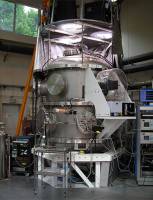
In addition to precipitation, clouds influence the climate in various ways: they cover 70% of the Earth's surface and represent nearly 15% of the volume of the atmosphere. Scientists need to understand their underlying chemical and physical mechanisms in order to better integrate them into climate change models.
Chemistry - 12.02.2016
New method for bio-designing yeast could improve biofuel production
Great Lakes Bioenergy Research Center assistant research specialist Quinn Dickinson picks a colony of a new yeast strain that could reduce the cost of biofuels produced with ionic liquids. Photo: Wisconsin Energy Institute An assistant research specialist at the Great Lakes Bioenergy Research Center (GLBRC) has designed a new strain of yeast that could improve the efficiency of making fuel from cellulosic biomass such as switchgrass.
Physics - Chemistry - 11.02.2016
New Way to Make Nanowire Lasers
This nanowire, composed of cesium, lead and bromide (CsPbBr3), emits bright laser light after hit by a pulse from another laser source. The nanowire laser proved to be very stable, emitting laser light for over an hour. It also was demonstrated to be broadly tunable across green and blue wavelengths.
Life Sciences - Chemistry - 11.02.2016
Could the food we eat affect our genes? Study in yeast suggests this may be the case
Almost all of our genes may be influenced by the food we eat, according to new research published today Microbiology. The study, carried out in yeast - which can be used to model some of the body's fundamental processes - shows that while the activity of our genes influences our metabolism, the opposite is also true and the nutrients available to cells influence our genes.
Agronomy & Food Science - Chemistry - 08.02.2016
Researchers create synthetic biopathway to turn agriculture waste into ’green’ products
Researchers at the University of Minnesota have engineered a new synthetic biopathway that can more efficiently and cost-effectively turn agricultural waste, like corn stover and orange peels, into a variety of useful products ranging from spandex to chicken feed. The groundbreaking study was published today .
Health - Chemistry - 08.02.2016
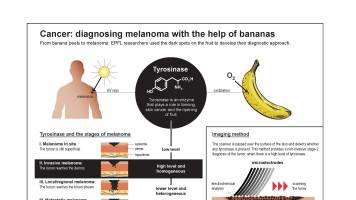
08. Human skin and banana peels have something in common: they produce the same enzyme when attacked. By studying fruit, researchers have come up with an accurate method for diagnosing the stages of this form of skin cancer. When bananas age they become covered in black spots caused by the enzyme tyrosinase.
Health - Chemistry - 08.02.2016
Novel gene implicated in deafness
Researchers from King's College London and the Wellcome Trust Sanger Institute have for the first time demonstrated a direct link between the Wbp2 gene and progressive hearing loss. The scientists found that loss of Wbp2 expression led to progressive high-frequency hearing loss in mice as well as in two clinical cases of children with deafness with no other obvious features.
Chemistry - Physics - 05.02.2016
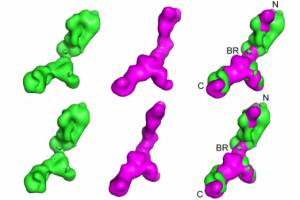
Elastin is a crucial building block in our bodies. Its flexibility allows skin to stretch and twist, blood vessels to expand and relax with every heartbeat, and lungs to swell and contract with each breath. But exactly how this protein-based tissue assembles itself to achieve this flexibility remained an unsolved question - until now.
Chemistry - Physics - 04.02.2016
Lithium battery material found to harm key soil microorganism
Study is first 'red flag" about nanotechnology's impact on the environment The material at the heart of the lithium ion batteries that power electric vehicles, laptop computers and smartphones has been shown to impair a key soil bacterium, according to new research published online in the journal Chemistry of Materials .
Chemistry - Physics - 04.02.2016
Lithium battery catalyst found to harm key soil microorganism
Study is first 'red flag" about nanotechnology's impact on the environment The material at the heart of the lithium ion batteries that power electric vehicles, laptop computers and smartphones has been shown to impair a key soil bacterium, according to new research published online in the journal Chemistry of Materials .
Physics - Chemistry - 04.02.2016
Researchers seek efficient means of splitting water
Flashes of fluorescence seen under a microscope show where chemical reactions to (b) split water molecules or (c) electric currents take place on a nanorod of photovoltaic material. The outline of the rod laid over flash images is taken from the scanning electron microscope image at right. Photovoltaics promise to help meet our energy needs by turning sunlight into electricity.
Chemistry - Physics - 04.02.2016
Lithium battery component found to harm key soil microorganism
Shewanella oneidensis thrives on metal ions, converting them to metals like iron that serve as nutrients for other microbes. The bacterium was shown to be harmed by the compound nickel manganese cobalt oxide, which is produced in nanoparticle form and is poised to become the dominant material in the lithium ion batteries that will power portable electronics and electric vehicles.


Economics - Today
University of Glasgow and Lloyds Banking Group announce groundbreaking agentic AI research programme
University of Glasgow and Lloyds Banking Group announce groundbreaking agentic AI research programme
Astronomy & Space - Today
ANU lends its expertise in laser communications to support NASA's Artemis II crewed moon mission
ANU lends its expertise in laser communications to support NASA's Artemis II crewed moon mission
Life Sciences - Mar 27
Understanding the Brain - TU Ilmenau's EU EMBRACE Project Nominated for European Excellence Award
Understanding the Brain - TU Ilmenau's EU EMBRACE Project Nominated for European Excellence Award
Social Sciences - Mar 27
A manual addresses, for the first time in Spain, child and adolescent sexual exploitation
A manual addresses, for the first time in Spain, child and adolescent sexual exploitation
Environment - Mar 26
Changing vegetation in thawing permafrost increases emissions of greenhouse gases
Changing vegetation in thawing permafrost increases emissions of greenhouse gases
Environment - Mar 26
University of Manchester hits major sustainability milestone, with Main Campus becoming 100% 'Zero Landfill'
University of Manchester hits major sustainability milestone, with Main Campus becoming 100% 'Zero Landfill'
Social Sciences - Mar 26
"It would be naive to believe that a social media ban will solve all problems"
"It would be naive to believe that a social media ban will solve all problems"
Health - Mar 26
Earlier detection, better outcomes: Irish researchers target rising bowel cancer rates with new blood test
Earlier detection, better outcomes: Irish researchers target rising bowel cancer rates with new blood test