



Life Sciences - Mar 27
Understanding the Brain - TU Ilmenau's EU EMBRACE Project Nominated for European Excellence Award
Understanding the Brain - TU Ilmenau's EU EMBRACE Project Nominated for European Excellence Award
Social Sciences - Mar 27
A manual addresses, for the first time in Spain, child and adolescent sexual exploitation
A manual addresses, for the first time in Spain, child and adolescent sexual exploitation


Environment - Mar 26
Changing vegetation in thawing permafrost increases emissions of greenhouse gases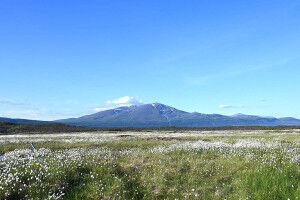
Changing vegetation in thawing permafrost increases emissions of greenhouse gases
Environment - Mar 26
University of Manchester hits major sustainability milestone, with Main Campus becoming 100% 'Zero Landfill'
University of Manchester hits major sustainability milestone, with Main Campus becoming 100% 'Zero Landfill'
Social Sciences - Mar 26
"It would be naive to believe that a social media ban will solve all problems"
"It would be naive to believe that a social media ban will solve all problems"


Health - Mar 26
Earlier detection, better outcomes: Irish researchers target rising bowel cancer rates with new blood test
Earlier detection, better outcomes: Irish researchers target rising bowel cancer rates with new blood test
Environment - Mar 26
UK must improve energy efficiency to end 50 years of policy failure and prevent future energy crises, study argues
UK must improve energy efficiency to end 50 years of policy failure and prevent future energy crises, study argues
Mathematics - Mar 26
From Materials to Medical Imaging, Fonseca's Work Shapes the Future of Innovation
From Materials to Medical Imaging, Fonseca's Work Shapes the Future of Innovation

news
Swiss Federal Institute of Technology Lausanne, EPFL
Results 781 - 800 of 1376.
Physics - Chemistry - 07.12.2019
Liquid flow is influenced by a quantum effect in water
Researchers at EPFL have discovered that the viscosity of solutions of electrically charged polymers dissolved in water is influenced by a quantum effect. This tiny quantum effect influences the way water molecules interact with one another. Yet, it can lead to drastic changes in large-scale observations.
Earth Sciences - Materials Science - 06.12.2019
Gaining insight into the energy balance of earthquakes
Researchers at EPFL's Computational Solid Mechanics Laboratory and the Weizmann Institute of Science have modeled the onset of slip between two bodies in frictional contact. Their work, a major step forward in the study of frictional rupture, could give us a better understanding of earthquakes - including how far and fast they travel.
Life Sciences - Health - 05.12.2019

The Defitech Foundation has teamed up with EPFL, CHUV and UNIL to widen access to the groundbreaking neurotechnology developed under the 2018 STIMO study, which allowed paraplegic patients to walk again. Their aim is also to develop new neurosurgical treatments for people suffering from Parkinson's disease or from neurological disorders following a head injury or stroke.
Life Sciences - Health - 04.12.2019

EPFL researchers have developed Big Data tools for identifying new gene functions. The work identifies millions of connections between genes and their functions, and can facilitate the development of precision medicine. Genes are the functional units of heredity, and the understanding of gene function is the major focus of biomedical research, serving as the basis of precision medicine.
Life Sciences - Pharmacology - 02.12.2019
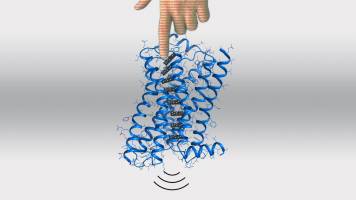
EPFL scientists have developed a computational method modeling and designing protein allostery that allows the accurate and rational engineering and even re-purposing of cell receptors. The method can be a significant tool for drug development. Called the "second secret of life", allostery is one of the most fundamental processes of biology and has been a central focus among scientists across the life sciences spectrum, from fundamental biology to drug development.
Physics - 02.12.2019
EPFL’s student solves a 100-year-old physics enigma
An EPFL Bachelor's student has solved a mystery that has puzzled scientists for 100 years. He discovered why gas bubbles in narrow vertical tubes seem to remain stuck instead of rising upwards. According to his research and observations, an ultra-thin film of liquid forms around the bubble, preventing it from rising freely.
Physics - Materials Science - 29.11.2019

Physicists from Switzerland, Germany, and France have found that large-amplitude acoustic waves, launched by ultrashort laser pulses, can dynamically manipulate the optical response of semiconductors. One of the main challenges in materials science research is to achieve high tunability of the optical properties of semiconductors at room temperature.
Agronomy & Food Science - Innovation - 22.11.2019
Engineering solutions for kitchen challenges
Crafty engineering can help solve many problems, including those we face in our own kitchens. At EPFL's Institute of Mechanical Engineering, students from three laboratories tackled some of the most common kitchen challenges as part of the first Kitchen-Inspired Engineering contest. Cooking the perfect poached egg is a lot trickier than it looks.
Materials Science - Mechanical Engineering - 21.11.2019
Eliminating cracks in 3D-printed metal components
Researchers at EPFL have developed a new laser 3D-printing technique to manufacture metal components with unprecedented resistance to high temperature, damage and corrosion. The method has applications in fields ranging from aerospace to power-generating turbines. 3D printing, also known as additive manufacturing, has revolutionized the way components are made, setting new standards in terms of production speed when geometric complexity is high.
Environment - 20.11.2019
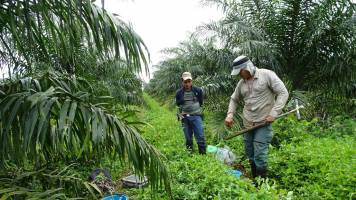
Turning an abandoned pasture into a palm tree plantation can be carbon neutral, according to a new study by EPFL and the Swiss Federal Institute for Forest, Snow and Landscape Research (WSL). These findings, based on measurements of 56-year-old palm tree plantations in Colombia, suggest we may be able to find sustainable alternatives to deforestation for the production of palm oil - a practice currently under fire by environmentalists.
Earth Sciences - Physics - 20.11.2019
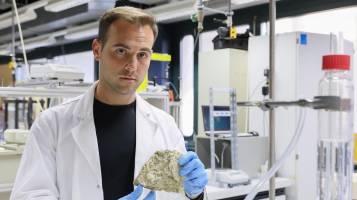
EPFL spin-off Medusoil has successfully tested its ground-stabilization process on cliffs subject to surface erosion. The company's biomineral-based solution can be used to stabilize sandy and gravelly subsoils to safeguard surrounding infrastructure. It is a long-lasting and easy-to-use alternative to industrial fluids - the production and use of which can be harmful to the environment.
Environment - Innovation - 15.11.2019

EPFL scientists have developed a glass-paneled solar cooker that delivers exceptional performance. Their patented design can operate an average of 155 days a year in Switzerland's cloudiest regions and up to 240 days in its sunniest. Solar cookers - or solar-powered ovens - can be used to cook foods at low temperatures (60-120°C) for anywhere from 30 minutes up to four hours.
Health - Environment - 15.11.2019
During epidemics, access to GPS data from smartphones can be crucial
A new EPFL and MIT study into the interplay between mobility and the 2013 and 2014 dengue outbreaks in Singapore has uncovered a legal void around access to mobile phone data - information that can prove vital in preventing the spread of infectious diseases. Researchers from EPFL and MIT have shown that human mobility is a major factor in the spread of vector-borne diseases such as malaria and dengue even over short intra-city distances.
Health - 14.11.2019
Place of residence and sodas, an explosive cocktail
In a groundbreaking study published today, scientists used precision geospatial analysis techniques to show that obesity and the consumption of sugar-sweetened beverages (SSBs) are more prevalent in some parts of Geneva than others. The study, a collaboration between HUG, EPFL, UNIGE and CHUV, is the first of its kind to establish a link between place of residence, SSB consumption and high body mass index (BMI).
Materials Science - Chemistry - 12.11.2019
A cheaper way to scale up atomic layer deposition
Chemical engineers at EPFL have developed a new method for atomic layer deposition, a technique commonly used in high-quality microelectronics. The new method can be used in materials with larger surfaces much more cheaply than current approaches, while preserving quality and efficiency. Atomic layer deposition (ALD) involves stacking layers of atoms on top of each other like pancakes.
Environment - Chemistry - 11.11.2019

The acidification of the Pacific Ocean in northern Japan is increasing the natural production rate of N2O, an ozone-depleting greenhouse gas. That's the finding of a study carried out jointly by scientists at EPFL, Tokyo Institute of Technology and Japan Agency for Marine-Earth Science and Technology and appearing recently.
Computer Science - Earth Sciences - 08.11.2019
Using AI to predict where and when lightning will strike
Researchers at EPFL have developed a novel way of predicting lightning strikes to the nearest 10 to 30 minutes and within a radius of 30 kilometers. The system uses a combination of standard data from weather stations and artificial intelligence. Lightning is one of the most unpredictable phenomena in nature.
Life Sciences - Health - 31.10.2019
Analyzing gut bacteria more accurately
The microorganisms in our intestines could be linked to certain diseases such as Alzheimer's and diabetes. Researchers from the AD-gut consortium have developed a novel method - combining optical DNA mapping and statistics - for accurately distinguishing and rapidly identifying the various species in the microbiota.
Life Sciences - Health - 31.10.2019
Analyzing gut bacteria more accurately to make diagnosis
The microorganisms in our intestines could be linked to certain diseases such as Alzheimer's and diabetes. Researchers from the AD-gut consortium have developed a novel method - combining optical DNA mapping and statistics - for accurately distinguishing and rapidly identifying the various species in the microbiota.
Life Sciences - Physics - 29.10.2019
Turning a dangerous toxin into a biosensor
Some bacteria release a toxin that forms pores on other cells. EPFL scientists have studied the pore-forming toxin aerolysin and genetically engineered it to be used as a high-resolution sensor for biological molecules like DNA and proteins. Image: Molecular simulation of an engineered aerolysin pore (light blue color) embedded into a membrane bilayer (cream color) and translocating DNA (red color).


Life Sciences - Mar 27
Understanding the Brain - TU Ilmenau's EU EMBRACE Project Nominated for European Excellence Award
Understanding the Brain - TU Ilmenau's EU EMBRACE Project Nominated for European Excellence Award
Social Sciences - Mar 27
A manual addresses, for the first time in Spain, child and adolescent sexual exploitation
A manual addresses, for the first time in Spain, child and adolescent sexual exploitation
Environment - Mar 26
Changing vegetation in thawing permafrost increases emissions of greenhouse gases
Changing vegetation in thawing permafrost increases emissions of greenhouse gases
Environment - Mar 26
University of Manchester hits major sustainability milestone, with Main Campus becoming 100% 'Zero Landfill'
University of Manchester hits major sustainability milestone, with Main Campus becoming 100% 'Zero Landfill'
Social Sciences - Mar 26
"It would be naive to believe that a social media ban will solve all problems"
"It would be naive to believe that a social media ban will solve all problems"
Health - Mar 26
Earlier detection, better outcomes: Irish researchers target rising bowel cancer rates with new blood test
Earlier detection, better outcomes: Irish researchers target rising bowel cancer rates with new blood test
Environment - Mar 26
UK must improve energy efficiency to end 50 years of policy failure and prevent future energy crises, study argues
UK must improve energy efficiency to end 50 years of policy failure and prevent future energy crises, study argues
Mathematics - Mar 26
From Materials to Medical Imaging, Fonseca's Work Shapes the Future of Innovation
From Materials to Medical Imaging, Fonseca's Work Shapes the Future of Innovation