


Life Sciences - Mar 27
Understanding the Brain - TU Ilmenau's EU EMBRACE Project Nominated for European Excellence Award
Understanding the Brain - TU Ilmenau's EU EMBRACE Project Nominated for European Excellence Award
Social Sciences - Mar 27
A manual addresses, for the first time in Spain, child and adolescent sexual exploitation
A manual addresses, for the first time in Spain, child and adolescent sexual exploitation


Environment - Mar 26
Changing vegetation in thawing permafrost increases emissions of greenhouse gases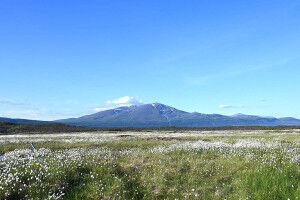
Changing vegetation in thawing permafrost increases emissions of greenhouse gases
Environment - Mar 26
University of Manchester hits major sustainability milestone, with Main Campus becoming 100% 'Zero Landfill'
University of Manchester hits major sustainability milestone, with Main Campus becoming 100% 'Zero Landfill'
Social Sciences - Mar 26
"It would be naive to believe that a social media ban will solve all problems"
"It would be naive to believe that a social media ban will solve all problems"


Health - Mar 26
Earlier detection, better outcomes: Irish researchers target rising bowel cancer rates with new blood test
Earlier detection, better outcomes: Irish researchers target rising bowel cancer rates with new blood test
Environment - Mar 26
UK must improve energy efficiency to end 50 years of policy failure and prevent future energy crises, study argues
UK must improve energy efficiency to end 50 years of policy failure and prevent future energy crises, study argues
Mathematics - Mar 26
From Materials to Medical Imaging, Fonseca's Work Shapes the Future of Innovation
From Materials to Medical Imaging, Fonseca's Work Shapes the Future of Innovation


news
OXFORD
Results 341 - 360 of 1428.
Social Sciences - Environment - 11.02.2020
Using the power of pop to change minds over sea turtle meat consumption
Researchers at the University of Oxford and Programa Tatô have developed a catchy way to reach communities on the island of São Tomé, in West Africa. Having utilised consumer research methods to source answers anonymously, they discovered that people have high levels of trust in TV and radio. Using these insights, they persuaded the island's favourite singer, João Seria, to produce an original music video with a song called 'Mém di Omali' which means, Mother of the Sea.
Pharmacology - Health - 07.02.2020
Treating depression important after stroke, but caution may be needed
Recognising and managing depression is an important part of post-stroke treatment, but some treatments should be used with caution until more is known about the risks, according to new evidence published in the Cochrane Library today. The George Institute for Global Health researchers analysed the results of 49 trials involving over 3,000 people with depression following a stroke and found that while psychological therapy or medication could be useful, the latter may come with some potentially harmful side effects.
Life Sciences - Agronomy & Food Science - 05.02.2020
Branching out for a new green revolution
Researchers at the University of Oxford and the Chinese Academy of Sciences have discovered a new gene that improves the yield and fertilizer use efficiency of rice. The worldwide late-20 th century 'Green Revolution' saw dramatic year-by-year increases in global grain yields of rice and other cereals.
Chemistry - Life Sciences - 04.02.2020
Scientists uncover molecular ’first responder’ that triggers heart-attacking causing plaques
Oxford University scientist have discovered the molecular 'first responder' which detects disturbances in the flow of blood through the arteries, and responds by encouraging the formation of plaques which can lead to serious problems, including heart attack, stroke and even death. The study, published in the journal Nature , found that mice without this molecule in its right shape don't have clogged arteries, even when they eat an unhealthy high fat diet.
Life Sciences - 30.01.2020
New target identified for repairing the heart after heart attack
An immune cell is shown for the first time to be involved in creating the scar that repairs the heart after damage Billions of cardiac muscle cells are lost during a heart attack. The human heart cannot replenish these lost cells, so the default mechanism of repair is to form a cardiac scar. While this scar works well initially to avoid ventricular rupture, the scar is permanent, so it will eventually lead to heart failure and the heart will not be able to pump as efficiently as before the damage caused by heart attack.
Life Sciences - Health - 28.01.2020
Gut bacteria linked to personality
Sociable people have a higher abundance of certain types of gut bacteria and also more diverse bacteria, an Oxford University study has found. Dr Katerina Johnson of Oxford University's Department of Experimental Psychology has been researching the science of that 'gut feeling' - the relationship between the bacteria living in the gut (the gut microbiome) and behavioural traits.
Environment - Life Sciences - 27.01.2020
Rewilding the Arctic could stop permafrost thaw and reduce climate change risks
The wide-scale introduction of large herbivores to the Arctic tundra to restore the 'mammoth steppe' grassland ecosystem and mitigate global warming is economically viable, suggests a new paper from the University of Oxford. Grazing animals such as horses and bison are known to engineer the landscape around them, for example suppressing the growth of trees by trampling or eating saplings.
Environment - 20.01.2020
Confirms the Importance of Tiger Population in Thailand Forest Complex
A new scientific survey has reinforced the importance of one of the world's only remaining breeding populations of Indochinese tigers and provided evidence of tiger cubs in eastern Thailand's Dong Phayayen-Khao Yai Forest Complex. The study by researchers from the Department of Zoology's WildCRU , published in Biological Conservation , discusses findings first announced in 2017 that the Dong Phayayen-Khao Yai Forest Complex supports a critically important breeding population of tigers.
Social Sciences - Health - 16.01.2020
Lifetime suicide risk factors identified
A new review of previous studies into suicide worldwide has highlighted the effects of individual and environmental risk factors over a lifetime.
Life Sciences - Health - 14.01.2020
Malnutrition linked with increased risk of Zika birth defects
The severity of Zika virus-related deformations in babies has been shown to be affected by environmental factors such as maternal nutrition. Environmental factors, such as the diets of pregnant women, have been shown to have an effect on the extent and severity of developmental malformations in babies associated with Zika virus (ZIKV) congenital infection.
Environment - 08.01.2020
Sea-ice-free Arctic makes permafrost vulnerable to thawing
New research led by scientists at the University of Oxford's Department of Earth Sciences, and at the Geological Survey of Israel, provides evidence from Siberian caves suggesting that summer sea ice in the Arctic Ocean plays an essential role in stabilising permafrost and its large store of carbon.
Health - 20.12.2019
Combined vitamin D and calcium supplements reduce fracture risk
Taking vitamin D and calcium supplements reduces the risk of hip fractures by about one sixth, but taking vitamin D alone does not, according to a new study from the Nuffield Department of Population Health (NDPH) at the University of Oxford. The research was led by Research Fellow Dr Pang Yao and Robert Clarke, Professor of Epidemiology and Public Health Medicine, at NDPH.
Pharmacology - Health - 19.12.2019
Flu antiviral has bigger benefits for sicker, older patients
A Europe-wide study conducted over three flu seasons finds that the antiviral drug, oseltamivir (Tamiflu ), can help people recover from flu-like illness about one-day sooner on average, with older, sicker patients who have been unwell for longer recovering two-to-three days sooner. Published today in The Lancet , the European Commission-funded 'ALIC4E' study was led by the Universities of Oxford (UK) and Utrecht (The Netherlands).
Life Sciences - Chemistry - 18.12.2019
Researchers move one step further towards understanding how life evolved
A fundamental problem for biology is explaining how life evolved. How did we get from simple chemical reactions in the prebiotic soup, to animals and plants? A key step in explaining life is that about 4 billion years ago, all we had was just the simplest molecules that could replicate themselves. These are called 'replicators' - the earliest form of life, so simple that that they are almost chemistry rather than biology.
Health - 17.12.2019
Cardiovascular disease remains the leading cause of maternal deaths in the UK
The leading cause of maternal deaths in the UK is still cardiovascular disease, including heart attacks, heart failure and heart rhythm problems, and there has been no reduction in maternal cardiovascular mortality rates for more than 15 years. These are the main findings of a new report, Saving Lives, Improving Mothers' Care , from the National Perinatal Epidemiology Unit (NPEU), part of the Nuffield Department of Population Health (NDPH) at the University of Oxford.
Environment - Agronomy & Food Science - 09.12.2019
Large atmospheric waves in the jet stream present risk to global food production
Researchers at Oxford University, together with and international colleagues, have discovered jet stream patterns that could affect up to a quarter of global food production. In a new study published today , scientists show how specific wave patterns in the jet stream strongly increase the chance of co-occurring heatwaves in major food producing regions of Northern America, Western Europe and Asia.
Environment - Earth Sciences - 06.12.2019
The Arctic’s changing landscape: Impact on plants, animals, livelihoods and global temperatures
With 2019 on track to be one of the warmest years on record, a major new study reveals the impact of warming temperatures on Arctic vegetation, animal species, and human communities who rely on the stability of the Arctic food chain to survive. The study, published today in Science Advances by an international team of researchers, reports that the Arctic has warmed by 0.
Life Sciences - Social Sciences - 05.12.2019
Social influencers: what can we learn from animals?
Research from Oxford University calls us to reconsider how behaviours may spread through societies of wild animals, and how this might provide new insights into human social networks. Our social connections to one another, whether it be online or in real life, give rise to our 'social networks'. Previously, it has often been assumed that the individuals with the most social connections are the primary 'social influencers' and most likely to acquire, and spread, new behaviours.
Pharmacology - Health - 04.12.2019
Typhoid vaccine over 81% effective in tackling disease in Nepal
A large field study of typhoid conjugate vaccine (TCV) in Nepal has shown a single dose to be safe and effective in reducing typhoid in children aged 9 months to <16 years in an endemic setting. Caused by the bacterium Salmonella Typhi, typhoid is a major cause of fever in children in lowand middle-income countries and is responsible for nearly 11 million cases and more than 116,000 deaths a year worldwide.
Environment - Life Sciences - 02.12.2019
Reveals climate change impact on Antarctic penguins | University of Oxford
Antarctic penguins have been on the forefront of climate change, experiencing massive changes to their natural habitat as the world's temperatures and human activity in the region have increased. Now, new research has revealed how penguins have dealt with more than a century of human impacts in Antarctica and why some species are winners or losers in this rapidly changing ecosystem.


Life Sciences - Mar 27
Understanding the Brain - TU Ilmenau's EU EMBRACE Project Nominated for European Excellence Award
Understanding the Brain - TU Ilmenau's EU EMBRACE Project Nominated for European Excellence Award
Social Sciences - Mar 27
A manual addresses, for the first time in Spain, child and adolescent sexual exploitation
A manual addresses, for the first time in Spain, child and adolescent sexual exploitation
Environment - Mar 26
Changing vegetation in thawing permafrost increases emissions of greenhouse gases
Changing vegetation in thawing permafrost increases emissions of greenhouse gases
Environment - Mar 26
University of Manchester hits major sustainability milestone, with Main Campus becoming 100% 'Zero Landfill'
University of Manchester hits major sustainability milestone, with Main Campus becoming 100% 'Zero Landfill'
Social Sciences - Mar 26
"It would be naive to believe that a social media ban will solve all problems"
"It would be naive to believe that a social media ban will solve all problems"
Health - Mar 26
Earlier detection, better outcomes: Irish researchers target rising bowel cancer rates with new blood test
Earlier detection, better outcomes: Irish researchers target rising bowel cancer rates with new blood test
Environment - Mar 26
UK must improve energy efficiency to end 50 years of policy failure and prevent future energy crises, study argues
UK must improve energy efficiency to end 50 years of policy failure and prevent future energy crises, study argues
Mathematics - Mar 26
From Materials to Medical Imaging, Fonseca's Work Shapes the Future of Innovation
From Materials to Medical Imaging, Fonseca's Work Shapes the Future of Innovation