


Life Sciences - Mar 27
Understanding the Brain - TU Ilmenau's EU EMBRACE Project Nominated for European Excellence Award
Understanding the Brain - TU Ilmenau's EU EMBRACE Project Nominated for European Excellence Award
Social Sciences - Mar 27
A manual addresses, for the first time in Spain, child and adolescent sexual exploitation
A manual addresses, for the first time in Spain, child and adolescent sexual exploitation


Environment - Mar 26
Changing vegetation in thawing permafrost increases emissions of greenhouse gases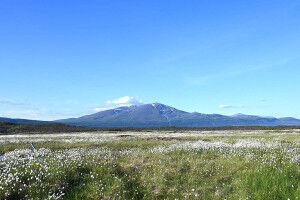
Changing vegetation in thawing permafrost increases emissions of greenhouse gases
Environment - Mar 26
University of Manchester hits major sustainability milestone, with Main Campus becoming 100% 'Zero Landfill'
University of Manchester hits major sustainability milestone, with Main Campus becoming 100% 'Zero Landfill'
Social Sciences - Mar 26
"It would be naive to believe that a social media ban will solve all problems"
"It would be naive to believe that a social media ban will solve all problems"


Health - Mar 26
Earlier detection, better outcomes: Irish researchers target rising bowel cancer rates with new blood test
Earlier detection, better outcomes: Irish researchers target rising bowel cancer rates with new blood test

Environment - Mar 26
UK must improve energy efficiency to end 50 years of policy failure and prevent future energy crises, study argues
UK must improve energy efficiency to end 50 years of policy failure and prevent future energy crises, study argues
Mathematics - Mar 26
From Materials to Medical Imaging, Fonseca's Work Shapes the Future of Innovation
From Materials to Medical Imaging, Fonseca's Work Shapes the Future of Innovation


news
OXFORD
Results 361 - 380 of 1428.
Veterinary - Environment - 28.11.2019
Unique sledge dogs helped the Inuit thrive in the North American Arctic
A unique group of dogs helped the Inuit conquer the tough terrain of the North American Arctic, a major new analysis of the remains of hundreds of animals shows. The results of a major new study on the remains of Artic sledge dogs reveals that the Inuit brought specialised dogs with them when they migrated from Siberia over the Bering Strait into North America.
Social Sciences - 21.11.2019
Women raised in deprived neighbourhoods face an increased risk of intimate partner violence
Women who spend longer periods of their early lives in less affluent neighbourhoods are at greater risk of experiencing violence during their early adulthoods at the hands of their intimate partners, finds a new study published in Epidemiology . Intimate partner violence - physical, psychological, or sexual violence committed by a current or former partner - is the most common form of violence experienced by women worldwide.
Health - 05.04.2019
Finds screen time - even before bed - has little impact on teen wellbeing
Research by Oxford University academics has found little evidence of a relationship between screen time and wellbeing in adolescents. Based on data from more than 17,000 teenagers, the study casts doubt on the widely accepted notion that spending time online, gaming or watching TV, especially before bedtime, can damage young people's mental health.
Life Sciences - 13.03.2019
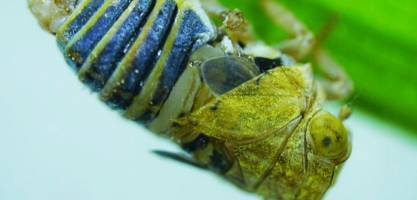
Planthopper bugs may be small, but they attract mates from afar by sending vibrational calls along plant stems and leaves using fast, rhythmic motions of their abdomen. Researchers at the University of Oxford describe how a newly-discovered "snapping organ" enables courting bugs of both sexes to produce this shaking motion through a combination of muscle action and elastic recoil.
Health - 12.03.2019
Urgent need for guidelines to communicate with children about life threatening conditions
The global prevalence of life threatening conditions in children and parents makes it an urgent priority to develop child-focused communication guidelines for healthcare professionals to support families in their time of need. Two new papers published in The Lancet , led by a team at the University of Oxford, highlight the importance of communicating with families about life threatening conditions in ways that can make a real difference to the traumatic circumstances in which families find themselves.
Pedagogy - Innovation - 12.03.2019
Mobile devices don’t reduce shared family time
The first study of the impact of digital mobile devices on different aspects of family time in the UK has found that children are spending more time at home with their parents rather than less - but not in shared activities such as watching TV and eating. The increase is in what is called 'alone-together' time, when children are at home with their parents but say they are alone.
Health - Social Sciences - 11.03.2019
New evidence proves the work of UN agencies is effective
Academics led by Professor Lucie Cluver at Oxford University have shown how key services in lower and middle-income countries can contribute to multiple sustainable development goals (SDGs), even for the highest-risk children and adolescents. The study, led by Oxford University in collaboration with the universities of Cape Town and Witwatersrand, University College London and the United Nations Development Programme (UNDP), is the first to test the UN's concept of 'accelerators': provisions that can improve the lives of vulnerable populations in not only one SDG area, but many.
Health - 11.03.2019
Vaccine developed to treat osteoarthritic pain
Researchers have developed a vaccine that blocks the effects of the main cause of pain in osteoarthritis (OA) - nerve growth factor (NGF) - in mice. In a collaborative effort between the Jenner Institute and the Kennedy Institute of Rheumatology at the University of Oxford, with colleagues in the University of Bern, and the Latvian Biomedical Research & Study Centre, scientists have developed and tested a vaccine that could be used to treat chronic pain caused by osteoarthritis, by blocking the cause of the pain - NGF.
Health - Environment - 05.03.2019
Enabling targeted interventions to reduce the burden of mosquito-borne diseases
The global population at risk from mosquito-borne diseases - including yellow fever, Zika and dengue - is expanding with changes in the distribution of two key mosquitoes: Aedes aegypti and Aedes albopictus . The spread of these species is largely driven by a combination of factors: human movements and climate change.
Life Sciences - Environment - 26.02.2019
Discovery of a new pathway that may help develop more resilient crop varieties
Researchers from the Department of Plant Sciences, University of Oxford, have discovered a new biochemical pathway in plants which they have named CHLORAD. By manipulating the CHLORAD pathway, scientists can modify how plants respond to their environment. For example, the plant's ability to tolerate stresses such as high salinity can be improved.
Astronomy & Space - 19.02.2019

A major new radio sky survey has revealed hundreds of thousands of previously undetected galaxies, shedding new light on many research areas including the physics of black holes and how clusters of galaxies evolve. An international team of more than 200 astronomers from 18 countries, including researchers from the University of Oxford, has published the first phase of the survey at unprecedented sensitivity using the Low Frequency Array (LOFAR) telescope.
Environment - Agronomy & Food Science - 19.02.2019
Is lab-grown meat really better for the environment?
Growing meat in the laboratory may do more damage to the climate in the long run than meat from cattle, according to new research. In a first-of-its-kind study from the LEAP (Livestock, Environment and People) programme at the Oxford Martin School, the climate-change impact of several production methods for lab-grown and farmed beef was assessed accounting for the differing greenhouse gases produced.
Health - Pharmacology - 19.02.2019

Researchers in Oxford have carried out the world's first gene therapy operation to tackle the root cause of age-related macular degeneration (AMD), the UK's most common cause of sight loss. The procedure was carried out at the John Radcliffe Hospital by Professor Robert MacLaren, Professor of Ophthalmology at the University of Oxford, with the support of the NIHR Oxford Biomedical Research Centre in a clinical trial sponsored by Gyroscope Therapeutics, a UK-based company developing genetically-defined therapies for the treatment of eye diseases.
Life Sciences - History & Archeology - 14.02.2019
Explains how rabbits adapted to survive myxomatosis
An unprecedented study of rabbit DNA spanning 150 years and thousands of miles has revealed the genetic basis for the animal's fightback - and ultimate triumph, against the deadly myxoma virus. The revelation of how rabbits evolved genetic resistance to myxomatosis through natural selection, comes as part of an international research collaboration, nearly seventy years after the lethal disease decimated species' populations of Australia, Britain and France.
Health - Life Sciences - 14.02.2019
Cannabis use in teens raises risk of depression in young adults
Cannabis use among adolescents is found to be associated with increased risk of depression and anxiety in adulthood. Cannabis is the most commonly used recreational drug by teenagers worldwide. In Canada, among youth aged 15 to 19 years, the rate of past-year cannabis use is 20.6%, while in England, 4% of adolescents aged 11 to 15 years used cannabis in the last month.
Psychology - 13.02.2019
Ethnic minority children over identified with Special Education Needs (SEN)
Children of ethnic minority groups are over-represented for some types of Special Educational Needs (SEN) and under-represented for other types, compared to White British pupils, according to new Oxford University research. The report finds that: Asian pupils (Indian, Pakistani, Bangladeshi and Other Asian) are half as likely to be identified with Autistic Spectrum Disorders (ASD) as White British pupils Black Caribbean and Mixed White & Black Caribbean pupils are twice as likely to be identified with Social, Emotional and Mental Health (SEMH) needs as White British pupils.
Psychology - 13.02.2019
Ethnic minority children not equally identified with Special Education Needs
Children of ethnic minority groups are over-represented for some types of Special Educational Needs (SEN) and under-represented for other types, compared to White British pupils, according to new Oxford University research. The report finds that: Asian pupils (Indian, Pakistani, Bangladeshi and Other Asian) are half as likely to be identified with Autistic Spectrum Disorders (ASD) as White British pupils Black Caribbean and Mixed White & Black Caribbean pupils are twice as likely to be identified with Social, Emotional and Mental Health (SEMH) needs as White British pupils.
Social Sciences - 13.02.2019
Violent video games found not to be associated with adolescent aggression
Researchers at the Oxford Internet Institute, University of Oxford, have found no relationship between aggressive behaviour in teenagers and the amount of time spent playing violent video games. The study used nationally representative data from British teens and their parents alongside official E.U. and US ratings of game violence.
Health - Life Sciences - 12.02.2019
New technique to analyse cancer cells’ life history could help provide personalised cancer treatment
A team of researchers from the Medical Research Council (MRC) Weatherall Institute of Molecular Medicine at Oxford University has developed a new technique that allows scientists to reliably track genetic errors in individual cancer cells, and find out how these might lead to uncontrollable growth. Despite recognising that cancer cell diversity underlies treatment resistance and recurrence of cancer, previous attempts to track errors in individual cancer cells were very inaccurate, or could only track a few cells at a time.
Social Sciences - 11.02.2019
Seven moral rules found all around the world
Anthropologists at the University of Oxford have discovered what they believe to be seven universal moral rules. The rules: help you family, help your group, return favours, be brave, defer to superiors, divide resources fairly, and respect others' property, were found in a survey of 60 cultures from all around the world.


Life Sciences - Mar 27
Understanding the Brain - TU Ilmenau's EU EMBRACE Project Nominated for European Excellence Award
Understanding the Brain - TU Ilmenau's EU EMBRACE Project Nominated for European Excellence Award
Social Sciences - Mar 27
A manual addresses, for the first time in Spain, child and adolescent sexual exploitation
A manual addresses, for the first time in Spain, child and adolescent sexual exploitation
Environment - Mar 26
Changing vegetation in thawing permafrost increases emissions of greenhouse gases
Changing vegetation in thawing permafrost increases emissions of greenhouse gases
Environment - Mar 26
University of Manchester hits major sustainability milestone, with Main Campus becoming 100% 'Zero Landfill'
University of Manchester hits major sustainability milestone, with Main Campus becoming 100% 'Zero Landfill'
Social Sciences - Mar 26
"It would be naive to believe that a social media ban will solve all problems"
"It would be naive to believe that a social media ban will solve all problems"
Health - Mar 26
Earlier detection, better outcomes: Irish researchers target rising bowel cancer rates with new blood test
Earlier detection, better outcomes: Irish researchers target rising bowel cancer rates with new blood test
Environment - Mar 26
UK must improve energy efficiency to end 50 years of policy failure and prevent future energy crises, study argues
UK must improve energy efficiency to end 50 years of policy failure and prevent future energy crises, study argues
Mathematics - Mar 26
From Materials to Medical Imaging, Fonseca's Work Shapes the Future of Innovation
From Materials to Medical Imaging, Fonseca's Work Shapes the Future of Innovation