


Life Sciences - Mar 27
Understanding the Brain - TU Ilmenau's EU EMBRACE Project Nominated for European Excellence Award
Understanding the Brain - TU Ilmenau's EU EMBRACE Project Nominated for European Excellence Award
Social Sciences - Mar 27
A manual addresses, for the first time in Spain, child and adolescent sexual exploitation
A manual addresses, for the first time in Spain, child and adolescent sexual exploitation


Environment - Mar 26
Changing vegetation in thawing permafrost increases emissions of greenhouse gases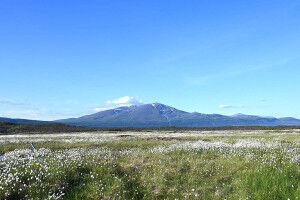
Changing vegetation in thawing permafrost increases emissions of greenhouse gases
Environment - Mar 26
University of Manchester hits major sustainability milestone, with Main Campus becoming 100% 'Zero Landfill'
University of Manchester hits major sustainability milestone, with Main Campus becoming 100% 'Zero Landfill'
Social Sciences - Mar 26
"It would be naive to believe that a social media ban will solve all problems"
"It would be naive to believe that a social media ban will solve all problems"


Health - Mar 26
Earlier detection, better outcomes: Irish researchers target rising bowel cancer rates with new blood test
Earlier detection, better outcomes: Irish researchers target rising bowel cancer rates with new blood test

Environment - Mar 26
UK must improve energy efficiency to end 50 years of policy failure and prevent future energy crises, study argues
UK must improve energy efficiency to end 50 years of policy failure and prevent future energy crises, study argues
Mathematics - Mar 26
From Materials to Medical Imaging, Fonseca's Work Shapes the Future of Innovation
From Materials to Medical Imaging, Fonseca's Work Shapes the Future of Innovation


news
OXFORD
Results 381 - 400 of 1428.
Life Sciences - Health - 08.02.2019
Scientists catch heartbeat ’molecular switch’ in action
Oxford University Radcliffe Department of Medicine researchers have developed a new method that uses a protein originally found in marine corals to visualise the flow of calcium that makes the heart beat. In a paper published in the journal Circulation Research , they used this technique to uncover the effects of genetic errors that contribute to a heart condition that is the leading killer of healthy people between the ages of 20 and 40 in the UK.
Life Sciences - 04.02.2019
Centuries-old population movements revealed in fine-scale genetic map of the Iberian Peninsula
A new study into the genetic makeup of over 1,400 individuals from across Spain has shown that the genetic patterns in modern individuals were shaped by population movements over the past 1,000 years. It also showed that in some regions, there are discernible patterns of genetic differences even between individuals living as close as 10km apart.
Life Sciences - 31.01.2019
MRI scans reveal how brain protects memories
Two distinct parts of the human brain - the neocortex and the hippocampus (a part of the brain involved in higher-order brain functions) - have been shown to help protect our memories from interfering with one another. Researchers from the Wellcome Centre for Integrative Neuroimaging at the University of Oxford have shed light on the exact neural mechanisms that make precise memory recall possible.
History & Archeology - Life Sciences - 31.01.2019
Fresh clues to the life and times of the first known humans
Oxford University scientists have played a key role in new research identifying the earliest evidence of some of the first known humans - Denisovans and Neanderthals, in Southern Siberia. Professor Tom Higham and his team at the Oxford Radiocarbon Accelerator Unit at the University of Oxford worked in collaboration with a multi-disciplinary team from the UK, Russia, Australia, Canada and Germany, on the detailed investigation over the course of five years, to date the archaeological site of Denisova cave.
Health - Pharmacology - 31.01.2019
Statin therapy reduces cardiovascular disease risk in older people
Statin therapy reduces major vascular events, such as heart attacks and strokes, in people of all ages, including those over the age of 75, according to a new study published in The Lancet. The study assessed the effects of statins in nearly 187,000 people who had taken part in 28 large clinical trials.
Life Sciences - Health - 30.01.2019
Skin colour and neurodevelopment are not linked
The latest findings from the international INTERGROWTH-21st Project, that has monitored healthy, urban children from educated families across four continents from early pregnancy to 2 years of age, show that human neurodevelopment is not influenced by the colour of an individual's skin.
Life Sciences - History & Archeology - 30.01.2019
Ancient Mongolian skull is the earliest modern human yet found in the region
A much debated ancient human skull from Mongolia has been dated and genetically analysed, showing that it is the earliest modern human yet found in the region, according to new research from the University of Oxford. The study published used Radiocarbon dating and DNA analysis and revealed that the only Pleistocene hominin fossil discovered in Mongolia, initially called Mongolanthropus, is in reality a modern human who lived approximately 34 - 35 thousand years ago.
Music - 23.01.2019
Famous freak wave recreated in lab mirrors Hokusai’s ’Great Wave’
A team of researchers based at the Universities of Oxford and Edinburgh have recreated for the first time the famous Draupner freak wave measured in the North Sea in 1995. The Draupner wave was one of the first confirmed observations of a freak wave in the ocean; it was observed on the 1st of January 1995 in the North Sea by measurements made on the Draupner Oil Platform.
Life Sciences - 17.01.2019
Fruit fly promiscuity alters the evolutionary forces on males
Researchers in the Department of Zoology at Oxford University have demonstrated for the first time what effect female fruit flies having multiple partners has on sexual selection - before and after mating. Sexual selection is the branch of natural selection concerned with obtaining mates and fertility, rather than survival.
Innovation - 15.01.2019
Technology use explains at most 0.4% of adolescent wellbeing
A study of 300,000 adolescents and parents in the UK and USA shows that only 0.4% of wellbeing in adolescents is associated with technology use. Comparatively, eating potatoes has nearly as negative effect and wearing glasses has a more negative effect on adolescent mental health then screen use.
Environment - 08.01.2019
A century and half of reconstructed ocean warming offers clues for the future
Due to a scarcity of data, most global estimates of ocean warming start only in the 1950s. However, a team of scientists at the University of Oxford has now succeeded in reconstructing ocean temperature change from 1871 to 2017. Over the past century, increased greenhouse gas emissions have given rise to an excess of energy in the Earth system.
Life Sciences - Health - 07.01.2019
Scientists call for increased diversity in genomic research
A growing number of genomic studies have generated important discoveries regarding human health and behaviour, but new research from the University of Oxford suggests that scientific advancement is limited by a lack of diversity. The findings show that the people studied in genetic discovery research continue to be overwhelmingly of European descent, but also for the first time reveal that subjects are concentrated in a handful of countries - the UK, US and Iceland, and have specific demographic characteristics.
Pharmacology - Computer Science - 20.12.2018
Concerns raised as opioid prescriptions rise across UK
Researchers recommend greater action to promote best practice as a new study reveals a rise in prescriptions of opioids for treating chronic pain rise between 1998 and 2018. A review of opioid prescribing in the UK has shown that UK doctors are prescribing more and stronger opioid drugs to patients.
Paleontology - Life Sciences - 20.12.2018
Newborn insects trapped in amber show first fossil evidence of how to crack an egg
Fossilised newborns, egg shells, and egg bursters preserved together in amber provide the first direct evidence of how insects hatched in deep time, according to a new article published today in the journal Palaeontology . One of the earliest and toughest trials that all organisms face is birth. The new findings give scientists evidence on how tiny insects broke the barrier separating them from life and took their first steps into an ancient forest.
Life Sciences - Health - 18.12.2018
Gently stroking babies before medical procedures may reduce pain
Researchers have found that gently stroking a baby seems to reduce activity in the infant brain associated with painful experiences. The results, published in the journal Current Biology , suggest that lightly brushing an infant at a speed of approximately 3cm per second could provide effective pain relief before clinically necessary medical procedures.
Astronomy & Space - 05.12.2018
Bringing balance to the Universe
A new toy model proposes a way to unify dark energy and dark matter in our Universe. Normal matter is the basic building block of humans, plants, and the solar system, but yet only comprises 5% of all the matter in the Universe. The other 95% is typically invisible, other than when its presence is inferred via gravitational effects.
Environment - Life Sciences - 05.12.2018
Study solves mystery of how geckos walk on water
It's official, the humble gecko is the Maserati of reptiles. Despite being just a few centimetres long, the gecko is known for its superior acrobatic skills and ability to power through the most challenging terrain, such as, climbing the tallest trees and running across cold, slippery ice. Scientists have now cracked perhaps its most head-scratching talent of all: how it walks on water.
Health - 03.12.2018
Global map of HIV reveals challenge to vaccine development
A study to be published in The Lancet Infectious Diseases on World AIDS Day shows the extraordinary global genetic diversity of HIV and highlights just how big the challenge is to develop a vaccine to combat the global spread of HIV. One of the most comprehensive studies of HIV around the world has revealed a map of the spread of subtypes of the virus across the world, revealing which strains are dominant in which country and region, and where new strains are emerging.
Life Sciences - Health - 30.11.2018
Experimental cancer drug shows promise for Parkinson’s
A drug originally developed for prostate cancer may have exciting potential for treating Parkinson's. The study, funded by Parkinson's UK, suggests that the drug, tasquinimod, which is not yet on the market, works by controlling genes that may cause Parkinson's. This happens when the drug interacts with a protein inside brain cells.
Health - Innovation - 29.11.2018
New report calls for cultural shift in use of patient data by NHS and health technology companies
A radical culture change in the NHS and across the health data and medical technology community is needed to ensure the NHS can deliver the benefits of new health technologies, says a new report co-authored by a University of Oxford scientist. The report, published by the Academy of Medical Sciences , outlines principles that must be adopted by the NHS and medical industry so that digital information about patients can be used in smarter, more joined-up ways to revolutionise healthcare and support life-saving research.


Life Sciences - Mar 27
Understanding the Brain - TU Ilmenau's EU EMBRACE Project Nominated for European Excellence Award
Understanding the Brain - TU Ilmenau's EU EMBRACE Project Nominated for European Excellence Award
Social Sciences - Mar 27
A manual addresses, for the first time in Spain, child and adolescent sexual exploitation
A manual addresses, for the first time in Spain, child and adolescent sexual exploitation
Environment - Mar 26
Changing vegetation in thawing permafrost increases emissions of greenhouse gases
Changing vegetation in thawing permafrost increases emissions of greenhouse gases
Environment - Mar 26
University of Manchester hits major sustainability milestone, with Main Campus becoming 100% 'Zero Landfill'
University of Manchester hits major sustainability milestone, with Main Campus becoming 100% 'Zero Landfill'
Social Sciences - Mar 26
"It would be naive to believe that a social media ban will solve all problems"
"It would be naive to believe that a social media ban will solve all problems"
Health - Mar 26
Earlier detection, better outcomes: Irish researchers target rising bowel cancer rates with new blood test
Earlier detection, better outcomes: Irish researchers target rising bowel cancer rates with new blood test
Environment - Mar 26
UK must improve energy efficiency to end 50 years of policy failure and prevent future energy crises, study argues
UK must improve energy efficiency to end 50 years of policy failure and prevent future energy crises, study argues
Mathematics - Mar 26
From Materials to Medical Imaging, Fonseca's Work Shapes the Future of Innovation
From Materials to Medical Imaging, Fonseca's Work Shapes the Future of Innovation