



Life Sciences - Mar 27
Understanding the Brain - TU Ilmenau's EU EMBRACE Project Nominated for European Excellence Award
Understanding the Brain - TU Ilmenau's EU EMBRACE Project Nominated for European Excellence Award
Social Sciences - Mar 27
A manual addresses, for the first time in Spain, child and adolescent sexual exploitation
A manual addresses, for the first time in Spain, child and adolescent sexual exploitation


Environment - Mar 26
Changing vegetation in thawing permafrost increases emissions of greenhouse gases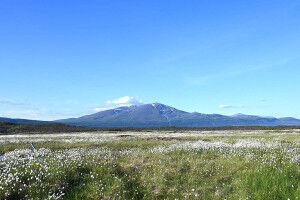
Changing vegetation in thawing permafrost increases emissions of greenhouse gases
Environment - Mar 26
University of Manchester hits major sustainability milestone, with Main Campus becoming 100% 'Zero Landfill'
University of Manchester hits major sustainability milestone, with Main Campus becoming 100% 'Zero Landfill'
Social Sciences - Mar 26
"It would be naive to believe that a social media ban will solve all problems"
"It would be naive to believe that a social media ban will solve all problems"


Health - Mar 26
Earlier detection, better outcomes: Irish researchers target rising bowel cancer rates with new blood test
Earlier detection, better outcomes: Irish researchers target rising bowel cancer rates with new blood test

Environment - Mar 26
UK must improve energy efficiency to end 50 years of policy failure and prevent future energy crises, study argues
UK must improve energy efficiency to end 50 years of policy failure and prevent future energy crises, study argues
Mathematics - Mar 26
From Materials to Medical Imaging, Fonseca's Work Shapes the Future of Innovation
From Materials to Medical Imaging, Fonseca's Work Shapes the Future of Innovation


news
OXFORD
Results 461 - 480 of 1428.
Health - 18.07.2018
Diabetes raises risk of cancer, with women at higher risk than men
About one billion people worldwide take regular aspirin, usually to prevent heart attacks or strokes. Writing in The Lancet , researchers have shown that 'one-dose-fits-all' use of aspirin to prevent heart attacks, stroke or cancer, is ineffective or harmful in the majority of people, and that a more tailored strategy is required.
Innovation - Social Sciences - 13.07.2018

The struggle to shape the experiences young people have online is now part of modern parenthood. As children and teenagers spend increasing amounts of time online, a significant share of parents and guardians now use Internet filtering tools (such as parental controls) to protect their children from accessing sexual material online.
Health - Psychology - 12.07.2018
Parental controls do not stop teens from seeing pornography
A study published in The Lancet Psychiatry provides first evidence that psychological therapy can be successfully delivered in virtual reality (VR). Fear of heights is a significant problem for one in five people at some point in their lives, and most never receive treatment. Although VR has been used in the past for phobias, it has always required a therapist to guide the user through the treatment.
Environment - Life Sciences - 12.07.2018

It is widely accepted that the human race originated from Africa - likely from a single ancestral population. However, a new Oxford University research collaboration has challenged this perception of evolution, suggesting that instead of one group growing from a specific region in Africa, our ancestors lived across the entire continent, and as a result, people were diverse both physically and culturally, from the very beginning.
Health - Innovation - 11.07.2018
Green energy is the future, according to new report
Researchers have made a breakthrough in more precisely targeting drugs to cancers. Using ultrasound and lipid drug carriers (liposomes), a multi-disciplinary team of biomedical engineers, oncologists, radiologists and anaesthetists at the University of Oxford have developed a new way to improve the targeting of cancer drugs to tumours.
Life Sciences - Health - 10.07.2018
Focussed ultrasound used to improve effects of cancer drugs
The arrival of European settlers, in the Americas, beginning in the 15th century, all but wiped out the dogs that had lived alongside people on the continent for thousands of years, according to new Oxford University-led research published today in Science. However, one close relative of these native dogs lives on in an unexpected place - as a transmissible cancer whose genome is that of the original dog in which it appeared, but which has since spread throughout the world.
Health - 03.07.2018
More awareness needed about stroke risk after mini-stroke
Regular contact with healthcare professionals, support from peers and engaging in organised exercise could help people with chronic lung conditions to lead more active - and generally better lives, according to new research. Physical inactivity in those with COPD, a common and preventable respiratory condition that is manageable, but is not currently curable, can lead to poor prognosis across the course of the disease, including increased risk of hospitalisation and death.
Media - 03.07.2018
COPD patients’ quality of life improved by socialising and regular exercise
European countries do not appear to feel threatened by the United Kingdom's decision to leave the European Union, a study of media coverage of Brexit has revealed. The study, based on coverage in 39 media outlets in France, Germany, Greece, Ireland, Italy, Poland, Spain and Sweden, found that most Brexit reporting was neutral and fact-based.
Health - 02.07.2018
How Europe’s media covered Brexit
A new prediction tool for managing patients with suspected high blood pressure in primary care could reduce by half the number of people needing to wear 24-hour ambulatory blood pressure monitors to confirm a diagnosis of hypertension. High blood pressure - also known as hypertension - affects more than one in four adults in England.
Environment - Life Sciences - 28.06.2018
Reducing the need for 24-hour blood pressure monitors in general practice
Using data from nearly 74,000 images, volunteer armchair scientists have helped Oxford University researchers to capture and better understand, the breeding habits of penguin breeding colonies across the Antarctic Peninsula, South Shetland Islands and South Georgia. The study features in Scientific Data , and was undertaken as part of Oxford's 'Penguin Watch' programme, which runs as part of the Zooniverse - the world's largest and most popular volunteer science platform.
Social Sciences - Sport - 26.06.2018
Citizen scientists capture penguin breeding dynamics
As World Cup fever sets in, increased hooliganism and football related violence are legitimate international concerns. Previous research has linked sports-related hooliganism to 'social maladjustment' e.g. previous episodes of violence or dysfunctional behaviour at home, work or school etc.
Environment - Earth Sciences - 25.06.2018
Who shares experiences of climate change in a 1.5°C world and beyond?
A new framework to understand how uneven the effects of a 1.5°C world are for different countries around the world has been published today in Geophysical Research Letters, led by researchers from the Environmental Change Institute (ECI) at the Oxford University Department of Geography. It has been long understood that climate change will affect some regions more severely than others.
Social Sciences - Sport - 22.06.2018
Social bonding key cause of football violence
As World Cup fever sets in, increased hooliganism and football related violence are legitimate international concerns. Previous research has linked sports-related hooliganism to 'social maladjustment' e.g. previous episodes of violence or dysfunctional behaviour at home, work or school etc.
Physics - Chemistry - 19.06.2018
Nano-scale ’vibrational wave’ research could revolutionise super materials
A new Oxford University research collaboration could transform the design and development of a number of next generation materials, including thermoelectrics, which are used in products that support everyday life, capturing waste heat and recycling it into electricity. A new Oxford University research collaboration could transform the design and development of a number of next generation materials, including thermoelectrics.
Environment - Earth Sciences - 08.06.2018
Rising CO2 may increase dangerous weather extremes, whatever happens to global temperatures
New research from the University of Oxford and collaborators at several other institutions provides compelling evidence that meeting the global warming target of 1.5°C may not be enough to limit the damage caused by extreme weather. The paper, published today , demonstrates that higher atmospheric CO2 concentrations directly increase temperature and rainfall extremes, meaning there could be dangerous changes in these extremes even if the global mean temperature rise remains within 1.5°C.
Economics - Environment - 05.06.2018
Regional inequalities within the EU ’have declined over the past 35 years’
New research from the University of Oxford and UFZ Helmholtz Centre for Environmental Research in Germany shows the gap between Europe's haves and have-nots has been narrowing over the past 35 years. The paper, a major comparative study of European urban and regional growth patterns, reveals that since 1980 cities and regions across the EU have been converging economically, becoming increasingly similar in per capita incomes and real growth rates.
Health - Environment - 05.06.2018
Pollution from cars and vans costs £6billion per year in health damages
A new Oxford University collaboration has shed light on the damaging health consequences of Britain's car addiction - revealing that it is likely costing our NHS and society in general more than £6 billion per year. Commissioned by Global Action Plan - who coordinate the forthcoming Clean Air Day (21 June) , and conducted in collaboration with the University of Bath, the researchers' in-depth analysis found for the first time that the health impact costs of diesel cars are significantly higher than petrol, electric and hybrid vehicles.
Health - Life Sciences - 05.06.2018
Rosalind Franklin Institute will ’transform’ life sciences research through disruptive technologies
Business Secretary Greg Clark has today launched the £103m Rosalind Franklin Institute (RFI), a national centre of excellence that will harness disruptive technologies such as AI and robotics to improve dramatically our understanding of biology. The development of the RFI was spearheaded by Oxford's Pro-Vice-Chancellor for Research and Innovation, Professor Ian Walmsley.
Environment - Life Sciences - 31.05.2018
New estimates of the environmental cost of food
Research published in the journal Science highlights the environmental impacts of thousands of food producers and their products, demonstrating the need for new technology to monitor agriculture, and the need for environmental labels on food products. Researchers at Oxford University and the Swiss agricultural research institute, Agroscope, have created the most comprehensive database yet on the environmental impacts of nearly 40,000 farms, and 1,600 processors, packaging types, and retailers.
Life Sciences - Health - 25.05.2018
Could we work together with our bacteria to stop infection?
As microbes have become increasingly resistant to antibiotics and antimicrobials scientists have become interested in new solutions to the growing superbug crisis, including the use of defensive microbes and faecal transplants. In new research, Oxford University scientists have developed a lab-based approach, creating positive co-dependent relationships between hosts and bacteria, quickly - termed 'mutualisms'. These lab-developed bacterial relationships demonstrate how microbes can work with their hosts to prevent infection.


Life Sciences - Mar 27
Understanding the Brain - TU Ilmenau's EU EMBRACE Project Nominated for European Excellence Award
Understanding the Brain - TU Ilmenau's EU EMBRACE Project Nominated for European Excellence Award
Social Sciences - Mar 27
A manual addresses, for the first time in Spain, child and adolescent sexual exploitation
A manual addresses, for the first time in Spain, child and adolescent sexual exploitation
Environment - Mar 26
Changing vegetation in thawing permafrost increases emissions of greenhouse gases
Changing vegetation in thawing permafrost increases emissions of greenhouse gases
Environment - Mar 26
University of Manchester hits major sustainability milestone, with Main Campus becoming 100% 'Zero Landfill'
University of Manchester hits major sustainability milestone, with Main Campus becoming 100% 'Zero Landfill'
Social Sciences - Mar 26
"It would be naive to believe that a social media ban will solve all problems"
"It would be naive to believe that a social media ban will solve all problems"
Health - Mar 26
Earlier detection, better outcomes: Irish researchers target rising bowel cancer rates with new blood test
Earlier detection, better outcomes: Irish researchers target rising bowel cancer rates with new blood test
Environment - Mar 26
UK must improve energy efficiency to end 50 years of policy failure and prevent future energy crises, study argues
UK must improve energy efficiency to end 50 years of policy failure and prevent future energy crises, study argues
Mathematics - Mar 26
From Materials to Medical Imaging, Fonseca's Work Shapes the Future of Innovation
From Materials to Medical Imaging, Fonseca's Work Shapes the Future of Innovation