


Life Sciences - Mar 27
Understanding the Brain - TU Ilmenau's EU EMBRACE Project Nominated for European Excellence Award
Understanding the Brain - TU Ilmenau's EU EMBRACE Project Nominated for European Excellence Award
Social Sciences - Mar 27
A manual addresses, for the first time in Spain, child and adolescent sexual exploitation
A manual addresses, for the first time in Spain, child and adolescent sexual exploitation


Environment - Mar 26
Changing vegetation in thawing permafrost increases emissions of greenhouse gases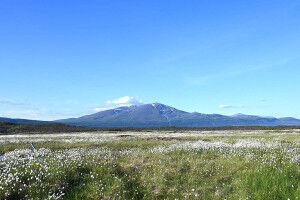
Changing vegetation in thawing permafrost increases emissions of greenhouse gases
Environment - Mar 26
University of Manchester hits major sustainability milestone, with Main Campus becoming 100% 'Zero Landfill'
University of Manchester hits major sustainability milestone, with Main Campus becoming 100% 'Zero Landfill'
Social Sciences - Mar 26
"It would be naive to believe that a social media ban will solve all problems"
"It would be naive to believe that a social media ban will solve all problems"


Health - Mar 26
Earlier detection, better outcomes: Irish researchers target rising bowel cancer rates with new blood test
Earlier detection, better outcomes: Irish researchers target rising bowel cancer rates with new blood test

Environment - Mar 26
UK must improve energy efficiency to end 50 years of policy failure and prevent future energy crises, study argues
UK must improve energy efficiency to end 50 years of policy failure and prevent future energy crises, study argues
Mathematics - Mar 26
From Materials to Medical Imaging, Fonseca's Work Shapes the Future of Innovation
From Materials to Medical Imaging, Fonseca's Work Shapes the Future of Innovation


news
OXFORD
Results 481 - 500 of 1428.
Life Sciences - Health - 25.05.2018
Could we work with our bacteria to prevent infection?
As microbes have become increasingly resistant to antibiotics and antimicrobials scientists have become interested in new solutions to the growing superbug crisis, including the use of defensive microbes and faecal transplants. In new research, Oxford University scientists have developed a fast lab-based approach, creating positive co-dependent relationships between hosts and bacteria - termed 'mutualisms'. These lab-developed bacterial relationships demonstrate how microbes can work with their hosts to prevent infection.
Health - Life Sciences - 22.05.2018
Using portable, real time DNA sequencing to fight drug-resistant TB | University of Oxford
Scientists from the Madagascar National TB Program, Institute Pasteur Madagascar, University of Oxford, European Bioinformatics Institute (EMBL-EBI) and Stony Brook University are collaborating to train Malagasy scientists to rapidly detect tuberculosis (TB) and drug-resistance using DNA sequencing.
Life Sciences - Mathematics - 22.05.2018
Extremely fast dives help peregrine falcons manoeuvre to catch agile prey | University of Oxford
Using detailed computer simulations, Oxford University research has revealed why falcons dive at their prey using the same steering laws as man-made missiles. Published today in PLOS Computational Biology, researchers from Oxford's Department of Zoology use computer simulations of peregrine falcon attacks to show that the extreme speeds reached during dives from high altitudes enhance the raptors' ability to execute manoeuvres needed to successfully attack agile prey that would otherwise escape.
Health - 18.05.2018
HIV researchers create Chelsea garden to raise awareness of disease stigma
Scientists and designers have teamed up with young people living with HIV, to create a garden at this year's RHS Chelsea Flower Show to highlight the successes and challenges still faced by young people living with HIV. The theme of the garden is HIV: stigma and cure.
History & Archeology - Economics - 17.05.2018
Ice-core study sheds light on ancient European civilisations
A study published in PNAS offer new insights into how European civilisations and their economies developed over time - finding links between levels of lead pollution trapped in Greenland ice and significant historical events, such as plagues, wars and imperial expansion. Image credit: Shutterstock Oxford University scientists have played a key role in a collaboration studying ice sheets in Greenland, which has shed light on pollution produced by the ancient Greeks and Romans.
Earth Sciences - Life Sciences - 04.05.2018
Feeling the beat through the elephants feet
Iconic and intelligent creatures, elephants continue to fascinate curious onlookers and scientists alike. Now, a new Oxford University collaboration with Save The Elephants, has shown that elephant behaviour can be determined in a new way: through the vibrations they create. The findings of the study, published in the journal Current Biology, offer a new way to detect elephants and discern their behaviour without having them in sight.
Earth Sciences - History & Archeology - 03.05.2018
Scientists call for ’open-skies’ imagery policy over Israel and Palestine
A 2013 CNES/Airbus satellite image of a new site that could be identified because looting pits over the site are visible on high-resolution satellite imagery. Map data ©2018 Google. New Oxford University research has called for an 'open-skies policy' around the availability of high resolution satellite imagery of Israel and Palestine.
Health - 01.05.2018
Partial knee replacements better for many patients and cheaper for NHS
Researchers at the Nuffield Department of Orthopaedics, Rheumatology and Musculoskeletal Sciences (NDORMS) have found that many more patients could be given a partial knee replacement instead of a total knee replacement, resulting in improvements in their quality of life and lower costs for the healthcare system.
Life Sciences - Health - 26.04.2018
Can microbes manipulate our minds?
Researchers at the University of Oxford have proposed an evolutionary framework to understand why microbes living in the gut affect the brain and behaviour, published. Katerina Johnson (Department of Experimental Psychology) and Kevin Foster (Department of Zoology) assessed data from studies on the gut-brain axis to suggest how 'that gut feeling' evolved.
Physics - Life Sciences - 26.04.2018
Weighing single molecules with light
Scientists at Oxford University have developed a light-based measuring technique that could transform our ability to characterise biomolecules. Using a microscope that detects light scattering rather than fluorescence, the researchers have demonstrated that single molecules can be observed, and their mass measured, in solution.
Health - 25.04.2018
Getting rid of malaria possible, if we try something new
The rapid elimination of potentially untreatable P. falciparum malaria in South-East Asia is possible, according to a ground-breaking new study published in The Lancet . The study authors say that setting up community-based malaria clinics for early diagnosis, treatment and monitoring, combined with mass antimalarial drug administration (MDA) to everyone living in 'hotspot' areas - even if they do not show signs of malaria - substantially reduced, often to zero, malaria incidence in remote Myanmar villages.
Life Sciences - Physics - 25.04.2018
How decisions form in the brain: A physical basis for a cognitive process
In experiments asking fruit flies to distinguish between ever closer concentrations of an odour, the researchers led by Professor Gero Miesenböck had previously identified a tiny minority of about 200 nerve cells in the brain as critical for decision-making. In new work, the team found that these nerve cells collect evidence for the alternative choices as minute voltage changes across their surface.
Life Sciences - Health - 23.04.2018
Scientists identify genetic catalysts that speed up evolution of antibiotic resistance
Researchers at Oxford University have shown that it is possible to identify genetic catalysts that accelerate the evolution of antibiotic resistance in bacteria - and that this knowledge could be used to design treatments to stifle the development of resistance. The study was funded by the Wellcome Trust and the European Research Council and is published in the journal Nature Ecology & Evolution .
Health - Physics - 20.04.2018
A dose of empathy may support patients in pain
Research published in the Journal of the Royal Society of Medicine suggests that empathic, positive messages from doctors may be of small benefit to patients suffering from pain, and improve their satisfaction about the care received. The study, which combined data from 28 clinical trials involving over 6,000 patients, adds weight to the argument that patient outcomes can be improved when doctors enhance how they express empathy and create positive expectations of benefit.
Life Sciences - 12.04.2018
Sweet potato research challenges early contact between America and Polynesia
New research led by Oxford University has revealed that sweet potato likely arrived naturally in Polynesia in pre-human times - challenging the long standing view that one of the world's most widely used crops was transported from America to Polynesia by people. New research led by Oxford University has revealed that sweet potato likely arrived naturally in Polynesia in pre-human times - challenging the long standing view that one of the world's most widely used crops was transported from America to Polynesia by people.
Life Sciences - Mathematics - 12.04.2018
Extremely fast dives help peregrine falcons manoeuvre to catch agile prey
Using detailed computer simulations, Oxford University research has revealed why falcons dive at their prey using the same steering laws as man-made missiles. Published today in PLOS Computational Biology, researchers from Oxford's Department of Zoology use computer simulations of peregrine falcon attacks to show that the extreme speeds reached during dives from high altitudes enhance the raptors' ability to execute manoeuvres needed to successfully attack agile prey that would otherwise escape.
Health - 10.04.2018
Weight loss is an important predictor of cancer
Unintended weight is the second highest risk factor for some forms of cancer, concludes the first robust research analysis to examine the association. A team led by the Universities of Oxford and Exeter conducted the first systematic review and meta-analysis to examine all available evidence on the association between weight loss and cancer in primary care.
History & Archeology - Life Sciences - 10.04.2018
Wildlife haven of Sulawesi much younger than first thought
An Oxford University collaboration has shed light on the origins of some of South East Asia's most iconic and unique wildlife; the 'deer-pig' (Sulawesi Babirusa), 'warty pig' and the 'miniature buffalo.' In doing so, the research has revealed that Sulawesi, the island paradise where they were discovered, is younger than previously thought.
Health - Life Sciences - 09.04.2018
Female body shape gene may increase risk of type 2 diabetes
Scientists at the University of Oxford have identified a gene that in women is linked to the creation and location of new fat cells and in turn contributes to an increased risk of type 2 diabetes. Published , the paper examined the effect of a gene called KLF14. The researchers found that genetic variations that control KLF14 have little impact on overall weight but they have a marked impact on where in the body any excess fat is stored.
Life Sciences - Environment - 09.04.2018
Ancient bones suggest first humans travelled further than we think
The relic is the oldest human (Homo sapiens) fossil to have been found outside of Africa and the immediately adjacent Levant, and suggests that people travelled further than initially thought during the first reported human migration into Eurasia.


Life Sciences - Mar 27
Understanding the Brain - TU Ilmenau's EU EMBRACE Project Nominated for European Excellence Award
Understanding the Brain - TU Ilmenau's EU EMBRACE Project Nominated for European Excellence Award
Social Sciences - Mar 27
A manual addresses, for the first time in Spain, child and adolescent sexual exploitation
A manual addresses, for the first time in Spain, child and adolescent sexual exploitation
Environment - Mar 26
Changing vegetation in thawing permafrost increases emissions of greenhouse gases
Changing vegetation in thawing permafrost increases emissions of greenhouse gases
Environment - Mar 26
University of Manchester hits major sustainability milestone, with Main Campus becoming 100% 'Zero Landfill'
University of Manchester hits major sustainability milestone, with Main Campus becoming 100% 'Zero Landfill'
Social Sciences - Mar 26
"It would be naive to believe that a social media ban will solve all problems"
"It would be naive to believe that a social media ban will solve all problems"
Health - Mar 26
Earlier detection, better outcomes: Irish researchers target rising bowel cancer rates with new blood test
Earlier detection, better outcomes: Irish researchers target rising bowel cancer rates with new blood test
Environment - Mar 26
UK must improve energy efficiency to end 50 years of policy failure and prevent future energy crises, study argues
UK must improve energy efficiency to end 50 years of policy failure and prevent future energy crises, study argues
Mathematics - Mar 26
From Materials to Medical Imaging, Fonseca's Work Shapes the Future of Innovation
From Materials to Medical Imaging, Fonseca's Work Shapes the Future of Innovation