



Life Sciences - Mar 27
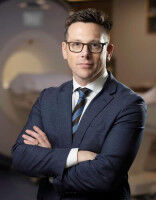
Understanding the Brain - TU Ilmenau's EU EMBRACE Project Nominated for European Excellence Award
Understanding the Brain - TU Ilmenau's EU EMBRACE Project Nominated for European Excellence Award
Social Sciences - Mar 27
A manual addresses, for the first time in Spain, child and adolescent sexual exploitation
A manual addresses, for the first time in Spain, child and adolescent sexual exploitation


Environment - Mar 26
Changing vegetation in thawing permafrost increases emissions of greenhouse gases
Changing vegetation in thawing permafrost increases emissions of greenhouse gases
Environment - Mar 26
University of Manchester hits major sustainability milestone, with Main Campus becoming 100% 'Zero Landfill'
University of Manchester hits major sustainability milestone, with Main Campus becoming 100% 'Zero Landfill'
Social Sciences - Mar 26
"It would be naive to believe that a social media ban will solve all problems"
"It would be naive to believe that a social media ban will solve all problems"


Health - Mar 26
Earlier detection, better outcomes: Irish researchers target rising bowel cancer rates with new blood test
Earlier detection, better outcomes: Irish researchers target rising bowel cancer rates with new blood test

Environment - Mar 26
UK must improve energy efficiency to end 50 years of policy failure and prevent future energy crises, study argues
UK must improve energy efficiency to end 50 years of policy failure and prevent future energy crises, study argues
Mathematics - Mar 26
From Materials to Medical Imaging, Fonseca's Work Shapes the Future of Innovation
From Materials to Medical Imaging, Fonseca's Work Shapes the Future of Innovation

news
OXFORD
Results 541 - 560 of 1428.
Health - 22.11.2017
Heart failure in the UK continues to rise; poorest people worst affected
The number of people being diagnosed with heart failure in the UK continues to grow, and the poorest people are significantly more likely to be affected by the condition, new research from The George Institute for Global Health at the University of Oxford has found. Image credit: Shutterstock The number of people being diagnosed with heart failure in the UK continues to grow, and the poorest people are significantly more likely to be affected by the condition, new research from The George Institute for Global Health at the University of Oxford has found.
Health - 21.11.2017
Does common NHS shoulder surgery work?
Results from the first placebo-controlled trial in shoulder surgery, suggest that decompression surgery may not be as effective as first thought. Image credit: Shutterstock The clinical treatment benefits of shoulder decompression surgery may be no more effective than no treatment at all, according to new Oxford University research.
Health - Life Sciences - 15.11.2017
Raising ’good’ cholesterol fails to protect against heart disease
Raising so-called 'good' cholesterol by blocking a key protein involved in its metabolism does not protect against heart disease or stroke, according to a large genetic study of 150,000 Chinese adults published in the journal JAMA Cardiology. There are two types of cholesterol in the blood: LDL-C, so-called 'bad' cholesterol, which is carried in low-density lipoproteins (LDL), and HDL-C, so-called 'good' cholesterol which is found in high-density lipoproteins (HDL).
Social Sciences - Life Sciences - 15.11.2017
It’s (not) complicated: relationships may be simpler than they seem
New research sheds light on how social networks can evolve by showing that complex social patterns observed across the animal kingdom may be simpler than they appear. Image credit: Shutterstock New Oxford University research has shed light on the complexities involved in forming social bonds, and suggests that the process is much simpler than first thought.
Health - 08.11.2017
Breast cancer study suggests review of treatment length
A new study published in the New England Journal of Medicine , funded by Cancer Research UK, has found that the risk of breast cancer recurring persists undiminished for at least 20 years after diagnosis, suggesting that hormonal treatments should continue for even longer to reduce the risk of late recurrence.
Earth Sciences - Environment - 03.11.2017
Atmospheric rivers could increase flood risk by 80 per cent
The global effect and impact of atmospheric rivers on rainfall, flooding and droughts has been estimated for the first time - revealing that in some regions the risks can be enhanced by up to 80 percent. The work, of which Oxford University is a key partner, also considers the number of people affected by these atmospheric phenomena across the globe.
Economics - Health - 02.11.2017
Child neglect linked to parental unemployment
The number of reported cases of child neglect in the United States of America increased as a result of the spike in unemployment following the financial crisis of 2007-08, according to new Oxford University research. Defined as the physical, mental, sexual or emotional abuse or neglect of a person under the age of 18, child maltreatment is a prolific problem in American society, with about 700,000 cases reported in 2015 alone.
Life Sciences - Earth Sciences - 31.10.2017
Aliens may be more like us than we think
Hollywood films and science fiction literature fuel the belief that aliens are monster-like beings, who are very different to humans. But new research suggests that we could have more in common with our extra-terrestrial neighbours, than initially thought. In a new study published in the International Journal of Astrobiology scientists from the University of Oxford show for the first time how evolutionary theory can be used to support alien predictions and better understand their behaviour.
Environment - Administration - 25.10.2017
How 14 Billion Dollars Protected Earth’s Species
Billions of dollars of financial investment in global conservation has significantly reduced biodiversity loss, according to a new Oxford University research. Image credit: Shutterstock Billions of dollars of financial investment in global conservation has significantly reduced biodiversity loss, according to a new Oxford University research.
Life Sciences - 25.10.2017
Chimpanzees shown spontaneously ’taking turns’ to solve number puzzle
A new study from Kyoto and Oxford universities and Indianapolis Zoo has shown chimpanzees spontaneously taking turns to complete a number sequencing task. Previous studies have shown chimps working together in strictly alternating turn-taking scenarios. However, these results are the first to demonstrate that chimpanzees can cope with more complex permutations of turn-taking, with no external cues to help time their behaviour.
Health - Life Sciences - 24.10.2017
Study raises possibility of vaccines against allergies and Alzheimer’s
Researchers at the Universities of Dundee and Oxford have shown how combining the tetanus vaccine with a viral particle that normally affects cucumbers can be used to treat psoriasis and allergies, and may even protect against Alzheimer's disease. Scientists led by Dundee's Dr John Foerster and Oxford's Professor Martin Bachmann, were able to take the protein coat of cucumber mosaic virus and incorporate a tetanus vaccine-derived protein structure known to stimulate the immune system in order to create vaccines to treat multiple chronic diseases.
Health - Life Sciences - 23.10.2017
Dolphin brains show signs of Alzheimer’s Disease
Study suggests Alzheimer's Disease and Type 2 diabetes might both be the price of a longer lifespan, with altered insulin function the common cause. A review led by Professor Simon Lovestone, an old age psychiatrist from Oxford Health NHS Foundation Trust, found that humans were almost unique in having Alzheimer's Disease.
Life Sciences - Environment - 20.10.2017
British birds adapt their beaks to birdfeeders
Certain British birds have evolved longer beaks than other species, and new research suggests that our fondness for feeding them may be the reason why. Image credit: Dennis Van De Water Certain British birds have evolved longer beaks than other species, and new research suggests that our fondness for feeding them may be the reason why.
Health - Life Sciences - 19.10.2017
Researchers target ’undruggable’ cancers
A new approach to targeting key cancer-linked proteins, thought to be 'undruggable', has been discovered through an alliance between industry and academia. The study published in Nature shows that two novel and specific small-molecule inhibitors developed by the research teams can bind to and deactivate an enzyme that controls the stability of the p53 tumour suppressor protein.
Health - 17.10.2017
High blood pressure linked to common heart valve disorder
For the first time, a strong link has been established between high blood pressure and the most common heart valve disorder in high-income countries, by new research from The George Institute for Global Health at the University of Oxford. The study, published in the journal PLOS Medicine, followed 5.5 million adults in the UK over 10 years.
Career - Life Sciences - 16.10.2017
Women in science ask fewer questions than men, according to new research
Stereotypes suggest that women love to talk, with some studies even finding that women say three times as much as men. But, new research from a team from the Universities of Oxford and Cambridge, shows there is an exception to this rule: professional STEM events, which could be indicative of the wider problem of gender inequality in the field.
Astronomy & Space - Environment - 11.10.2017
Dual project supports understanding of climate change and astronomy
The THz sounder TARDiS (Terahertz Atmospheric/ Astrophysics Radiation Detection in Space) will sit on the International Space Station (ISS) and support scientists to better understand the effects of climate change on space, and the origin of the stars and planets. Image credit: Shutterstock Scientists from the University of Oxford are to play a key role in new missions that will help to both better monitor the effects of climate change on space and understand the origin of the stars and planets.
Health - 09.10.2017
Trench Foot discovery paves way for new treatment
The physical cause of trench foot has been uncovered more than 100 years after the painful and debilitating condition was first identified in the First World War. Non-freezing cold injury, better known as 'trench foot' when first described during the First World War, can permanently damage hands and feet, causing chronic pain and long-lasting numbness and tingling sensations.
Religions - Social Sciences - 06.10.2017
Religion and social factors top IVF concerns
Although one in 8 couples experience fertility issues and many of them turn to Assisted Reproductive Technologies (ART) to help them have a child, usage varies significantly across Europe. A new Oxford study has shed light on some of the reasons behind this - pinpointing moral and social acceptance of the treatment and religion as key.
Social Sciences - Religions - 06.10.2017
Social factors top IVF concerns
Although one in 8 couples experience fertility issues and many of them turn to Assisted Reproductive Technologies (ART) to help them have a child, usage varies significantly across Europe. A new Oxford study has shed light on some of the reasons behind this - pinpointing moral and social acceptance of the treatment and religion as key.


Life Sciences - Mar 27
Understanding the Brain - TU Ilmenau's EU EMBRACE Project Nominated for European Excellence Award
Understanding the Brain - TU Ilmenau's EU EMBRACE Project Nominated for European Excellence Award
Social Sciences - Mar 27
A manual addresses, for the first time in Spain, child and adolescent sexual exploitation
A manual addresses, for the first time in Spain, child and adolescent sexual exploitation
Environment - Mar 26
Changing vegetation in thawing permafrost increases emissions of greenhouse gases
Changing vegetation in thawing permafrost increases emissions of greenhouse gases
Environment - Mar 26
University of Manchester hits major sustainability milestone, with Main Campus becoming 100% 'Zero Landfill'
University of Manchester hits major sustainability milestone, with Main Campus becoming 100% 'Zero Landfill'
Social Sciences - Mar 26
"It would be naive to believe that a social media ban will solve all problems"
"It would be naive to believe that a social media ban will solve all problems"
Health - Mar 26
Earlier detection, better outcomes: Irish researchers target rising bowel cancer rates with new blood test
Earlier detection, better outcomes: Irish researchers target rising bowel cancer rates with new blood test
Environment - Mar 26
UK must improve energy efficiency to end 50 years of policy failure and prevent future energy crises, study argues
UK must improve energy efficiency to end 50 years of policy failure and prevent future energy crises, study argues
Mathematics - Mar 26
From Materials to Medical Imaging, Fonseca's Work Shapes the Future of Innovation
From Materials to Medical Imaging, Fonseca's Work Shapes the Future of Innovation