



Life Sciences - Mar 27
Understanding the Brain - TU Ilmenau's EU EMBRACE Project Nominated for European Excellence Award
Understanding the Brain - TU Ilmenau's EU EMBRACE Project Nominated for European Excellence Award
Social Sciences - Mar 27
A manual addresses, for the first time in Spain, child and adolescent sexual exploitation
A manual addresses, for the first time in Spain, child and adolescent sexual exploitation


Environment - Mar 26
Changing vegetation in thawing permafrost increases emissions of greenhouse gases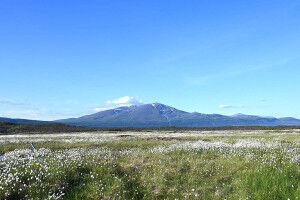
Changing vegetation in thawing permafrost increases emissions of greenhouse gases
Environment - Mar 26
University of Manchester hits major sustainability milestone, with Main Campus becoming 100% 'Zero Landfill'
University of Manchester hits major sustainability milestone, with Main Campus becoming 100% 'Zero Landfill'
Social Sciences - Mar 26
"It would be naive to believe that a social media ban will solve all problems"
"It would be naive to believe that a social media ban will solve all problems"


Health - Mar 26
Earlier detection, better outcomes: Irish researchers target rising bowel cancer rates with new blood test
Earlier detection, better outcomes: Irish researchers target rising bowel cancer rates with new blood test

Environment - Mar 26
UK must improve energy efficiency to end 50 years of policy failure and prevent future energy crises, study argues
UK must improve energy efficiency to end 50 years of policy failure and prevent future energy crises, study argues
Mathematics - Mar 26
From Materials to Medical Imaging, Fonseca's Work Shapes the Future of Innovation
From Materials to Medical Imaging, Fonseca's Work Shapes the Future of Innovation

news
OXFORD
Results 561 - 580 of 1428.
Life Sciences - 06.10.2017
Breakthrough in efforts to ’supercharge’ rice and reduce world hunger
Scientists have taken an important step in a long-term project aimed at improving photosynthesis in rice to increase crop yields and help meet the food needs of billions of people around the world. Researchers working on the Oxford-led C4 Rice Project have, by introducing a single maize gene to the plant, moved towards 'supercharging' rice to the level of more efficient crops.
Life Sciences - 03.10.2017
Role of stem cells in cancer
A shielded X-ray irradiation assay used to study migration in vivo shows planarian stem cells (green) and their progeny (magenta) distributed throughout the anteroposterior axis (left), in a stripe after targeted X-ray exposure (middle) and then migrating to the anterior (right). Cell nuclei (blue) are labelled with Hoechst.
Health - Life Sciences - 28.09.2017
New typhoid vaccine offers hope of protection for children
A new typhoid vaccine for both both adults and children has been proven by Oxford researchers to be safe and effective in preventing the disease. Typhoid is caused by the bacterium Salmonella Typhi, and is responsible for around 20 million new infections and 200,000 deaths each year, mainly in South and South-East Asia and Africa.
Astronomy & Space - Earth Sciences - 27.09.2017
The volatile processes that shaped Earth
Based on observations of newly-forming stars, scientists know that the solar system began as a disc of dust and gas surrounding the centrally-growing sun. The gas condensed to solids which accumulated into larger rocky bodies like asteroids and mini-planets. Over a period of 100 million years these mini-planets collided with one another and gradually accumulated into the planets we see today, including the Earth.
Social Sciences - Sport - 26.09.2017
Understanding football violence could help the fight against terror
Football has long been tarnished by outbreaks of fan violence. Although media headlines often link the behaviour to 'hooliganism', the activity could stem from potentially more positive motivations, such as passionate commitment to the group and the desire to belong. Understanding the root cause of football violence may therefore help in tackling the behaviour and channelling it into something more positive, Oxford University scientists suggest.
Life Sciences - Health - 21.09.2017
Virtual reality tool developed to untangle genes
Researchers from Oxford have been using virtual reality software to compile genetic data to create models which explain how genes are controlled within their natural chromosomal environments. The team from the MRC Weatherall Institute of Molecular Medicine (WIMM) have been working in collaboration with physicists from Universita' di Napoli and software developers and artists at Goldsmiths, University of London, to visualise complex interactions between genes and their regulatory elements in an interactive format.
Life Sciences - Earth Sciences - 14.09.2017
’Mysterious’ ancient creature was definitely an animal, research confirms
It lived well over 550 million years ago, is known only through fossils and has variously been described as looking a bit like a jellyfish, a worm, a fungus and lichen. But was the 'mysterious' Dickinsonia an animal, or was it something else? A new study by researchers at the universities of Oxford, Cambridge, Bristol, and the British Geological Survey provides strong proof that Dickinsonia was an animal, confirming recent findings suggesting that animals evolved millions of years before the so-called Cambrian Explosion of animal life.
Health - Life Sciences - 13.09.2017
Low-level radiation less harmful to health than other lifestyle risks
Low-level radiation exposure poses less of a health risk than other modern lifestyle threats, such as smoking, obesity and air pollution, according to Oxford University research. Human populations have always been exposed to ionizing radiation, and more so in modern life due to its use in medicine, industry and the armed forces.
Health - 12.09.2017
Cancer survivors who quit smoking sooner can live longer
Lung cancer survivors who quit smoking within a year of diagnosis will live for longer than those who continue to smoke, according to new research led by the Universities of Oxford and Birmingham. The findings also revealed that general practitioners are comparatively less likely to intervene and offer stop-smoking support to cancer patients, than they are to people diagnosed with coronary heart disease.
Physics - Earth Sciences - 12.09.2017
Tectonic plates ’weaker than previously thought’, say scientists
Experiments carried out at Oxford University have revealed that tectonic plates are weaker than previously thought. The finding explains an ambiguity in lab work that led scientists to believe these rocks were much stronger than they appeared to be in the natural world. This new knowledge will help us understand how tectonic plates can break to form new boundaries.
Life Sciences - 12.09.2017
Genes linked with education and fertility depend on when and where you live
Different genes affect educational attainment and fertility in different times and places, according to new research from the University of Oxford. This means we could be missing important variations when we try to draw conclusions about the influence of genes on human behaviour, because combining data sets from vastly different countries and historical periods could muddy the waters.
Life Sciences - 08.09.2017
Fathers can influence the sex of their offspring, scientists show
But a new study in wild mice led by Dr Aurelio Malo of Oxford University's Department of Zoology has shown that fathers can, in fact, influence sex ratios. The paper is published in the journal Proceedings of the Royal Society B and involves researchers from the UK, Spain and the USA. Dr Malo said: 'In mammals, theory predicts that offspring sex ratios can only be determined by the mother, as fathers have always been thought to inseminate an equal proportion of X and Y sperm, having a random effect on offspring sex that they could not shift from equality, or 50:50.
Life Sciences - History & Archeology - 08.09.2017
Monkey tool use threatens prey numbers, say researchers
Using tools to search for food is affecting primate prey numbers and could potentially lead to prey species extinction, new Oxford research suggests. Using tools to search for food is affecting primate prey numbers and could potentially lead to prey species extinction, new Oxford research suggests. Once thought to be a skill unique to humans, recent studies have shown that some animals, such as monkeys, apes, birds and otters, are able to use tools to find food that would otherwise be inaccessible to them.
Health - 07.09.2017
New sensor to improve intensive care monitoring of breathing
An innovative new sensor could improve how hospital staff monitor patient breath rates and stability, according to new Oxford University research. It is commonly understood that in both healthy animals and humans, arterial blood oxygen levels stay constant as we breathe. However, until now, the technology available has not been fast enough, or small enough, to be able to measure and demonstrate this.
Health - Psychology - 06.09.2017
Treating insomnia may reduce mental health problems
Treating insomnia with online cognitive behavioural therapy (CBT) could reduce mental health problems such as anxiety, depression, and paranoia, according to a large randomised controlled trial published today in The Lancet Psychiatry. The Wellcome-funded study was conducted by researchers at the Sleep and Circadian Neuroscience Institute, University of Oxford.
Life Sciences - History & Archeology - 01.09.2017
Late surviving Neanderthals ’much older’ than previously thought
Late surviving Neanderthals 'much older' than previously thought Image credit: Dr Thibaut Devièse Late surviving Neanderthals from Croatia were much older than previously thought, according to new research from the University of Oxford. Previous research suggested that the 'Vindija Neanderthals' living in Vindija Cave in northern Croatia lived as recently as 32,000 years ago.
Astronomy & Space - 29.08.2017
Volunteers find ’spiders’ on Mars - but not where they expected
A high resolution image from the HiRISE camera onboard NASA's Mars Reconnaissance Orbiter of one of the new Martian araneiform (or "spider") locales outside of the South Polar Layered Deposits discovered by the Planet Four: Terrains volunteers. Image credit: NASA/JPL/University of Arizona Armchair astronomers have helped Oxford University scientists discover landforms known as 'spiders' on parts of Mars where they were previously thought not to exist.
Physics - Earth Sciences - 29.08.2017
Sense of smell is key factor in bird navigation
How do birds navigate over long distances' This complex question has been the subject of debate and controversy among scientists for decades, with Earth's magnetic field and the bird's own sense of smell among the factors said to play a part. Now, researchers from the universities of Oxford, Barcelona and Pisa have shown in a new experiment that olfaction - or sense of smell - is almost certainly a key factor in long-distance oceanic navigation, eliminating previous misgivings about this hypothesis.
Health - Administration - 23.08.2017
New scan developed to predict stroke risk
Researchers at the University of Oxford have developed a new type of MRI scan to predict the risk of having a stroke, thanks to funding from the British Heart Foundation (BHF). The non-invasive technique, described in a paper published in the journal JACC: Cardiovascular Imaging , produces a quantitative result that can accurately indicate whether plaques in the carotid arteries - those that supply the brain with blood - are rich in cholesterol, and therefore more likely to cause a stroke.
Life Sciences - 09.08.2017
Family break-ups lead to domestic abuse in fruit flies | University of Oxford
Male fruit flies with strong family ties are less likely to become abusive during mating than others, according to new Oxford research. Drosophila melanogaster (fruit flies) courtship is known to be a violent affair. Males compete aggressively for a female's attention, attacking each other with their front legs - often harming the object of their affection in the cross fire.


Life Sciences - Mar 27
Understanding the Brain - TU Ilmenau's EU EMBRACE Project Nominated for European Excellence Award
Understanding the Brain - TU Ilmenau's EU EMBRACE Project Nominated for European Excellence Award
Social Sciences - Mar 27
A manual addresses, for the first time in Spain, child and adolescent sexual exploitation
A manual addresses, for the first time in Spain, child and adolescent sexual exploitation
Environment - Mar 26
Changing vegetation in thawing permafrost increases emissions of greenhouse gases
Changing vegetation in thawing permafrost increases emissions of greenhouse gases
Environment - Mar 26
University of Manchester hits major sustainability milestone, with Main Campus becoming 100% 'Zero Landfill'
University of Manchester hits major sustainability milestone, with Main Campus becoming 100% 'Zero Landfill'
Social Sciences - Mar 26
"It would be naive to believe that a social media ban will solve all problems"
"It would be naive to believe that a social media ban will solve all problems"
Health - Mar 26
Earlier detection, better outcomes: Irish researchers target rising bowel cancer rates with new blood test
Earlier detection, better outcomes: Irish researchers target rising bowel cancer rates with new blood test
Environment - Mar 26
UK must improve energy efficiency to end 50 years of policy failure and prevent future energy crises, study argues
UK must improve energy efficiency to end 50 years of policy failure and prevent future energy crises, study argues
Mathematics - Mar 26
From Materials to Medical Imaging, Fonseca's Work Shapes the Future of Innovation
From Materials to Medical Imaging, Fonseca's Work Shapes the Future of Innovation