



Life Sciences - Mar 27
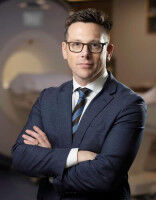
Understanding the Brain - TU Ilmenau's EU EMBRACE Project Nominated for European Excellence Award
Understanding the Brain - TU Ilmenau's EU EMBRACE Project Nominated for European Excellence Award
Social Sciences - Mar 27
A manual addresses, for the first time in Spain, child and adolescent sexual exploitation
A manual addresses, for the first time in Spain, child and adolescent sexual exploitation


Environment - Mar 26
Changing vegetation in thawing permafrost increases emissions of greenhouse gases
Changing vegetation in thawing permafrost increases emissions of greenhouse gases
Environment - Mar 26
University of Manchester hits major sustainability milestone, with Main Campus becoming 100% 'Zero Landfill'
University of Manchester hits major sustainability milestone, with Main Campus becoming 100% 'Zero Landfill'
Social Sciences - Mar 26
"It would be naive to believe that a social media ban will solve all problems"
"It would be naive to believe that a social media ban will solve all problems"


Health - Mar 26
Earlier detection, better outcomes: Irish researchers target rising bowel cancer rates with new blood test
Earlier detection, better outcomes: Irish researchers target rising bowel cancer rates with new blood test

Environment - Mar 26
UK must improve energy efficiency to end 50 years of policy failure and prevent future energy crises, study argues
UK must improve energy efficiency to end 50 years of policy failure and prevent future energy crises, study argues
Mathematics - Mar 26
From Materials to Medical Imaging, Fonseca's Work Shapes the Future of Innovation
From Materials to Medical Imaging, Fonseca's Work Shapes the Future of Innovation

news
OXFORD
Results 661 - 680 of 1428.
Health - Life Sciences - 08.11.2016
Scientists identify key evolutionary catalyst for antibiotic resistance
A new study led by scientists at the University of Oxford has found that small DNA molecules known as plasmids are one of the key culprits in spreading the major global health threat of antibiotic resistance. Using a novel experimental model, the international team of researchers show that plasmids, which live inside bacteria and are known to be a vehicle for transferring antibiotic resistance genes, can accelerate the evolution of new forms of resistance - making them more important to the process than previously thought.
Life Sciences - History & Archeology - 08.11.2016
Clues in poached elephant ivory reveal ages and locations of origin
More than 90% of ivory in large seized shipments came from elephants that died less than three years before, according to a new study led by the University of Utah and involving the University of Oxford. Combining radiocarbon ivory dating with genetic analysis provides a picture of when and where poachers are killing elephants - useful tools in the ongoing battle against illegal animal product trade.
Health - 04.11.2016
What percentage of people who play video games are ’addicted’’
A new Oxford University study suggests that playing internet games is not as addictive as gambling. It is the first research that has tried to measure the scale of gaming addiction in the general population using symptoms of 'internet gaming disorder' as defined by the American Psychiatric Association (APA) Researchers from the University's Oxford Internet Institute asked nationally representative samples of men and women in four countries how they felt after gaming using the APA checklist of health symptoms.
Health - Life Sciences - 02.11.2016
Study paves the way for new autoimmune disease treatments with fewer side effects
New research has raised the possibility of minimising the side effects of treatment for patients with autoimmune diseases, such as multiple sclerosis and inflammatory bowel disease. A research team has been using genetics to explore ways of producing new treatments for autoimmune diseases, but with significantly fewer side effects.
Life Sciences - Social Sciences - 31.10.2016
Twelve DNA areas ’linked with the age at which we have our first child and family size’
Researchers identify specific areas of DNA sequence that are related with the age at which we have our first child, and the total number of children we have during the course of our life. Researchers have identified 12 specific areas of the DNA sequence that are robustly related with the age at which we have our first child, and the total number of children we have during the course of our life.
Health - Social Sciences - 31.10.2016
Psychotropic medications may cut risk of violent reoffending
A study by the University of Oxford, looking at rates of violent re-offences among former prisoners in Sweden, has shown that prescribing psychotropic medications can cut the risk of violent reoffending. Prescribing ex-prisoners psychotropic medications after release is associated with a decrease in reoffending, according to a new study led by the University of Oxford.
Health - 27.10.2016
No weekend effect in England’s major trauma centres
Patients admitted to NHS major trauma centres at the weekend have near identical outcomes to those admitted during the week, according to a new study of more than 49,000 patients published in the Emergency Medicine Journal. NHS major trauma services in England show no signs of a 'weekend effect', Oxford University-led research has found.
Life Sciences - Earth Sciences - 26.10.2016
Fossilised dinosaur brain tissue identified for the first time
An unassuming brown pebble, found more than a decade ago by a fossil hunter in Sussex, has been confirmed as the first example of fossilised brain tissue from a dinosaur. The fossil, most likely from a species closely related to Iguanodon, displays distinct similarities to the brains of modern-day crocodiles and birds.
Economics - 26.10.2016
Strong link between increased benefit sanctions and higher foodbank use
The researchers found that for every 10 additional sanctions applied in each quarter of the year, on average five more adults would be referred to foodbanks in the area. There is a 'strong, dynamic' relationship between people having their benefits stopped and an increase in referral to foodbanks, new research has found.
Physics - Chemistry - 20.10.2016
Safe new storage method could be key to future of hydrogen-powered vehicles
Hydrogen is often described as the fuel of the future, particularly when applied to hydrogen-powered fuel cell vehicles. One of the main obstacles facing this technology - a potential solution to future sustainable transport - has been the lack of a lightweight, safe on-board hydrogen storage material.
Media - 12.10.2016
When we care about some plane crashes and not so much others
Researchers have analysed data that reveals which plane crashes the public is interested in and why. They show the biases in the coverage of such events, even in open systems like Wikipedia. The team from the Oxford Internet Institute (OII) counted the number of page views and edits of Wikipedia articles about 1,500 plane crashes around the world to discover that a death toll of around 50 is the minimum threshold for predicting significant levels of public interest.
Health - 10.10.2016
Elderly patients with unstable ankle fractures could avoid surgery
Elderly patients with unstable ankle fractures could avoid surgery, according to research by a UK team led by Oxford University. The study, published in the Journal of the American Medical Association , compared surgery to pin a broken ankle with a new plaster cast technique known as 'close casting'.
Life Sciences - Health - 10.10.2016
First of our three billion heartbeats is sooner than we thought
When does our heart first start to beat? Until now, researchers thought that the first time our heart muscle contracted to beat was at eight days after conception in mice, which equates to around day 21 of a human pregnancy. Now, a team funded by the British Heart Foundation (BHF) at the University of Oxford has demonstrated earlier beating of the heart in mouse embryos which, if extrapolated to the human heart, suggests beating as early as 16 days after conception.
History & Archeology - Environment - 07.10.2016
Ancient Britons’ teeth reveal people were ’highly mobile’ 4,000 years ago
Archaeologists have created a new database from the teeth of prehistoric humans found at ancient burial sites in Britain and Ireland that tell us a lot about their climate, their diet and even how far they may have travelled. In a paper, led by Dr Maura Pellegrini from the University of Oxford, researchers say that individuals in prehistoric Britain were highly mobile.
Health - 05.10.2016
Rapid blood test by GPs can rule out serious infections in children
Using a simple decision rule and a finger prick to test blood, GPs could substantially reduce the number of ill children being referred to hospital, if the test is used on children identified as 'at-risk' of a serious infection.
Health - Life Sciences - 05.10.2016
No link between night shifts and breast cancer, study concludes
Despite an assessment in 2007 that night shift work was probably carcinogenic, data from three new studies and a review of currently available evidence indicate that night shift work has little or no effect on breast cancer incidence. The work was led by Oxford University and is published in the Journal of the National Cancer Institute .
Social Sciences - Philosophy - 05.10.2016
Being kind to others does make you ’slightly happier’
Researchers conclude that being kind to others causes a small but significant improvement in subjective well-being. The review found that the effect is lower than some pop-psychology articles have claimed, but also concluded that future research might help identify which kind acts are most effective at boosting happiness.
Life Sciences - Law - 03.10.2016
First evidence of deep-sea animals ingesting microplastics
Following the news that the UK government is to ban plastic microbeads by the end of 2017, a team of scientists led by the University of Oxford has discovered the first evidence of microplastics being ingested by deep-sea animals. Researchers working on the Royal Research Ship (RRS) James Cook at two sites in the mid-Atlantic and south-west Indian Ocean found plastic microfibres inside creatures including hermit crabs, squat lobsters and sea cucumbers at depths of between 300m and 1800m.
Life Sciences - Law - 29.09.2016
Vice-Chancellor’s Oration 2016
Following the news that the UK government is to ban plastic microbeads by the end of 2017, a team of scientists led by the University of Oxford has discovered the first evidence of microplastics being ingested by deep-sea animals. Researchers working on the Royal Research Ship (RRS) James Cook at two sites in the mid-Atlantic and south-west Indian Ocean found plastic microfibres inside creatures including hermit crabs, squat lobsters and sea cucumbers at depths of between 300m and 1800m.
Health - Life Sciences - 29.09.2016
Medicine at Oxford named world’s best for sixth year running
New research finds genetic differences that help to explain why some babies are born bigger or smaller than others. The research, led by the University of Oxford, also reveals how genetic differences provide an important link between an individual's early growth and their chances of developing conditions such as type 2 diabetes or heart disease in later life.


Life Sciences - Mar 27
Understanding the Brain - TU Ilmenau's EU EMBRACE Project Nominated for European Excellence Award
Understanding the Brain - TU Ilmenau's EU EMBRACE Project Nominated for European Excellence Award
Social Sciences - Mar 27
A manual addresses, for the first time in Spain, child and adolescent sexual exploitation
A manual addresses, for the first time in Spain, child and adolescent sexual exploitation
Environment - Mar 26
Changing vegetation in thawing permafrost increases emissions of greenhouse gases
Changing vegetation in thawing permafrost increases emissions of greenhouse gases
Environment - Mar 26
University of Manchester hits major sustainability milestone, with Main Campus becoming 100% 'Zero Landfill'
University of Manchester hits major sustainability milestone, with Main Campus becoming 100% 'Zero Landfill'
Social Sciences - Mar 26
"It would be naive to believe that a social media ban will solve all problems"
"It would be naive to believe that a social media ban will solve all problems"
Health - Mar 26
Earlier detection, better outcomes: Irish researchers target rising bowel cancer rates with new blood test
Earlier detection, better outcomes: Irish researchers target rising bowel cancer rates with new blood test
Environment - Mar 26
UK must improve energy efficiency to end 50 years of policy failure and prevent future energy crises, study argues
UK must improve energy efficiency to end 50 years of policy failure and prevent future energy crises, study argues
Mathematics - Mar 26
From Materials to Medical Imaging, Fonseca's Work Shapes the Future of Innovation
From Materials to Medical Imaging, Fonseca's Work Shapes the Future of Innovation