


Life Sciences - Mar 27
Understanding the Brain - TU Ilmenau's EU EMBRACE Project Nominated for European Excellence Award
Understanding the Brain - TU Ilmenau's EU EMBRACE Project Nominated for European Excellence Award
Social Sciences - Mar 27
A manual addresses, for the first time in Spain, child and adolescent sexual exploitation
A manual addresses, for the first time in Spain, child and adolescent sexual exploitation


Environment - Mar 26
Changing vegetation in thawing permafrost increases emissions of greenhouse gases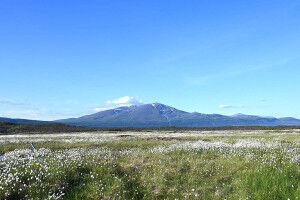
Changing vegetation in thawing permafrost increases emissions of greenhouse gases
Environment - Mar 26
University of Manchester hits major sustainability milestone, with Main Campus becoming 100% 'Zero Landfill'
University of Manchester hits major sustainability milestone, with Main Campus becoming 100% 'Zero Landfill'
Social Sciences - Mar 26
"It would be naive to believe that a social media ban will solve all problems"
"It would be naive to believe that a social media ban will solve all problems"


Health - Mar 26
Earlier detection, better outcomes: Irish researchers target rising bowel cancer rates with new blood test
Earlier detection, better outcomes: Irish researchers target rising bowel cancer rates with new blood test
Environment - Mar 26
UK must improve energy efficiency to end 50 years of policy failure and prevent future energy crises, study argues
UK must improve energy efficiency to end 50 years of policy failure and prevent future energy crises, study argues
Mathematics - Mar 26
From Materials to Medical Imaging, Fonseca's Work Shapes the Future of Innovation
From Materials to Medical Imaging, Fonseca's Work Shapes the Future of Innovation

news
OXFORD
Results 701 - 720 of 1428.
Health - Life Sciences - 19.08.2016
Study suggests routes to improved immunity in older people
In a paper , scientists explain how they uncovered the effects of a protein called Foxn1, which is a critical factor in the development of an effective immune system. The findings from these studies.. identify new potential strategies to preserve thymus function for longer, raising the prospect of a healthier old age.
Health - Life Sciences - 17.08.2016
Improved genetic test analysis could lead to better diagnosis of inherited conditions
A groundbreaking study, led by experts from the University of Oxford and Royal Brompton Hospital, has discovered better methods to interpret the significance of gene mutations in patients who are tested for genetic conditions. The findings mean that, in future, more diagnoses could be made through genetic testing.
Life Sciences - 15.08.2016
Finding the brain’s generosity centre
Scientists from Oxford University and UCL have identified part of our brain that helps us learn to be good to others. The discovery could help understanding of conditions like psychopathy where people's behaviour is extremely antisocial. The researchers were led by Dr Patricia Lockwood, who explained: 'Prosocial behaviours are social behaviours that benefit other people.
Health - 15.08.2016
Cardiovascular disease cause of 45% of deaths across Europe each year
Cardiovascular disease (CVD) is the main cause of death in Europe, accounting for nearly half (45 per cent) of all deaths, according to a new Oxford study funded by the British Heart Foundation (BHF). There are around four million deaths from CVD across Europe each year including more than 150,000 in the UK.
Environment - Life Sciences - 12.08.2016
Greenland shark revealed to have longest life expectancy of all vertebrates
An international team of scientists led by the University of Copenhagen and including the University of Oxford has found that the Greenland shark has a life expectancy of at least 272 years. This discovery shows it is the longest living vertebrate known to science, exceeding even bowhead whales, turtles and tortoises.
Health - Life Sciences - 10.08.2016
Our genes can alter action of the most commonly used Type 2 diabetes drug
Researchers in an international study have uncovered new genetic evidence of how the benefits of the world's most commonly used Type 2 diabetes drug may vary between individuals. Metformin, a drug used by hundreds of millions of people with Type 2 diabetes worldwide, has been in use for over 50 years.
Psychology - 08.08.2016
Psychologist’s magic makes a non-existent object disappear
Magicians use sleight of hand to confuse you about where an object is. But could they make you believe that you saw a non-existent object disappear? A team of experimental psychologists at Oxford University developed their own magic trick to find out. Their results are published in the journal Frontiers in Psychology .
Health - Life Sciences - 03.08.2016
Rapid bacterial infection test reduces antibiotic use
Researchers from the Oxford University Clinical Research Unit in Vietnam have shown that using a rapid (5-minute) test can reduce antibiotic misuse for respiratory infections. Cutting the number of unnecessary antibiotic prescriptions is a key way to prevent the spread of antibiotic-resistant infections.
Health - 02.08.2016
Study sheds light on link between cholesterol and diabetes
The slight increase in risk of developing type 2 diabetes during statin treatment may actually be a consequence of having lowered cholesterol, rather than a direct effect of the drug, according to Oxford University research funded by the British Heart Foundation. The genetic study found that people with genes predisposing them to having lower levels of low density lipoprotein (LDL) cholesterol, had a decreased risk of heart disease and an increased risk of diabetes.
Health - Life Sciences - 02.08.2016
Research targets number one killer of under-5s
Oxford researchers are developing a tool to make it much easier and cheaper to diagnose pneumonia - the number one killer of children under 5. Their latest research is published in Journal of the Royal Society Interface . Currently, correctly diagnosing pneumonia and understanding how severe it is requires specialist doctors and expensive equipment like X-ray machines.
Life Sciences - 02.08.2016
Sandman’s role in sleep control
Oxford University researchers have discovered what causes a switch to flip in our brains and wake us up. The discovery, published in the journal Nature , brings us closer to understanding the mystery of sleep. Sleep is governed by two systems'the circadian clock and the sleep homeostat. While the circadian clock is quite well understood, very little is known about the sleep homeostat.
Astronomy & Space - Economics - 01.08.2016
Satellite images show poor populations around the world in darkness at night
Economists from the University of Oxford have come up with a novel approach for measuring global poverty - counting the number of people who live in darkness at night. Researchers analysed two separate datasets from satellites: the first showed images of all the areas of the world that light up at night, and the second estimated population using images of roads, buildings and other signs of human habitation.
Health - Life Sciences - 29.07.2016
Two research discoveries offer hope for managing ovarian cancer
Oxford University researchers have found a way to detect ovarian cancer early and identified an enzyme that is key in making ovarian cancer more deadly. Their results, published in two journals, provide new research routes for scientists trying to detect and beat the disease. Ovarian cancer is the fifth most common cancer for women in the UK , with about 7100 new cases each year.
Social Sciences - 20.07.2016
’One in three foodbank users is a child’
Researchers from Oxford and Chester Universities have systematically identified the characteristics of people who use food banks in the UK, looking at why they need to resort to the emergency food parcels. Last year, nearly 2,900 three-day food supplies were handed out in West Cheshire in North West England.
Life Sciences - Psychology - 19.07.2016
Didn’t you do well?
While sports coaching may be increasingly statistics-dependent, people's assessment of performance overrides objective evidence in favour of comparison with others. Oxford University researchers have been looking at how we judge our own performance and that of other people. Their conclusion - we confuse the two, especially if in groups such as sports teams.
Health - Life Sciences - 18.07.2016
Rare mutations in bowel cancer may identify patients with a better prognosis
An international collaboration between the University of Oxford and other European institutions has uncovered a correlation between a rare mutation in bowel cancers and a better prognosis, raising the possibility that patients with such tumours may not require chemotherapy after surgery. The study focused on colorectal (bowel) cancers and examined the presence of mutations in a gene that is essential for the accurate copying of DNA when cells divide, known as DNA polymerase epsilon (POLE).
Health - Psychology - 12.07.2016
Psychological treatment may be effective in reducing self-harm
A new review, published in The Lancet Psychiatry , investigates the effectiveness of a number of different forms of psychological, or 'talking' therapies, for adults who self-harm. Self-harm, which includes all intentional self-poisoning or self-injury irrespective of suicidal or other motives, is often repeated and is strongly associated with an increased risk of suicide.
Health - Life Sciences - 11.07.2016
Gene sequencing offers way to beat global spread of gonorrhoea
With drug-resistant strains of sexually-transmitted infection gonorrhoea increasing, scientists from Brighton, Oxford University and Public Health England have found that genetic sequencing can track the spread of infection. They show coordinated national and international strategies are required to stop drug-resistance spreading further.
Environment - 08.07.2016
Deaths during heatwave in two cities ’due to man-made climate change’
Scientists have specified how many deaths can be attributed to man-made climate change during an extreme heatwave in two European cities in 2003. They calculate that in Paris, the hottest city in Europe during the heatwave in summer 2003, 506 out of 735 summer deaths recorded in the French capital were due to a heatwave made worse by man-made climate change.
History & Archeology - Life Sciences - 08.07.2016
Monkeys in Brazil have used stone tools for hundreds of years at least
New archaeological evidence suggests that Brazilian capuchins have been using stone tools to crack open cashew nuts for at least 700 years, and the new research paper asks whether human behaviour was influenced through watching the monkeys. Researchers say, to date, they have found the earliest archaeological examples of monkey tool use outside of Africa.


Life Sciences - Mar 27
Understanding the Brain - TU Ilmenau's EU EMBRACE Project Nominated for European Excellence Award
Understanding the Brain - TU Ilmenau's EU EMBRACE Project Nominated for European Excellence Award
Social Sciences - Mar 27
A manual addresses, for the first time in Spain, child and adolescent sexual exploitation
A manual addresses, for the first time in Spain, child and adolescent sexual exploitation
Environment - Mar 26
Changing vegetation in thawing permafrost increases emissions of greenhouse gases
Changing vegetation in thawing permafrost increases emissions of greenhouse gases
Environment - Mar 26
University of Manchester hits major sustainability milestone, with Main Campus becoming 100% 'Zero Landfill'
University of Manchester hits major sustainability milestone, with Main Campus becoming 100% 'Zero Landfill'
Social Sciences - Mar 26
"It would be naive to believe that a social media ban will solve all problems"
"It would be naive to believe that a social media ban will solve all problems"
Health - Mar 26
Earlier detection, better outcomes: Irish researchers target rising bowel cancer rates with new blood test
Earlier detection, better outcomes: Irish researchers target rising bowel cancer rates with new blood test
Environment - Mar 26
UK must improve energy efficiency to end 50 years of policy failure and prevent future energy crises, study argues
UK must improve energy efficiency to end 50 years of policy failure and prevent future energy crises, study argues
Mathematics - Mar 26
From Materials to Medical Imaging, Fonseca's Work Shapes the Future of Innovation
From Materials to Medical Imaging, Fonseca's Work Shapes the Future of Innovation