



Life Sciences - Mar 27
Understanding the Brain - TU Ilmenau's EU EMBRACE Project Nominated for European Excellence Award
Understanding the Brain - TU Ilmenau's EU EMBRACE Project Nominated for European Excellence Award
Social Sciences - Mar 27
A manual addresses, for the first time in Spain, child and adolescent sexual exploitation
A manual addresses, for the first time in Spain, child and adolescent sexual exploitation


Environment - Mar 26
Changing vegetation in thawing permafrost increases emissions of greenhouse gases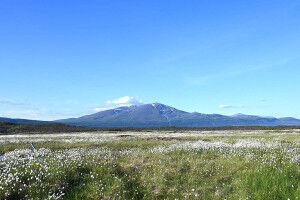
Changing vegetation in thawing permafrost increases emissions of greenhouse gases
Environment - Mar 26
University of Manchester hits major sustainability milestone, with Main Campus becoming 100% 'Zero Landfill'
University of Manchester hits major sustainability milestone, with Main Campus becoming 100% 'Zero Landfill'
Social Sciences - Mar 26
"It would be naive to believe that a social media ban will solve all problems"
"It would be naive to believe that a social media ban will solve all problems"


Health - Mar 26
Earlier detection, better outcomes: Irish researchers target rising bowel cancer rates with new blood test
Earlier detection, better outcomes: Irish researchers target rising bowel cancer rates with new blood test

Environment - Mar 26
UK must improve energy efficiency to end 50 years of policy failure and prevent future energy crises, study argues
UK must improve energy efficiency to end 50 years of policy failure and prevent future energy crises, study argues
Mathematics - Mar 26
From Materials to Medical Imaging, Fonseca's Work Shapes the Future of Innovation
From Materials to Medical Imaging, Fonseca's Work Shapes the Future of Innovation

news
OXFORD
Results 721 - 740 of 1428.
Environment - History & Archeology - 07.07.2016
Innovation of Stone Age humans ’not linked with climate change’
The cultural and technological innovations of Middle Stone Age humans in Southern Africa may not be directly linked to climate, according to new research. Environmental records obtained from archaeological sites where there are Middle Stone Age deposits are the subject of the study published in the journal, PLOS ONE .
Social Sciences - Administration - 07.07.2016
Foster carers facing allegations of abuse ’need better support’
New research finds that foster carers who have faced unproven allegations of abuse from the children they are looking after often have little support afterwards. The study drew on 190 records of unproven allegations against foster carers from all over England. It found that just over half (55%) of foster carers subjected to an unproven abuse allegation by the child were offered support on the day they learnt about the claim - usually from the relevant local authority, or fostering companies or charities involved.
Health - 01.07.2016
Efficacy of RTS,S malaria vaccine declines over seven years
Results from a long-term phase II study of the malaria vaccine RTS,S show that its efficacy falls over time, and that this decline is fastest in children living in areas with higher than average rates of malaria. The findings, published in the New England Journal of Medicine , suggest that the benefits of the vaccine are likely to vary across different populations and highlight the need for more research to determine the most effective way of using RTS,S, which last year became the first ever malaria vaccine to receive a green light from the European Medicines Agency.
Life Sciences - Environment - 30.06.2016
Not so pea-brained after all! Pea plants demonstrate ability to ’gamble’ - a first in plants
An international team of scientists from Oxford University and Tel-Hai College (Israel) has shown that pea plants can demonstrate sensitivity to risk - namely, that they can make adaptive choices that take into account environmental variance, an ability previously unknown outside the animal kingdom.
Life Sciences - 28.06.2016
Human development’s first gear
Team spent ten years trying to find role of four genes: Argfx, Leutx, Dprx and Tprx Genes only act in one brief period during the early stages of an embryo After fertilisation starts the engine of growth, genes control the 'first gear' of embryo development Genes arose 70 million years ago in an unstable area of human DNA Oxford University researchers are closer to solving a decade-old mystery after discovering that a set of genes they are studying play a key role in early human development.
Life Sciences - Health - 27.06.2016
Malaria mutations beat treatments
Scientists have discovered that the malaria parasite Plasmodium vivax is evolving rapidly to adapt to conditions in different geographical locations, in particular to defend itself against widely-used antimalarial drugs. The study, published in Nature Genetics today, provides a foundation for using genomic surveillance to guide effective strategies for malaria control and elimination.
Earth Sciences - Health - 27.06.2016
Huge helium discovery ’a life-saving find’
A new approach to gas exploration has discovered a huge helium gas field, which could address the increasingly critical shortage of this vital yet rare element. Helium doesn't just make your voice squeaky - it is critical to many things we take for granted, including MRI scanners in medicine, welding, industrial leak detection and nuclear energy.
Health - Life Sciences - 24.06.2016
More uses for immune system’s ’Swiss army knife’
Oxford University research has found that a little-studied and relatively unknown part of the human immune system could be twice as important as previously thought. Mucosal Associated Invariant T-cells (MAIT cells) were first identified in 1993 but largely ignored until recently. Australian researchers recently found that they had an important role in fighting bacterial infections.
Media - Social Sciences - 23.06.2016
Mapping online hate speech
You might think from anecdotal evidence that hate speech on social media by individuals and groups appears quite a lot, but one of first academic studies to examine the empirical data concludes that these extreme forms of speech on Facebook are marginal as compared with total content. Researchers from the University of Oxford and Addis Ababa University examined thousands of comments made by Ethiopians on Facebook during four months around the time of Ethiopia's general election in 2015.
Life Sciences - Health - 20.06.2016
Sub-Saharan Africa’s 4000-year legacy of past migrations
Researchers from the University of Oxford have revealed that the genetic ancestries of many of sub-Saharan Africa's populations are the result of historical DNA mixing events, known as admixture, within the last 4000 years. Their study, to be published in the journal eLife, uncovers signatures of these admixture events through a large analysis of DNA from populations across the continent.
Social Sciences - Psychology - 16.06.2016
Dancing together can connect groups of children
Brief bouts of simple synchronised dancing can help groups of children warm to one another, says a new study. Researchers found this was even the case when children's feelings about the other group were negative beforehand. Around 100 children who took part in the Oxford University study were divided into groups and performed dance-like moves facing one another, wearing headphones for their rhythmic cues.
Social Sciences - Psychology - 16.06.2016
Dancing to the same beat connects groups of children
Brief bouts of simple synchronised dance-like moves can help groups of children warm to one another, says a new study. Researchers found this was even the case when children's feelings about the other group were negative beforehand. Around 100 children who took part in the Oxford University study were divided into groups and performed their moves facing one another, wearing headphones for their rhythmic cues.
Health - Life Sciences - 15.06.2016
New genetic research can significantly improve drug development
With drug development costs topping $1.2bn (£850 million) to get a single treatment to the point it can be sold and used in the clinic, could genetic analysis save hundreds of millions of dollars? According to a new study published in the International Journal of Epidemiology this week, genetic research in large-scale prospective biobank studies can significantly improve the drug development pipeline and reduce costs.
Health - Life Sciences - 14.06.2016
Scientists map the global spread of HIV - through the Western world and beyond - for the first time
For the first time, an international team of scientists from the European Society for Translational Antiviral Research (ESAR) has mapped the spread of the HIV virus around the globe after it reached the United States in the early 1970s. The major study, published in the Journal of Molecular Epidemiology and Evolutionary Genetics of Infectious Diseases ( MEEGID ), finds that HIV travelled from the US to Western Europe on a number of occasions, whereas Central and Eastern Europe remained isolated for the most part of the early epidemic.
Health - 14.06.2016
Study confirms that breast is best for premature babies’ hearts
Breastfeeding premature babies improves long-term heart structure and function, an Oxford University study has found. The hearts of babies born early often develop abnormally. Dr Adam Lewandowski and colleagues at the Oxford Cardiovascular Clinical Research Facility, directed by Professor Paul Leeson, have previously shown that, in adult life, the hearts of people who were born very preterm have smaller chambers, thicker walls and reduced function.
History & Archeology - Life Sciences - 09.06.2016
Generations of macaques used ’tools’ to open their oysters and nuts
A new study looks into the history of stone tools used by wild macaques in coastal Thailand. It finds they have been using them for decades..and possibly thousands of years.. to crack open shellfish and nuts. While there have been several studies observing living non-human primates, this is the first report into the archaeological evidence of tool use by Old World monkeys.
Health - 08.06.2016
Most antidepressant drugs ineffective for children and teens, study finds
But researchers warn that lack of available data from published and unpublished trials leads to great uncertainty around true effects Most available antidepressants are ineffective, and some may be unsafe, for children and teenagers with major depression, according to the most comprehensive comparison of commonly prescribed antidepressant drugs so far, published in The Lancet .
Environment - History & Archeology - 07.06.2016
’Pristine’ landscapes haven’t existed for thousands of years
'Pristine' landscapes simply do not exist anywhere in the world today and, in most cases, have not existed for at least several thousand years, says a new study led by the University of Oxford. An exhaustive review of archaeological data from the last 30 years details how the world's landscapes have been shaped by repeated human activity over many thousands of years.
Life Sciences - 06.06.2016
Fish can recognise human faces, new research shows
A species of tropical fish has been shown to be able to distinguish between human faces. It is the first time fish have demonstrated this ability. The research, carried out by a team of scientists from the University of Oxford (UK) and the University of Queensland (Australia), found that archerfish were able to learn and recognise faces with a high degree of accuracy - an impressive feat, given this task requires sophisticated visual recognition capabilities.
Life Sciences - Health - 06.06.2016
Babies don’t just look cute, scientists find
What is it about the sight of an infant that makes almost everyone crack a smile? Big eyes, chubby cheeks, and a button nose? An infectious laugh, soft skin, and a captivating smell? While we have long known that babies look cute, Oxford University researchers have found that cuteness is designed to appeal to all our senses - even our noses! They explain that all these characteristics contribute to 'cuteness' and trigger our caregiving behaviours, which is vital because infants need our constant attention to survive and thrive.


Life Sciences - Mar 27
Understanding the Brain - TU Ilmenau's EU EMBRACE Project Nominated for European Excellence Award
Understanding the Brain - TU Ilmenau's EU EMBRACE Project Nominated for European Excellence Award
Social Sciences - Mar 27
A manual addresses, for the first time in Spain, child and adolescent sexual exploitation
A manual addresses, for the first time in Spain, child and adolescent sexual exploitation
Environment - Mar 26
Changing vegetation in thawing permafrost increases emissions of greenhouse gases
Changing vegetation in thawing permafrost increases emissions of greenhouse gases
Environment - Mar 26
University of Manchester hits major sustainability milestone, with Main Campus becoming 100% 'Zero Landfill'
University of Manchester hits major sustainability milestone, with Main Campus becoming 100% 'Zero Landfill'
Social Sciences - Mar 26
"It would be naive to believe that a social media ban will solve all problems"
"It would be naive to believe that a social media ban will solve all problems"
Health - Mar 26
Earlier detection, better outcomes: Irish researchers target rising bowel cancer rates with new blood test
Earlier detection, better outcomes: Irish researchers target rising bowel cancer rates with new blood test
Environment - Mar 26
UK must improve energy efficiency to end 50 years of policy failure and prevent future energy crises, study argues
UK must improve energy efficiency to end 50 years of policy failure and prevent future energy crises, study argues
Mathematics - Mar 26
From Materials to Medical Imaging, Fonseca's Work Shapes the Future of Innovation
From Materials to Medical Imaging, Fonseca's Work Shapes the Future of Innovation