

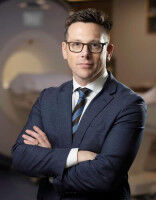


Life Sciences - Mar 27
Understanding the Brain - TU Ilmenau's EU EMBRACE Project Nominated for European Excellence Award
Understanding the Brain - TU Ilmenau's EU EMBRACE Project Nominated for European Excellence Award
Social Sciences - Mar 27
A manual addresses, for the first time in Spain, child and adolescent sexual exploitation
A manual addresses, for the first time in Spain, child and adolescent sexual exploitation


Environment - Mar 26
Changing vegetation in thawing permafrost increases emissions of greenhouse gases
Changing vegetation in thawing permafrost increases emissions of greenhouse gases
Environment - Mar 26
University of Manchester hits major sustainability milestone, with Main Campus becoming 100% 'Zero Landfill'
University of Manchester hits major sustainability milestone, with Main Campus becoming 100% 'Zero Landfill'
Social Sciences - Mar 26
"It would be naive to believe that a social media ban will solve all problems"
"It would be naive to believe that a social media ban will solve all problems"


Health - Mar 26
Earlier detection, better outcomes: Irish researchers target rising bowel cancer rates with new blood test
Earlier detection, better outcomes: Irish researchers target rising bowel cancer rates with new blood test

Environment - Mar 26
UK must improve energy efficiency to end 50 years of policy failure and prevent future energy crises, study argues
UK must improve energy efficiency to end 50 years of policy failure and prevent future energy crises, study argues
Mathematics - Mar 26
From Materials to Medical Imaging, Fonseca's Work Shapes the Future of Innovation
From Materials to Medical Imaging, Fonseca's Work Shapes the Future of Innovation

news
OXFORD
Results 781 - 800 of 1428.
Life Sciences - Health - 03.02.2016
Protein that switches cancers from inflammation to proliferation identified
Oxford University scientists researching PAD4, a protein that plays a role in the development of inflammatory diseases like arthritis and which is regularly found in cancers have uncovered the protein's role in cancer development. Their results are published online by the journal Science Advances . Peptidyl arginine deiminase 4 (PAD4) is an enzyme that plays a role in genetic expression - turning our genetic code into functional products in the body.
Environment - Earth Sciences - 29.01.2016
Man-made climate change helped cause south of England floods, say scientists
Human-induced climate change increased the risk of severe storms like those that hit the south of England in the winter of 2013/14, causing devastating flooding and costing several people their lives. That's according to new analysis from an international team of climate scientists led by researchers at Oxford University.
Earth Sciences - 29.01.2016
Rapid formation of bubbles in magma may trigger sudden volcanic eruptions
It has long been observed that some volcanoes erupt with little prior warning. Now, scientists have come up with an explanation behind these sudden eruptions that could change the way observers monitor active or dormant volcanoes. Previously, it was thought eruptions were triggered by a build-up of pressure caused by the slow accumulation of bubbly, gas-saturated magma beneath volcanoes over tens to hundreds of years.
Health - Economics - 26.01.2016
Oxford spinout Orbit Discovery launches peptide-discovery platform
Orbit Discovery - a new spinout from the University of Oxford - has raised seed funding to commercialise technology which will help to identify targeted, affordable therapeutic drugs known as peptides. Oxford Sciences Innovation, the £320m investment company established to provide capital and scaling expertise to Oxford spinouts, is the lead investor in the new company.
Life Sciences - Health - 22.01.2016
Scientists to investigate new test to prevent stroke
An illustration showing atherosclerosis - blockage of the artery caused by a buildup of cholesterol-rich plaque. When plaque breaks off and enters the brain, it can cause a clot leading to stroke Scientists at the University of Oxford will investigate a new way to identify people who might be at high risk of stroke. Dr Luca Biasiolli at the university has been backed by the British Heart Foundation to study whether a new MRI scanning technique could be used to spot the potentially dangerous plaques that cause stroke.
Social Sciences - 21.01.2016
New experiments challenge economic game assumptions
While traditional economic and evolutionary theory predicts that people will typically seek to maximise their own success, the results of economic games have shown people to be much more altruistic than expected. But a series of experiments carried out by evolutionary biologists at Oxford found that people are just as generous towards computers, which cannot benefit materially from cooperation, and that simply misunderstanding the game may lead to altruism in many cases.
Life Sciences - Health - 18.01.2016
Omega-3 levels affect whether B vitamins can slow brain’s decline
While research has already established that B vitamin supplements can help slow mental decline in older people with memory problems, an international team have now found that having higher levels of Omega-3 fatty acids in your body could boost the B vitamins' effect. The team, from the Universities of Cape Town, Oslo, Oxford and the UAE, studied more than 250 people with mild cognitive impairment (MCI) in Oxford.
Earth Sciences - Astronomy & Space - 11.01.2016
Scientists pinpoint unbroken section of Nepal fault line and show why Himalayas keep growing
An international team of scientists has shed new light on the earthquake that devastated Nepal in April 2015, killing more than 8,000 people. A study published shows that a kink in the regional fault line below Nepal explains why the highest mountains in the Himalayas are seen to grow between earthquakes.
Health - Life Sciences - 05.01.2016
Monitoring chicken flock behaviour could help combat leading cause of food poisoning
A new technique that monitors the movement of chickens can be used to predict which flocks are at risk of becoming infected with Campylobacter - the most common bacterial source of food poisoning in humans in the UK. Research by scientists at Oxford University has found that by using a camera system to analyse the 'optical flow' of chickens, at-risk flocks can be detected when the birds are only seven to 10 days old - much earlier than is usually possible with conventional on-farm sampling methods.
Health - 05.01.2016
Making patients safer in surgery
Surgery is getting safer thanks to research by an Oxford University team that has brought together two previously competing theories about how best to protect patients. Previous attempts to improve patient safety in surgery used one of two approaches. Some investigators tried to improve teamwork and communication by training team members to interact better, using principles developed in the aviation industry.
Mathematics - 21.12.2015
More insecticide-treated malaria nets and improved delivery efficiency needed to achieve universal coverage
A new study led by the University of Oxford suggests that more insecticide-treated malaria nets (ITNs) and improved efficiency in net delivery are needed to achieve universal coverage and make serious headway on the path to the elimination of the disease. Currently, malaria net coverage remains well below the 100% universal coverage target.
Health - Chemistry - 21.12.2015
Discovery finds possible new route to malaria vaccine
Oxford University researchers across the globe are working to beat Malaria. Now, a team of Oxford scientists in the UK and Kenya, working with colleagues in three Swiss institutes, have found two people who could reveal a new approach to targeting the malaria parasite. Malaria still claims over 400,000 lives every year, mostly due to infection by a single species of malaria parasite called Plasmodium falciparum .
Social Sciences - 21.12.2015
’Shared bad memories’ bind fighters and terrorists to their groups
What binds military fighters or terrorists together so tightly that they are willing to sacrifice their own lives for their causes? Previous research has shown that such extreme behaviour can be driven by 'identity fusion', a strong sense of 'oneness' with their group. Oxford University researchers have now shed new light on the role that shared emotional experiences plays in this fusion between people's personal and group identities.
Administration - Pedagogy - 18.12.2015
Children’s centres ’improve parenting skills of disadvantaged families’
An Oxford University study says children's centres across England have successfully reached out to support vulnerable families in disadvantaged communities, especially in supporting parenting skills and confidence Organised activities, such as 'Stay and Play' sessions where parents and their children played and learned songs, were linked to small but significant reductions in parenting stress, improvements in mothers' health, and better learning environments in the children's own homes.
Economics - 15.12.2015
’$20 billion of hidden fees charged by private equity firms’
Private equity firms have charged hidden fees amounting to $20 billion to companies, while some of the firms' partners have sat on the companies' board of directors, according to a new study. Dr Ludovic Phalippou, Associate Professor of Finance at the Saïd Business School, and his coauthors Dr Christian Rauch and Professor Dr Mark Umber examined the portfolio fees of 592 US companies worth $1.1 trillion in total.
Mathematics - 15.12.2015
’Freak’ ocean waves hit without warning, new research shows
Mariners have long spoken of 'walls of water' appearing from nowhere in the open seas. But oceanographers have generally disregarded such stories and suggested that rogue waves - enormous surface waves that have attained a near-mythical status over the centuries - build up gradually and have relatively narrow crests.
Health - 10.12.2015
Blood test that could predict arthritis risk
Scientists have found a marker that can indicate your likelihood of suffering from rheumatoid arthritis (RA) even sixteen years before the condition takes effect. A team from the Kennedy Institute of Rheumatology at Oxford University found that a blood test that looks for antibodies that recognize the protein tenascin-C could reliably show those who will contract the condition.
Health - 08.12.2015
Happiness and unhappiness have no direct effect on mortality
A study of a million UK women, published today in The Lancet , has shown that happiness itself has no direct effect on mortality, and that the widespread but mistaken belief that unhappiness and stress directly cause ill health came from studies that had simply confused cause and effect. Life-threatening poor health can cause unhappiness, and for this reason unhappiness is associated with increased mortality.
Health - 08.12.2015
Human trials suggest ’rescued’ drug could be safer treatment for bipolar disorder
A drug destined for the scrap heap has been rescued by Oxford scientists, who may have found it a new role in treating bipolar disorder. A team from Oxford University, led by Dr Grant Churchill and Dr Sridhar Vasudevan of the Department of Pharmacology, in collaboration with Professor Phil Cowen of the Department of Psychiatry, used a database of 'failed' drugs, found to be safe but ineffective for their proposed use, to identify ebselen as a possible alternative to lithium, the main treatment for people who are bipolar.
Health - Life Sciences - 04.12.2015
Scientists use breakthrough DNA technology to diagnose cases of TB faster
Whole Genome Sequencing is a faster, cheaper and more effective way of diagnosing tuberculosis says a new study published in the journal Lancet Respiratory Medicine . Dr Louise Pankhurst of the University of Oxford and a team of worldwide collaborators including Public Health England utilised innovative DNA technology to diagnose cases of tuberculosis (TB) up to eight times faster than traditional methods.


Life Sciences - Mar 27
Understanding the Brain - TU Ilmenau's EU EMBRACE Project Nominated for European Excellence Award
Understanding the Brain - TU Ilmenau's EU EMBRACE Project Nominated for European Excellence Award
Social Sciences - Mar 27
A manual addresses, for the first time in Spain, child and adolescent sexual exploitation
A manual addresses, for the first time in Spain, child and adolescent sexual exploitation
Environment - Mar 26
Changing vegetation in thawing permafrost increases emissions of greenhouse gases
Changing vegetation in thawing permafrost increases emissions of greenhouse gases
Environment - Mar 26
University of Manchester hits major sustainability milestone, with Main Campus becoming 100% 'Zero Landfill'
University of Manchester hits major sustainability milestone, with Main Campus becoming 100% 'Zero Landfill'
Social Sciences - Mar 26
"It would be naive to believe that a social media ban will solve all problems"
"It would be naive to believe that a social media ban will solve all problems"
Health - Mar 26
Earlier detection, better outcomes: Irish researchers target rising bowel cancer rates with new blood test
Earlier detection, better outcomes: Irish researchers target rising bowel cancer rates with new blood test
Environment - Mar 26
UK must improve energy efficiency to end 50 years of policy failure and prevent future energy crises, study argues
UK must improve energy efficiency to end 50 years of policy failure and prevent future energy crises, study argues
Mathematics - Mar 26
From Materials to Medical Imaging, Fonseca's Work Shapes the Future of Innovation
From Materials to Medical Imaging, Fonseca's Work Shapes the Future of Innovation