

Environment - Mar 25
UCalgary expedition, with NASA, Canadian and European space agencies, sets out to better understand state of Arctic ice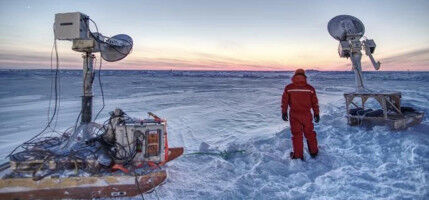
UCalgary expedition, with NASA, Canadian and European space agencies, sets out to better understand state of Arctic ice
Social Sciences - Today
Young people's wellbeing is improving in Greater Manchester, major survey finds
Young people's wellbeing is improving in Greater Manchester, major survey finds
Environment - Today
Australia's environment is improving but climate change is 'accelerating' damage to ecosystems and wildlife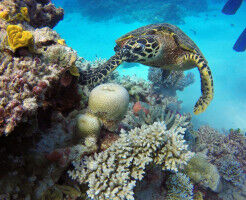
Australia's environment is improving but climate change is 'accelerating' damage to ecosystems and wildlife

Psychology - Mar 23
The grief myth: it doesn't come in stages or follow a checklist - like love, it endures
The grief myth: it doesn't come in stages or follow a checklist - like love, it endures


History & Archeology - Mar 23
The UV has played a part in the discovery of a 3,500-year-old loom that sheds light on key aspects of the Bronze Age textile revolution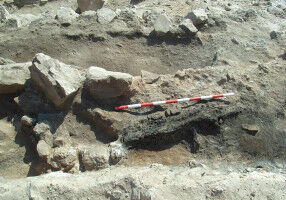
The UV has played a part in the discovery of a 3,500-year-old loom that sheds light on key aspects of the Bronze Age textile revolution
Innovation - Mar 23
The University of Valencia launches ClioViz, an open digital platform for accessing cultural heritage data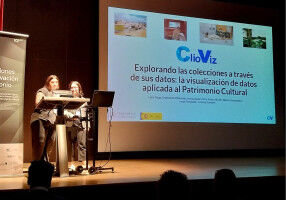
The University of Valencia launches ClioViz, an open digital platform for accessing cultural heritage data

Social Sciences - Mar 23
Study links higher concentration of pokie machines to increase in family and domestic violence
Study links higher concentration of pokie machines to increase in family and domestic violence
Health - Mar 23
Screening blitz could achieve cervical cancer elimination among Indigenous communities within a generation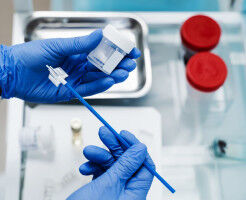
Screening blitz could achieve cervical cancer elimination among Indigenous communities within a generation
Computer Science - Mar 20
New computer chip material inspired by the human brain could slash AI energy use
New computer chip material inspired by the human brain could slash AI energy use
news
Delft University of Technology (TU Delft)
Results 1 - 20 of 110.
Health - Life Sciences - 18.03.2026
Bacteria reveal themselves through unique sounds: a breakthrough for rapid diagnostics
Scientists from TU Delft, SoundCell and RHMDC (laboratory of Reinier de Graaf hospital) have discovered that different bacterial species produce their own characteristic sounds. Building on an earlier development from the same team, they have now shown that bacteria can be identified and their antibiotic susceptibility determined simultaneously, based solely on their sound.
Environment - 09.02.2026
Ajit Ahlawat started this study at the Leibniz Institute for Tropospheric Research where he together with Professor Sagnik Dey (IIT-CAS) and Dr. Birgit Wehner (TROPOS) conceptualised the study and then conducted the field observations in Delhi, with assistance from colleagues of the Indian Institute of Technology (IIT).
Health - Life Sciences - 05.11.2025
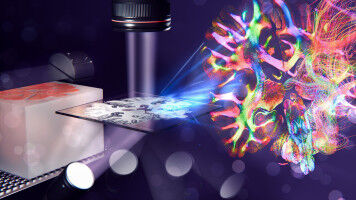
In order to understand brain diseases, neuroscientists try to untangle the intricate nerve fibre labyrinth of our brain. Before analysing brain tissue under a microscope, it is often soaked in paraffin wax to achieve high-quality sections. However, accurately mapping the densely packed nerves inside wax-treated brain slices was so far not possible.
Life Sciences - Materials Science - 04.11.2025
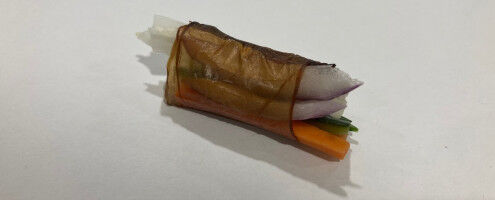
Bacterial spores - the hardy survival structures formed by certain bacterial species - are proving to be a game changer in the field of engineered living materials (ELMs). By embedding Bacillus spores within ELMs, Jeong-Joo Oh, Franka van der Linden, Marie-Eve Aubin-Tam and their fellow researchers have created living materials that not only endure harsh environments but can also be programmed to perform specific tasks.
Microtechnics - Innovation - 28.10.2025
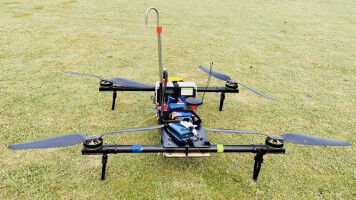
New algorithm lets autonomous drones work together to transport heavy, changing payloads
Scientists at TU Delft have developed a new algorithm that allows multiple autonomous drones to work together to control and transport heavy payloads, even in windy conditions.
Computer Science - 13.10.2025
Assessing the health of the world’s long-span bridges from space
Satellite data can refine risk assessments and improve safety for critical infrastructure. A new method, published in Nature Communications, reveals that one-third fewer bridges are classified as high-risk when spaceborne monitoring availability is integrated into risk assessments. This enables infrastructure authorities to make better-informed maintenance decisions.
Physics - 28.08.2025

Researchers from Delft University of Technology in The Netherlands have been able to see the magnetic nucleus of an atom switch back and forth in real time. They read out the nuclear -spinvia the electrons in the same atom through the needle of a scanning tunneling microscope. To their surprise, the spin remained stable for several seconds, offering prospects for enhanced control of the magnetic nucleus.
Physics - Electroengineering - 24.06.2025

Scientists from TU Delft have observed quantum spin currents in graphene for the first time without using magnetic fields. These currents are vital for spintronics, a faster and more energy-efficient alternative to electronics. This breakthrough, published in Nature Communications , marks an important step towards technologies like quantum computing and advanced memory devices.
Earth Sciences - Environment - 27.05.2025
An international team of scientists is currently located dozens of kilometres offshore New England (USA) to investigate freshwater occurrence under the ocean floor. For a long time, scientists have been wondering how fresh groundwater ended up beneath the salty seawater, and how long it has been there.
Astronomy & Space - Earth Sciences - 19.05.2025

Analysing gravity data collected by spacecraft orbiting the moon reveals groundbreaking insights about the Moon-s deep internal structure without having to land on the surface. The study offers evidence that a warmer interior on the Moon-s near side compared to the far side created the conditions for volcanic activity, that may have lasted far longer than expected.
Physics - Materials Science - 08.05.2025

Researchers at QuTech in Delft have combined superconductors and quantum dots to observe and manipulate so-called Majorana bound states, which have properties that could enable stable quantum computation. By building a chain of three coupled quantum dots in a two-dimensional electron gas, they were able to demonstrate properties of Majoranas that are essential for the study of Majorana-based quantum bits.
Environment - Life Sciences - 07.05.2025

Nitrous oxide is known as the gas used in whipped cream cartridges or as an anaesthetic in hospitals. But it's much more than that. This potent greenhouse gas is also released from biological wastewater treatment plants (WWTPs), posing a real threat to our climate. PhD candidate Nina Roothans (TU Delft), who recently graduated cum laude, has identified practical strategies to reduce nitrous oxide emissions.
Health - Life Sciences - 03.04.2025

While medical centres use ultrasound daily, so far this technology is not capable of observing body tissues at the scale of cells. Physicists from TU Delft have developed a microscopy technique based on ultrasound to reveal capillaries and cells across living organs-something that wasn't possible before.
Astronomy & Space - Physics - 24.03.2025

Researchers at TU Delft and Brown University have developed scalable nanotechnology-based lightsails that could support future advances in space exploration and experimental physics. Their research, published in Nature Communications , introduces new materials and production methods to create the thinnest large-scale reflectors ever made.
Physics - Materials Science - 12.03.2025

When water freezes into ice or boils into vapour, its properties change dramatically at specific temperatures. These so-called phase transitions are fundamental to understanding materials. But how do such transitions behave in nanomaterials? In Nature Communications , a team of scientists led by TU Delft presents new insights into the complex nature of phase transitions in magnetic nanomaterials.
Computer Science - Physics - 12.03.2025

Breakthrough achievement paves the way for practical quantum internet applications Delft, The Netherlands: Quantum Internet Alliance (QIA) researchers at TU Delft, QuTech, University of Innsbruck, INRIA and CNRS recently announced the creation of the first operating system designed for quantum networks: QNodeOS.
Astronomy & Space - Physics - 26.02.2025

A group of researchers from TU Delft and the Institute for Planetary Research of the German Aerospace Center have been able to the determinate the Mars-s interior structure and the age of the large ice sheet covering its north pole. They have published their findings in Nature. The team used the same geophysical trick on Mars that geologists use here on Earth to: measure how large areas of land are deformed by the ice sheet that presses down on the planet itself.
Computer Science - Innovation - 31.01.2025
Bringing machine learning into the real world
We constantly hear about the -AI revolutionand the -digital transformation-. This is being driven by rapid advances from the field of machine learning (ML), such as those enabling autonomous vehicles, ChatGPT, DeepSeek and even predicting extreme weather events. But how do these innovations move from fundamental research to real-world impact? Geert-Jan Houben explores this question with the co-directors of the ELLIS Unit Delft: Frans Oliehoek and Jens Kober.
Life Sciences - Health - 15.01.2025
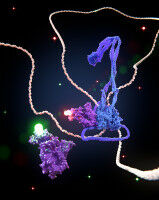
Scientists from Delft, Vienna, and Lausanne discovered that the protein machines that shape our DNA can switch direction. Until now, researchers believed that these so-called SMC motors that make loops into DNA could move in one direction only. The discovery, which is published in Cell , is key to understanding how these motors shape our genome and regulate our genes.
Health - Life Sciences - 18.12.2024

Neural implants contain integrated circuits (ICs) - commonly called chips - built on silicon. These implants need to be small and flexible to mimic circumstances inside the human body. However, the environment within the body is corrosive, which raises concerns about the durability of implantable silicon ICs.


Environment - Mar 25
UCalgary expedition, with NASA, Canadian and European space agencies, sets out to better understand state of Arctic ice
UCalgary expedition, with NASA, Canadian and European space agencies, sets out to better understand state of Arctic ice
Social Sciences - Today
Young people's wellbeing is improving in Greater Manchester, major survey finds
Young people's wellbeing is improving in Greater Manchester, major survey finds
Environment - Today
Australia's environment is improving but climate change is 'accelerating' damage to ecosystems and wildlife
Australia's environment is improving but climate change is 'accelerating' damage to ecosystems and wildlife
Psychology - Mar 23
The grief myth: it doesn't come in stages or follow a checklist - like love, it endures
The grief myth: it doesn't come in stages or follow a checklist - like love, it endures
History & Archeology - Mar 23
The UV has played a part in the discovery of a 3,500-year-old loom that sheds light on key aspects of the Bronze Age textile revolution
The UV has played a part in the discovery of a 3,500-year-old loom that sheds light on key aspects of the Bronze Age textile revolution
Innovation - Mar 23
The University of Valencia launches ClioViz, an open digital platform for accessing cultural heritage data
The University of Valencia launches ClioViz, an open digital platform for accessing cultural heritage data
Social Sciences - Mar 23
Study links higher concentration of pokie machines to increase in family and domestic violence
Study links higher concentration of pokie machines to increase in family and domestic violence
Health - Mar 23
Screening blitz could achieve cervical cancer elimination among Indigenous communities within a generation
Screening blitz could achieve cervical cancer elimination among Indigenous communities within a generation
Computer Science - Mar 20
New computer chip material inspired by the human brain could slash AI energy use
New computer chip material inspired by the human brain could slash AI energy use