

Environment - Today
UCalgary expedition, with NASA, Canadian and European space agencies, sets out to better understand state of Arctic ice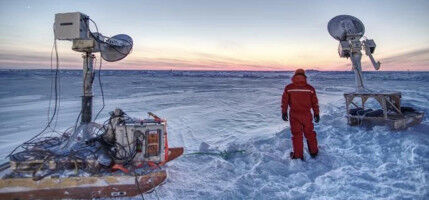
UCalgary expedition, with NASA, Canadian and European space agencies, sets out to better understand state of Arctic ice
Social Sciences - Mar 24
Young people's wellbeing is improving in Greater Manchester, major survey finds
Young people's wellbeing is improving in Greater Manchester, major survey finds

Environment - Mar 24
Australia's environment is improving but climate change is 'accelerating' damage to ecosystems and wildlife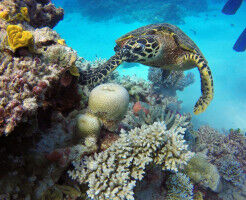
Australia's environment is improving but climate change is 'accelerating' damage to ecosystems and wildlife

Psychology - Mar 23
The grief myth: it doesn't come in stages or follow a checklist - like love, it endures
The grief myth: it doesn't come in stages or follow a checklist - like love, it endures



History & Archeology - Mar 23
The UV has played a part in the discovery of a 3,500-year-old loom that sheds light on key aspects of the Bronze Age textile revolution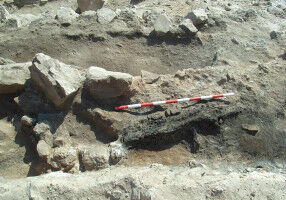
The UV has played a part in the discovery of a 3,500-year-old loom that sheds light on key aspects of the Bronze Age textile revolution
Innovation - Mar 23
The University of Valencia launches ClioViz, an open digital platform for accessing cultural heritage data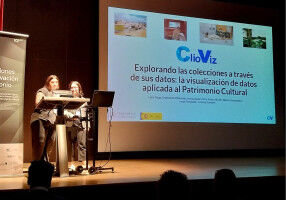
The University of Valencia launches ClioViz, an open digital platform for accessing cultural heritage data

Social Sciences - Mar 23
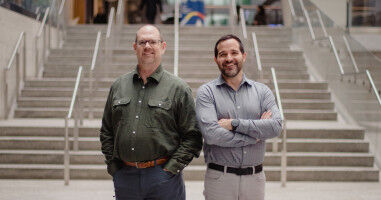
Study links higher concentration of pokie machines to increase in family and domestic violence
Study links higher concentration of pokie machines to increase in family and domestic violence
Health - Mar 23
Screening blitz could achieve cervical cancer elimination among Indigenous communities within a generation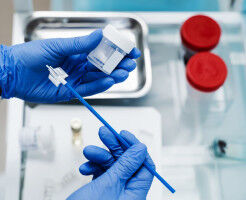
Screening blitz could achieve cervical cancer elimination among Indigenous communities within a generation
Computer Science - Mar 20
New computer chip material inspired by the human brain could slash AI energy use
New computer chip material inspired by the human brain could slash AI energy use
news
University College London
Results 1581 - 1600 of 2143.
Life Sciences - Mathematics - 28.09.2017
In people with OCD, actions are at odds with beliefs
UCL researchers have devised a mathematical model to understand what causes obsessive-compulsive disorder (OCD), a set of repeated behaviours deriving from an underlying brain dysfunction that is not yet well understood. In the study, published in Neuron , they found that people with OCD develop an internal, accurate sense of how things work but do not use it to guide behaviour.
Psychology - 20.09.2017
One in four girls is depressed at age 14
New research shows a quarter of girls (24%) and one in 10 boys (9%) are depressed at age 14. Researchers from the UCL Institute of Education and the University of Liverpool analysed information on more than 10,000 children born in 2000-01 who are taking part in the Millennium Cohort Study. At ages 3, 5, 7, 11 and 14, parents reported on their children's mental health.
Astronomy & Space - 19.09.2017
Size matters in the detection of exoplanet atmospheres
A group-analysis of 30 exoplanets orbiting distant stars suggests that size, not mass, is a key factor in whether a planet's atmosphere can be detected according to a UCL-led team of European researchers. The largest population-study of exoplanets to date successfully detected atmospheres around 16 'hot Jupiters', and found that water vapour was present in every case.
Life Sciences - 15.09.2017
Happiness is not determined by childhood biomarkers
Happiness is not determined by childhood biological markers such as height or body fat, according to a team of European researchers involving UCL. The paper, published in PLoS ONE analysed longitudinal data from nearly 2000 young Finns over a period of 20 years. For the first time, researchers obtained measurements for biomarkers in childhood together with measures of happiness in adulthood.
Life Sciences - Health - 12.09.2017
Explaining bursts of activity in brains of preterm babies
The source of spontaneous, high-amplitude bursts of activity seen in the brains of preterm babies, which are vital for healthy development, has been identified by a team led by researchers at UCL and King's College London. In a new study published in eLife and funded by the National Institute for Health Research and the Medical Research Council, the researchers found that a specific brain region called the insula plays a major role in the generation of the spontaneous neuronal bursts.
Pedagogy - 06.09.2017
Schools "teaching in ’ability’ sets despite evidence this may cause harm
Schools are rejecting the chance to teach children in "mixed-ability" classes despite evidence that the alternative - pupils being put in ability sets or streams - will have a negative effect on at least some of their charges' results, according to new research from UCL. The paper - "Factors deterring schools from mixed attainment grouping practices," written by Dr Becky Taylor, UCL Institute of Education (IOE), together with academics from Queen's University, Belfast, was presented yesterday at the British Educational Research Association's (BERA) annual conference.
Health - 29.08.2017
Urine test for blood pressure drug adherence
The use of a urine test for drug adherence can lead to a drop in blood pressure in patients who had been struggling to regularly take their blood pressure lowering tablets, according to a new study involving UCL researchers, published in Hypertension . Of the 238 patients who underwent the urine test, 73 were not taking their blood pressure lowering tablets on a regular basis.
Economics - Social Sciences - 23.08.2017
Personality drives purchasing of luxury goods
People who are 'extraverted' and on low incomes buy more luxury goods than their introverted peers to compensate for the experience of low financial status, finds new UCL research. The study, published today in Psychological Science , used real life spending data from UK bank accounts to investigate the spending habits of richer and poorer people with different personality types.
Life Sciences - Health - 21.08.2017
People who hear voices can detect hidden speech
People who hear voices that other people can't hear may use unusual skills when their brains process new sounds, according to new research led by UCL and Durham University. The study, published in the journal Brain , found that voice-hearers could detect disguised speech-like sounds more quickly and easily than people who had never had a voice-hearing experience.
Life Sciences - 09.08.2017
Fossil skull sheds light on ape ancestry
A remarkably complete fossil skull discovered in Kenya reveals what the common ancestor of all living apes and humans may have looked like, according to a new study involving UCL research. The find, announced today in Nature , belongs to an infant that lived about 13 million years ago. It's a significant discovery that will help researchers uncover whether the common ancestor of living apes and humans originated in Africa and what these early ancestors looked like.
Health - Life Sciences - 04.08.2017
Diabetes drug shows potential as disease-modifying therapy for Parkinson’s disease
A drug commonly used to treat diabetes may have disease-modifying potential to treat Parkinson's disease, a new UCL-led study suggests, paving the way for further research to define its efficacy and safety. The study, published in The Lancet and funded by The Michael J. Fox Foundation for Parkinson's Research (MJFF), found that people with Parkinson's who injected themselves each week with exenatide for one year performed better in movement (motor) tests than those who injected a placebo.
Astronomy & Space - Physics - 03.08.2017
Accurately measuring the dark universe
The theory that dark matter and dark energy make up most of the cosmos has been confirmed by extremely accurate measurements from the Dark Energy Survey (DES) collaboration involving UCL scientists. The findings verify that only 4% of the universe is made of ordinary matter, 26% is in the form of mysterious dark matter and space is filled with an unseen dark energy, which is causing the accelerating expansion of the universe and makes up 70%.
Health - 02.08.2017
Clinicians’ intuitions about when terminally ill patients will die are often inaccurate
A simple method, routinely used by clinicians to help identify patients who may be approaching their last year of life, is frequently inaccurate, according to a new study led by UCL researchers and funded by Marie Curie. The "Surprise Question" was developed as a way to recognise those patients who might benefit from palliative care.
Life Sciences - 31.07.2017
People with autism are less surprised by the unexpected
Adults with autism may overestimate the volatility of the world around them, finds a new UCL study published . The researchers found that adults with autism were less surprised by unexpected images in a simple learning task than adults without autism, and those who were the least surprised had the most pronounced symptoms.
Health - 27.07.2017
High sugar intake linked with poorer long-term mental healthÂ
Men with high sugar intakes from sweet food and beverages have an increased likelihood of common mental disorders (such as anxiety and depression) after 5 years compared to those with low intake, according to UCL research. The study also showed that having a mood disorder did not make people more inclined to eat foods with a high sugar content.
Chemistry - Astronomy & Space - 26.07.2017
Has Cassini found a universal driver for prebiotic chemistry at Titan?
An important type of molecule that helps produce complex organic material has been detected within Titan's hazy upper atmosphere by a UCL-led team as part of the international Cassini-Huygens mission. In the study, published in Astrophysical Journal Letters , scientists identified negatively charged molecules called 'carbon chain anions' in the atmosphere of Titan, Saturn's largest moon.
Philosophy - 18.07.2017
Hearing a sound can alter perception of finger size
Hearing an ascending sound while pulling their own finger can make a person think their finger is longer than it is, finds a new study led by UCL and the Institute of Philosophy, School of Advanced Study, University of London. The study, published in Scientific Reports and funded by the Economic and Social Research Council (ESRC) and the Arts and Humanities Research Council (AHRC), provides the first evidence that an artificial sound, unrelated to the sound of body movements, can alter how a person perceives their own body when the sound is arbitrarily paired with a bodily action.
History & Archeology - Life Sciences - 14.07.2017
Synchrotron light used to show human domestication of seeds from 2000BC
The UK's synchrotron facility, Diamond Light Source, has been used by scientists at UCL to document for the first time the rate of evolution of seed coat thinning, a major marker of crop domestication from archaeological remains. Writing in the journal Scientific Reports , the authors present evidence for seed coat thinning between 2,000 BC and 1,200 BC in the legume horsegram (Macrotyloma uniflorum), a bean commonly eaten in southern India.
Health - Life Sciences - 10.07.2017
Low iron levels may increase risk of heart disease
People with low iron levels may be at greater risk of heart disease, according to a new study involving UCL scientists. Researchers analysing genetic data have uncovered a potential protective effect of iron in coronary artery disease, suggesting that having a higher iron status reduces a person's risk of coronary artery disease (CAD), a type of cardiovascular disease (CVD) where clogged arteries reduce the amount of blood reaching the heart.
Life Sciences - 05.07.2017
Gaze direction affects sensitivity to sounds
Listening to something while looking in a different direction can slow down reaction times while the brain works harder to suppress distractions, finds a new UCL study. In a study published in Scientific Reports , UCL researchers found that a misalignment between the direction of the eyes and the focus of auditory attention leads to slower reactions and increased listening effort.


Environment - Today
UCalgary expedition, with NASA, Canadian and European space agencies, sets out to better understand state of Arctic ice
UCalgary expedition, with NASA, Canadian and European space agencies, sets out to better understand state of Arctic ice
Social Sciences - Mar 24
Young people's wellbeing is improving in Greater Manchester, major survey finds
Young people's wellbeing is improving in Greater Manchester, major survey finds
Environment - Mar 24
Australia's environment is improving but climate change is 'accelerating' damage to ecosystems and wildlife
Australia's environment is improving but climate change is 'accelerating' damage to ecosystems and wildlife
Psychology - Mar 23
The grief myth: it doesn't come in stages or follow a checklist - like love, it endures
The grief myth: it doesn't come in stages or follow a checklist - like love, it endures
History & Archeology - Mar 23
The UV has played a part in the discovery of a 3,500-year-old loom that sheds light on key aspects of the Bronze Age textile revolution
The UV has played a part in the discovery of a 3,500-year-old loom that sheds light on key aspects of the Bronze Age textile revolution
Innovation - Mar 23
The University of Valencia launches ClioViz, an open digital platform for accessing cultural heritage data
The University of Valencia launches ClioViz, an open digital platform for accessing cultural heritage data
Social Sciences - Mar 23
Study links higher concentration of pokie machines to increase in family and domestic violence
Study links higher concentration of pokie machines to increase in family and domestic violence
Health - Mar 23
Screening blitz could achieve cervical cancer elimination among Indigenous communities within a generation
Screening blitz could achieve cervical cancer elimination among Indigenous communities within a generation
Computer Science - Mar 20
New computer chip material inspired by the human brain could slash AI energy use
New computer chip material inspired by the human brain could slash AI energy use